

Science & Tech · Science & Environment · 18 hrs ago
Ancient Virus DNA May Have Helped Shape Human-Chimp Brain Differences
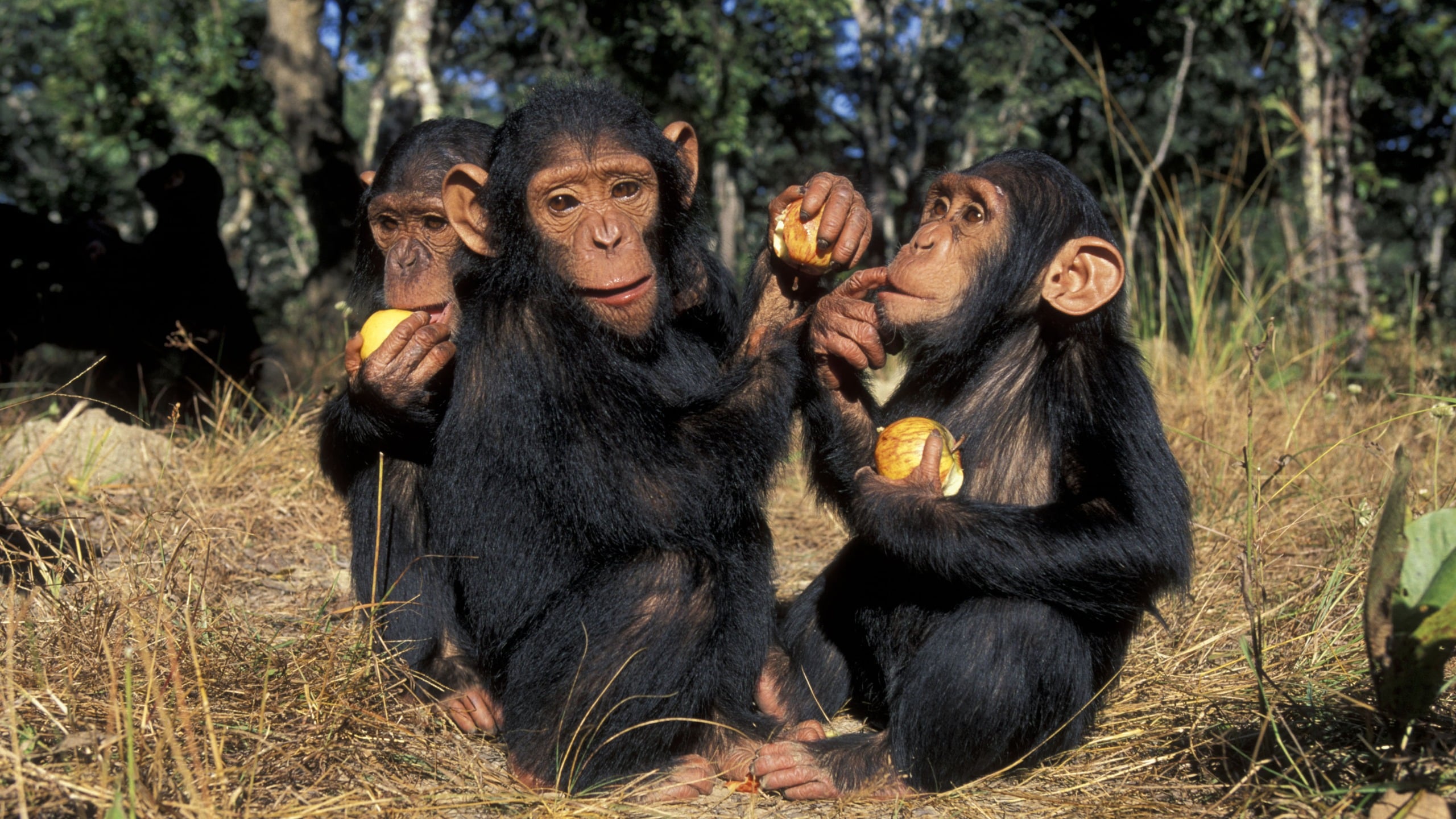
Researchers at Lund University studied DNA left by an ancient virus in chimpanzees but not humans.
The virus inserted a DNA sequence called PTERV1 into chimpanzee genomes millions of years ago.
Humans and chimpanzees share most of their DNA, but human brains are about three times larger.
The insertion switches off LINC00662, a molecule linked to the development of brain cells.
In lab-grown brain organoids, turning off LINC00662 reduced the growth and maturation of neurons, while removing the viral sequence from chimpanzee cells restored its activity.
The experiments point to one possible cause of brain differences, but they do not show that the virus alone determined brain size, abilities or behaviour.
Researchers say more work is needed to understand what LINC00662 does in the body and what its reduced activity means for chimpanzees.

Researchers report that ancient viral DNA in chimpanzees may help explain differences in how human and chimpanzee brain-related genes are regulated.
The study, published in Science Advances on October 23, found that the viral insertion can silence LINC00662 in chimpanzee cells.
When researchers removed the insertion from chimpanzee stem cells, LINC00662 became active; switching off the gene in human cells produced the opposite condition.
Active LINC00662 was associated with increased activity in other genes that may be important to brain development.
The researchers said it is not known whether the viral insertion changed chimpanzee brain biology or how much it contributed to differences between the species.
- Who
- Researchers led by Patricia Gerdes and Johan Jakobsson at Lund University studied human and chimpanzee cells.
- What
- The study found that ancient viral DNA can silence a gene associated with brain development in chimpanzee cells. The researchers said the difference may have contributed to how the species’ brains evolved.
- When
- The study was published on October 23, 2026. The viral infection was estimated by sources to have occurred between about 4 million and 7 million years ago.
- Where
- The research was conducted using human and chimpanzee cells and brain organoids in laboratory experiments.
- Why
- The researchers investigated how human and chimpanzee brains could have evolved differently despite similarities in protein-making genes.
This story does not have two clearly opposing sides.
An ancestral African ape was infected by a retrovirus, according to estimates reported by the sources.
Researchers removed the viral DNA using CRISPR, and LINC00662 became active.
Researchers switched off LINC00662 to match the silenced condition seen in chimpanzee cells.
The study was published in Science Advances.
- Study journal
- Science Advances
- Publication date
- October 23, 2026
- Viral DNA
- PTERV1, found in chimpanzees and other African apes but not humans
- Chimpanzee genome
- The viral DNA was reported at 158 locations
- Gene examined
- LINC00662
- Brain size comparison
- Human brains are about three times larger than chimpanzee brains
3 sources
What people are saying
Our findings show one way an ancient viral [DNA] insertion could create a lasting difference in how a gene is regulated in humans and chimpanzees
We do not yet know all of LINC00662's roles in the human body, or what the loss of its activity means for chimpanzees as a whole
But we cannot predict that this would produce a particular brain shape, ability, or behavior.