

Science & Tech · Science & Environment · 2 hrs ago
Neanderthal shoulder wound may be evidence of a fatal spear attack
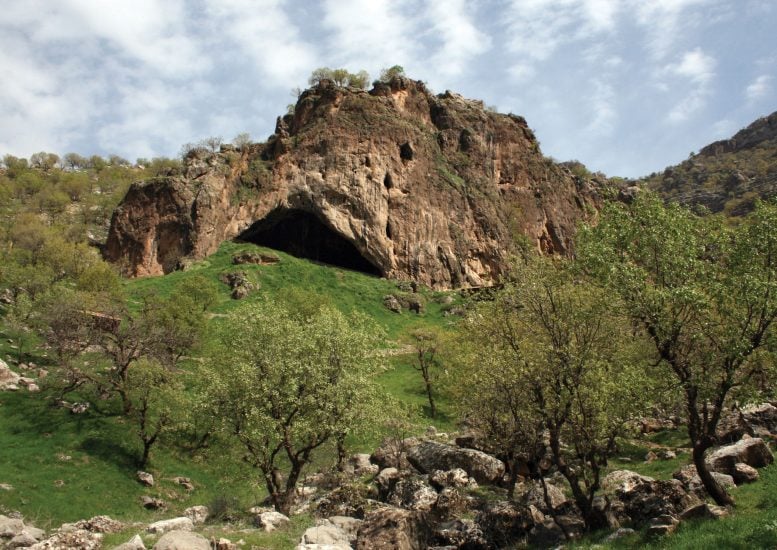
Researchers examining remains from Shanidar Cave in Iraqi Kurdistan found a 15-millimeter hole in the left shoulder blade of a Neanderthal known as Shanidar A. The remains date to about 75,000 years ago, and Shanidar A was around 45 when they died.
The hole and nearby bone fragments suggest a wooden spear entered the chest from the front and passed through a lung before exiting through the shoulder blade.
The researchers say the injury likely damaged major arteries and caused rapid death, but the evidence points to a possible attack rather than proving exactly what happened.
A damaged tooth shows Shanidar A had survived an earlier facial injury and lived for at least a year afterward, suggesting other Neanderthals may have cared for them.
The findings offer rare evidence of possible lethal violence involving a wooden spear in the human fossil record; no further next steps are stated.

A hole in a Neanderthal’s shoulder blade may be evidence of a fatal spear wound about 75,000 years ago.
The remains belong to an individual known as Shanidar A, found at Shanidar Cave in Iraqi Kurdistan.
Researchers say the wound may have been caused by a wooden spear entering the chest and passing through a lung and likely major arteries.
A Cambridge-led team unearthed the remains in 2020 and published its findings in Scientific Reports.
A damaged tooth also suggests Shanidar A survived an earlier facial injury for at least a year, possibly with care from other Neanderthals.
- Who
- Shanidar A, a Neanderthal who was approximately 45 years old at death.
- What
- A 15-millimeter hole in the left shoulder blade may indicate a fatal wooden spear wound to the chest.
- When
- About 75,000 years ago.
- Where
- Shanidar Cave in Iraqi Kurdistan.
- Why
- The researchers suggest the strike passed through a lung and likely major arteries, causing rapid death; the reason for the attack is not stated.
This story does not have two clearly opposing sides.
Shanidar A sustained the shoulder wound that researchers say may have been caused by a wooden spear.
A Cambridge-led team unearthed Shanidar A’s remains at Shanidar Cave.
- Individual
- Shanidar A
- Age at death
- Approximately 45 years
- Estimated age of wound
- About 75,000 years
- Hole in shoulder blade
- 15 millimeters wide
- Excavation
- 2020, Shanidar Cave, Iraqi Kurdistan
- Publication
- Scientific Reports
What people are saying
Surviving a blow that splits a tooth in this fashion, then continuing to live and eat for a period of at least a year and maybe more, would have required care and support from other Neanderthals.
It’s extraordinary to have a perfectly preserved scapula from 75,000 years ago. These bones are so thin that you often don’t get complete scapulae from modern burials.