

Science & Tech · Space · 9 hrs ago
Researchers Search Gaia Data for Nearby Isolated Black Holes
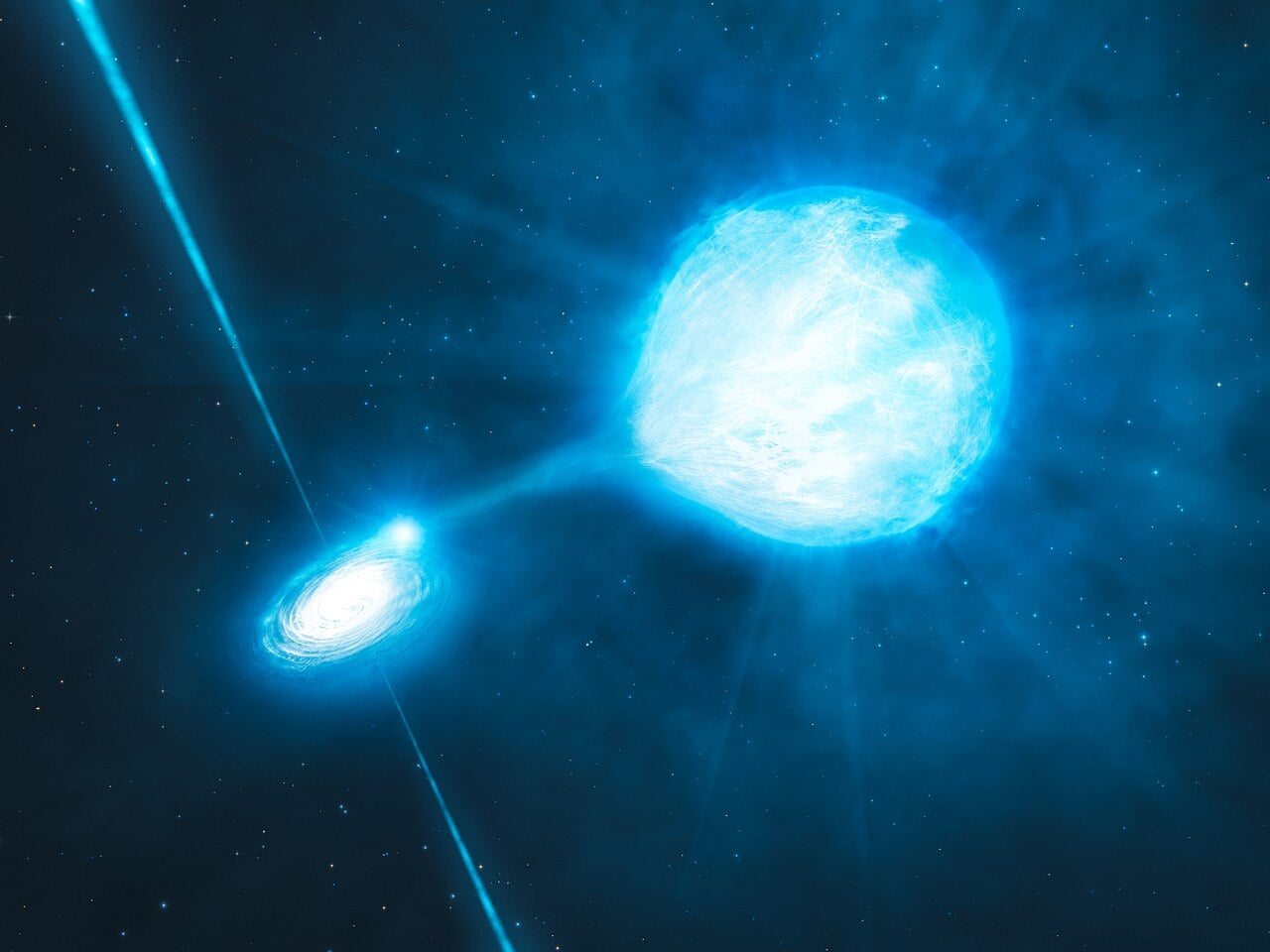
Models suggest the Milky Way contains 100 million to 1 billion stellar-mass black holes, but most are difficult to detect.
Researchers led by Abdurakhmon Nosirov searched Gaia data for isolated black-hole candidates within about 50 light-years of the Sun.
These objects are much smaller and less active than the giant black holes at galaxy centres, so they may give off little radiation.
The researchers say a nearby black hole could be easier to detect if it lies inside a local cloud of interstellar gas, which it could draw in and heat.
Outside those clouds, the material available to feed a black hole is so sparse that its signal would likely be too faint for current or near-future observatories.
The study concerns a search for candidates, but the available information does not state whether any were found.

Researchers searched Gaia data for candidates for isolated stellar-mass black holes within 15 parsecs of the Solar System.
The study, published in The Astrophysical Journal, is titled “Searching for Isolated Black Hole Candidates within 15 pc of the Solar System in Gaia DR3.”
Its lead author is Abdurakhmon Nosirov of Fudan University in Shanghai, China.
Models predict that the Milky Way contains between about 100 million and 1 billion stellar-mass black holes, most of them isolated.
The article says a black hole inside a nearby interstellar cloud could produce detectable electromagnetic emissions as it draws in gas.
- Who
- Researchers led by Abdurakhmon Nosirov of Fudan University.
- What
- They searched Gaia data for candidates for isolated black holes within 15 parsecs of the Solar System.
- When
- The article was published on October 21, 2026. The study date is not stated.
- Where
- Within 15 parsecs of the Solar System, using data from Gaia DR3.
- Why
- Models predict that many stellar-mass black holes are isolated. Researchers sought nearby candidates that might be detectable through emissions from accreting gas.
This story does not have two clearly opposing sides.
This story does not have a timeline yet.
- Search area
- Within 15 pc of the Solar System
- Data source
- Gaia DR3
- Lead author
- Abdurakhmon Nosirov
- Journal
- The Astrophysical Journal
- Milky Way estimate
- About 100 million to 1 billion stellar-mass black holes
What people are saying
Theoretical models predict that the Galaxy hosts 108–109 black holes formed from the complete gravitational collapse of heavy stars and that most of these black holes are isolated, without any companion
Within 15 pc of the solar system (∼50 lt-yr), there may be a few black holes
Outside these clouds, the accretion rate would be too low; according to our models, the resulting electromagnetic flux is well below the detection thresholds of current and near-future observational facilities