

Science & Tech · Science & Environment · 13 hrs ago
Researchers propose the strong nuclear force could explain dark energy
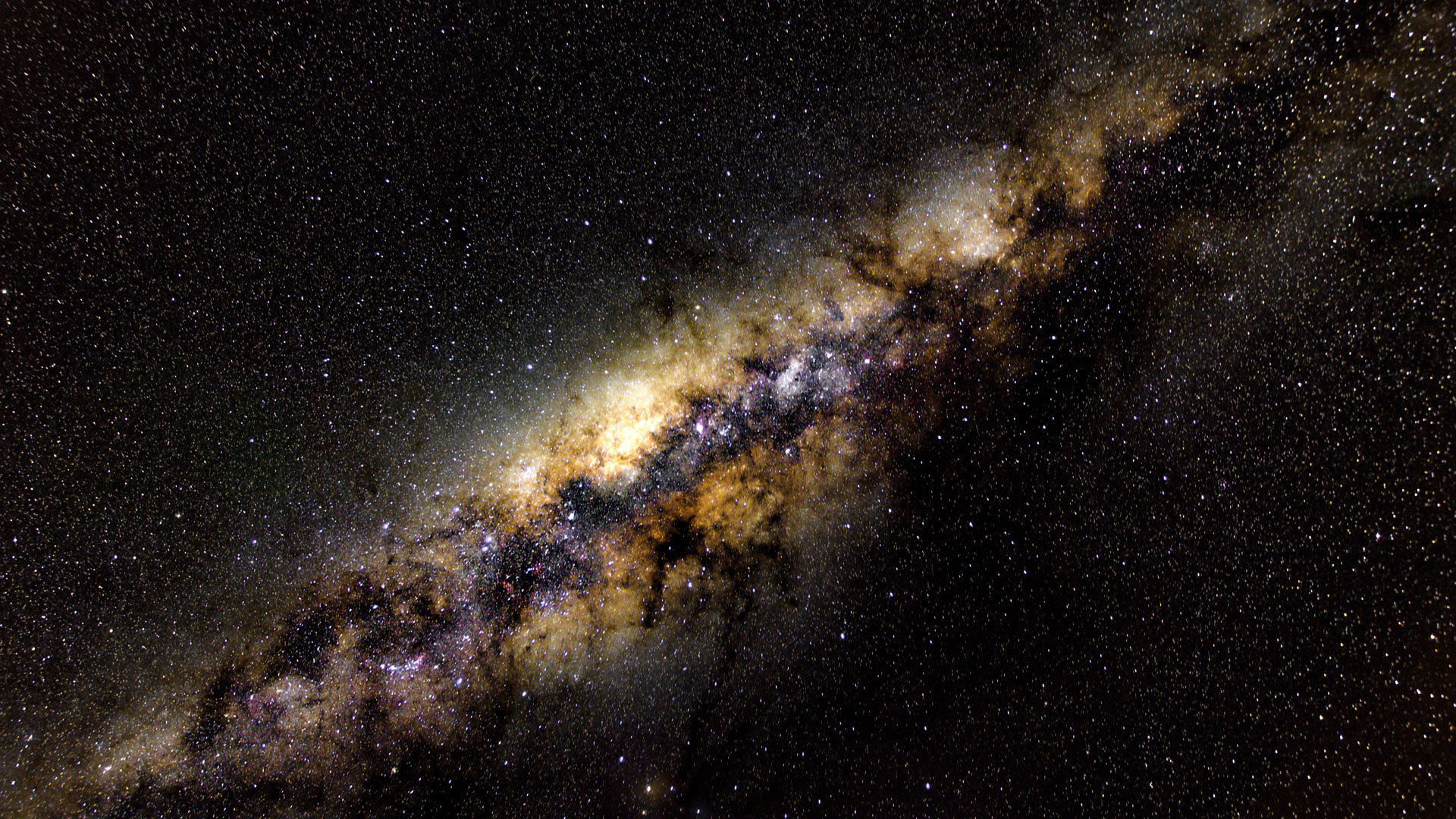
Researchers in Canada and the UK proposed a new explanation for dark energy: it may arise from quantum effects linked to the strong nuclear force.
That force holds quarks together inside protons and neutrons, the particles that make up atomic nuclei.
The researchers say the quantum vacuum, which is not truly empty, can shift between different configurations as the universe expands.
Those changes could add energy that drives cosmic acceleration, without requiring a new fundamental particle or field.
The team compared its model with measurements of supernovae, the cosmic microwave background and galaxy patterns.
It matched observations about as well as the standard model in some tests, and was mildly to moderately preferred when early- and late-universe data were combined.
The proposal remains theoretical, and its model uses two additional parameters to describe when and how its effect develops.

Researchers from the University of British Columbia and the University of Sheffield propose that quantum effects linked to the strong nuclear force could help explain dark energy.
Their model suggests the energy of the quantum vacuum may change as the universe expands, contributing to cosmic acceleration.
The researchers say the explanation does not require new fundamental particles or fields, though their model uses two additional parameters.
The model performed comparably to the standard Lambda-CDM model on separate early- or late-universe data, and was mildly to moderately preferred in a combined Bayesian comparison.
- Who
- Researchers at the University of British Columbia and the University of Sheffield.
- What
- They proposed that quantum effects linked to the strong nuclear force could account for dark energy.
- When
- The study was reported on November 21, 2026.
- Where
- The research was conducted by teams at the University of British Columbia and the University of Sheffield.
- Why
- The researchers are seeking a physical explanation for dark energy and the universe’s accelerating expansion.
This story does not have two clearly opposing sides.
Researchers compared the QCD-based framework with observations of supernovae, the cosmic microwave background and galaxy distribution.
Interesting Engineering reported the researchers’ proposal and its comparison with cosmological observations.
- Research institutions
- University of British Columbia and University of Sheffield
- Proposed mechanism
- Quantum chromodynamics and the strong nuclear force
- Dark energy’s share of energy density
- Roughly 70 percent
- Model parameters
- Two additional parameters
- Comparison models
- Lambda-CDM and a model allowing dark energy to change over time
What people are saying
Our theoretical framework suggests no new particles may be required at all
The characteristic energy scale predicted from the QCD vacuum and gravity comes out close to the observed dark-energy scale today without having to introduce an ad hoc new field or a new parameter