

Health · Medical Research · 2 hrs ago
Saline Procedure May Ease Carpal Tunnel Symptoms for Six Months
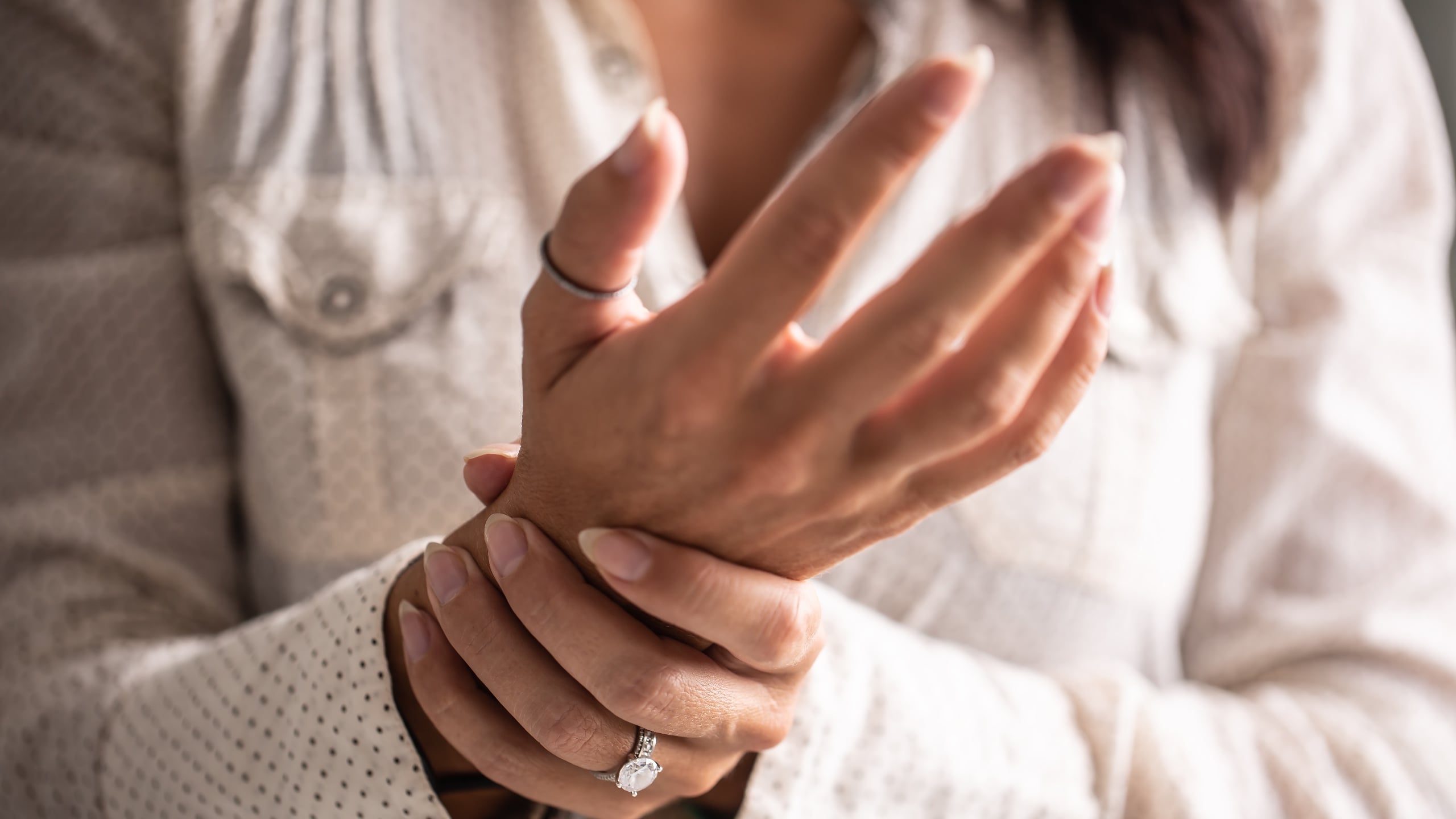
Researchers tested saline hydrodissection for carpal tunnel syndrome, which happens when a nerve is squeezed at the wrist and can cause pain, numbness and weakness.
The procedure uses ultrasound to guide a needle that injects sterile salt water around the nerve, separating it from nearby tissues.
The trial included 39 adults with persistent symptoms, whose 63 wrists were assigned to saline hydrodissection, steroid injection alone, or hydrodissection with steroid.
All three treatments helped at first, but relief continued for six months after saline hydrodissection, while symptoms returned in the steroid-only group.
Adding a steroid to hydrodissection did not clearly improve the results.
The findings suggest freeing the nerve may help ease pressure, but the study was small, took place at one center and had no dummy-injection group.
Larger studies are needed to confirm the benefit and determine how long it lasts; the trial did not compare the procedure with surgery.

A small trial found that saline hydrodissection may ease carpal tunnel symptoms for six months.
The procedure uses ultrasound to guide a saline injection that separates the nerve from surrounding tissues.
The study included 39 adults and 63 wrists, and compared saline hydrodissection with steroid injections and hydrodissection with added steroid.
All three treatments helped initially, but pain returned in the steroid-only group while relief continued in the saline-only group.
Researchers said larger studies are needed to confirm how reliably the procedure works and how long relief lasts.
- Who
- Researchers led by radiologist Anindita Bose studied 39 adults with carpal tunnel syndrome.
- What
- A small trial found that saline hydrodissection may provide symptom relief lasting six months.
- When
- Participants were followed for up to six months. The article was published on October 19, 2026.
- Where
- The study was conducted at one center; the article identifies the lead researcher’s institution as Mahatma Gandhi Medical College and Hospital in India.
- Why
- Researchers wanted to determine how much benefit came from separating tissues around the nerve, rather than from medication in the injection.
This story does not have two clearly opposing sides.
Researchers randomly assigned each wrist to saline hydrodissection, steroid injection alone, or hydrodissection with added steroid.
Researchers tracked symptoms and used ultrasound scans to check nerve swelling.
Relief continued in the saline-only hydrodissection group, while pain had returned in the steroid-only group.
- Participants
- 39 adults
- Wrists studied
- 63
- Follow-up
- Up to six months
- Study location
- One center
- Lead researcher
- Anindita Bose of Mahatma Gandhi Medical College and Hospital
What people are saying
This relieves the pressure on the nerve and improves patients' symptoms
Post hydrodissection, she had improvement in her symptoms and was able to resume her work