

Business · Energy & Commodities · 17 hrs ago
Saudi Arabia remains the region’s largest gold jewelry market as demand falls
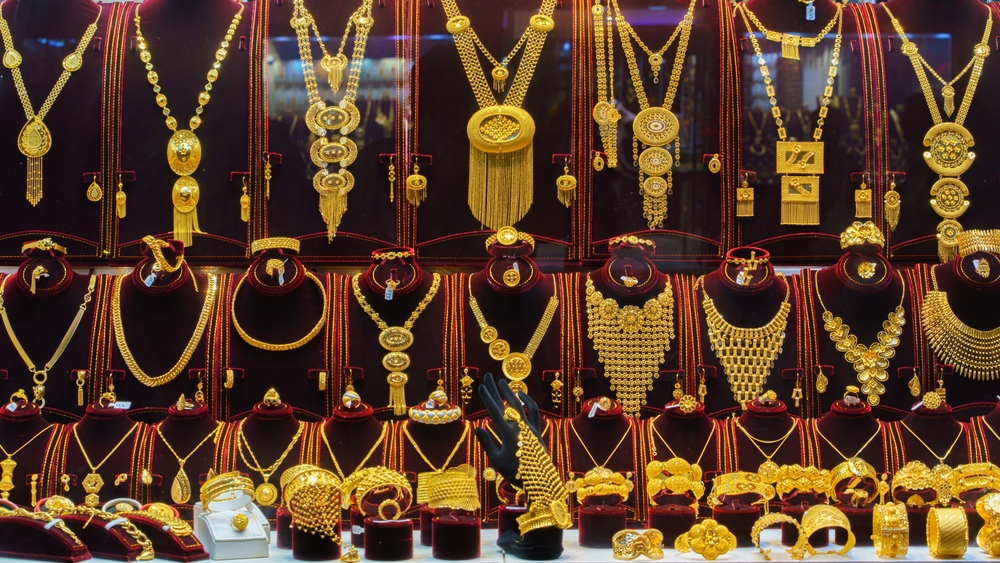
Saudi Arabia remained the Middle East’s largest gold jewelry market in the third quarter of 2026, even as purchases fell.
Demand there dropped 12% year on year to 8.2 tonnes, while Middle East jewelry demand fell 22% to 26.2 tonnes.
High gold prices and economic uncertainty have made jewelry harder for consumers to afford across the region.
Saudi Arabia’s smaller decline raised its share of regional demand to about 31%, from 28%, and helped cushion the overall fall.
But demand also fell 20% from the previous quarter, so the yearly comparison does not show a market recovery.
Saudi bar and coin purchases also declined, while regional investment demand fell 24%.
Global jewelry demand is expected to fall again in the fourth quarter if prices remain high, and a meaningful recovery may depend on prices easing or consumers adjusting.

Saudi Arabia remained the Middle East’s largest gold jewelry market in the third quarter of 2026, despite a year-on-year decline in purchases.
Saudi jewelry demand fell 12 percent to 8.2 tonnes, while regional demand dropped 22 percent to 26.2 tonnes.
The World Gold Council attributed the regional decline to high gold prices, pressure on household purchasing power and geopolitical uncertainty.
Saudi Arabia’s share of regional jewelry demand rose to about 31 percent from 28 percent.
An analyst cautioned that the year-on-year resilience did not mean the Saudi market was recovering, as demand also fell from the previous quarter.
- Who
- Saudi Arabia remained the Middle East’s largest gold jewelry market, according to the World Gold Council.
- What
- Saudi jewelry purchases fell 12 percent year on year to 8.2 tonnes. Middle East demand fell 22 percent to 26.2 tonnes.
- When
- The third quarter of 2026.
- Where
- Saudi Arabia and the wider Middle East.
- Why
- High gold prices, pressure on household purchasing power and geopolitical uncertainty constrained discretionary purchases across the region.
This story does not have two clearly opposing sides.
Saudi Arabia recorded 9.3 tonnes of jewelry demand and the Middle East recorded 33.4 tonnes.
Saudi jewelry demand reached 12.7 tonnes.
Saudi jewelry demand fell to 10.3 tonnes.
Saudi jewelry demand fell to 8.2 tonnes, while Middle East demand fell to 26.2 tonnes.
Andrew Naylor told Arab News that Saudi Arabia was poised to outperform regional peers, helped by a shift toward investment.
- Saudi jewelry demand
- 8.2 tonnes in the third quarter of 2026, down 12 percent year on year
- Middle East jewelry demand
- 26.2 tonnes, down 22 percent year on year
- Saudi share of regional demand
- About 31 percent, up from 28 percent
- Saudi bar and coin demand
- 4.1 tonnes, down 9 percent
- Global jewelry consumption
- 313 tonnes, down 17 percent
What people are saying
High gold prices, pressure on household purchasing power and continuing geopolitical uncertainty, notable in anaemic tourist numbers, combined to constrain discretionary purchases across the region
The gap between those two figures is the story: Saudi Arabia declined by roughly half as much as the region overall
The relative resilience is therefore a year-on-year story and does not indicate that the market is recovering
Until then, a pattern of smaller purchases and lower tonnage, even where spending holds up, is the most likely scenario