

Science & Tech · AI · 3 hrs ago
Baidu launches AI simulator to train robotaxis for rare road hazards
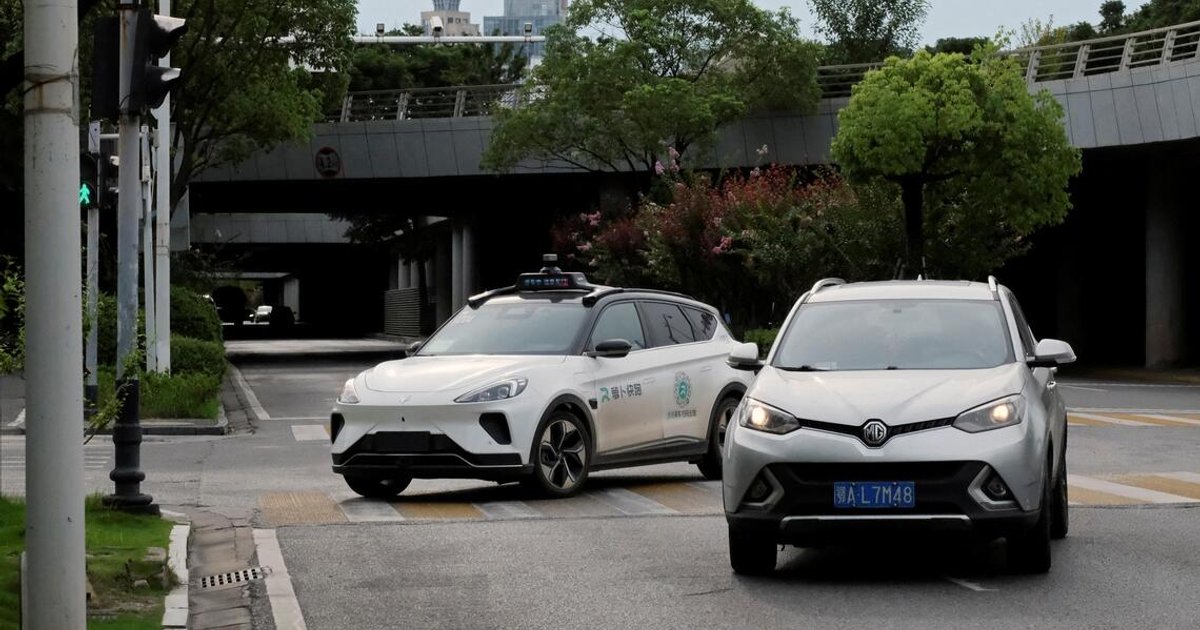
China’s Baidu launched Apollo World on Nov.
3 to train its robotaxis in virtual road environments.
The system can create difficult, rare hazards, such as a cyclist running a red light or an animal suddenly entering traffic, without putting people at risk in real-world tests.
Baidu says it can generate up to 100,000km of simulated driving daily, about three years of testing with a safety driver.
It provides simulated camera and lidar data so self-driving systems can practise sensing and navigating.
Apollo Go is already using the simulator to train its robotaxi fleet, which Baidu plans to operate globally.
The launch comes as companies compete to develop self-driving vehicles, a process that remains expensive.
The simulator could help Baidu prepare its vehicles for new environments, while cutting the need for some real-world testing.

Baidu launched Apollo World, an AI system that simulates road environments to train robotaxis.
The system can generate up to 100,000km of simulated driving each day, Baidu said.
It can produce camera and lidar data streams so self-driving systems can sense and navigate simulated environments.
Baidu said Apollo World is being used to train its Apollo Go robotaxi fleet.
The simulator is designed to help prepare robotaxis for rare hazards that are difficult to capture safely in real-world tests.
- Who
- Baidu launched the system for training its Apollo robotaxis.
- What
- Apollo World simulates road environments and driving scenarios for robotaxi training.
- When
- Nov 3, 2026.
- Where
- China. The system is designed to simulate real-world environments.
- Why
- To train robotaxis, including for hazards that are difficult to capture safely in real-world testing, and to help cut the cost of developing autonomous vehicles.
This story does not have two clearly opposing sides.
Baidu launched Apollo World, an AI system for simulating real-world environments to train robotaxis.
Baidu said Apollo World was already being used to train Apollo Go’s robotaxi fleet.
- System
- Apollo World
- Daily simulated driving
- Up to 100,000km
- Equivalent testing time
- About three years of real-world testing by a safety-driver-equipped autonomous vehicle
- Data streams
- Camera and lidar observations
- Robotaxi service
- Apollo Go
- Launch date
- Nov 3, 2026
3 sources
What people are saying
up to 100,000km
They still have the capex of training models... and vehicles, a challenge that every autonomous vehicle company is going to face
The speed at which you can launch comes down to your technology’s ability to adapt and understand and learn (how to drive in) that environment