

Science & Tech · Science & Environment · 4 hrs ago
Glaciers Ending in Lakes Lose Ice Faster, Global Study Finds
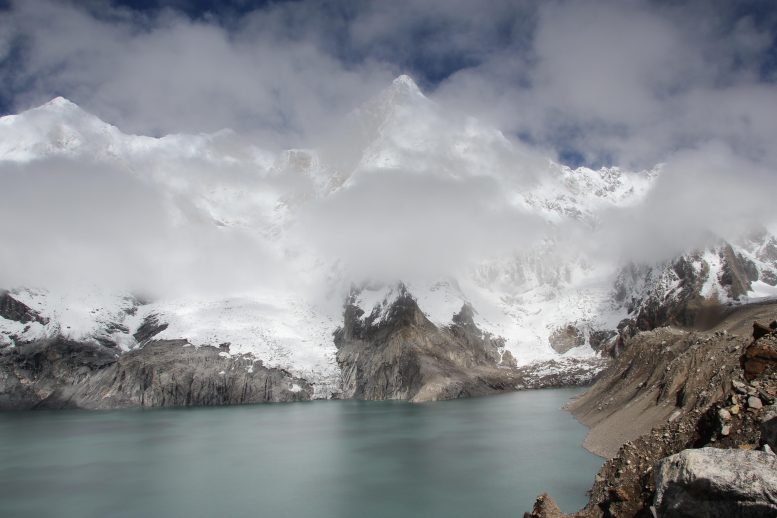
An international research team found that glaciers ending in lakes lose ice faster than glaciers that end on land or at sea.
The study used satellite images from 2000 and 2020 to map lakes that touch glaciers around the world.
The number of glacier-touching lakes grew by about 35%, increasing by more than 3,500 over those two decades.
Glaciers ending in lakes lost an average of 66 centimeters of water equivalent each year, compared with 40 centimeters for land-ending glaciers and 36 for those ending in the sea.
Lake contact adds to glacier loss, as lake water can melt ice and chunks of glacier can break off into the water.
The researchers estimated that glacier features accounted for 46% of the explained influence on ice gains and losses, climate factors for 43%, and lakes for 11%.
The findings could improve forecasts of glacier change and risks from lake outbursts, while helping assess future meltwater supplies in mountain regions and nearby lowlands.

Glaciers ending in lakes lost ice faster on average than glaciers ending on land or in the sea, a global study found.
From 2000 to 2020, lake-ending glaciers lost 66 centimeters of water equivalent annually, compared with 40 centimeters for land-ending glaciers and 36 centimeters for sea-ending glaciers.
The number of lakes in direct contact with glaciers increased by more than 3,500, and their combined area grew by about 600 square kilometers.
Researchers found glacier characteristics accounted for 46 percent of the explained influence on ice gains and losses, climate factors for around 43 percent, and lakes for approximately 11 percent.
The findings could help improve estimates of glacier change and assessments of risks from potential glacial-lake outbursts.
- Who
- An international research team, including Tobias Bolch of TU Graz.
- What
- The team found that glaciers ending in lakes lose ice faster on average than glaciers ending on land or in the sea.
- When
- The study compared conditions in 2000 and 2020. Its findings were published on 20 November 2026.
- Where
- Worldwide, including regions such as Alaska and the southern Andes where lake expansion was particularly pronounced.
- Why
- Lake water can melt glaciers from underneath, and ice can break off into the water. The study examined how lake contact contributes to glacier loss.
This story does not have two clearly opposing sides.
Researchers used satellite images from this year to map glacial lakes and glaciers.
The number of lakes in direct contact with glaciers grew by about 35 percent.
Researchers used satellite images from this year to map glacial lakes and glaciers.
The study was published in Nature Climate Change.
- Average annual loss, lake-ending glaciers
- 66 centimeters of water equivalent
- Average annual loss, land-ending glaciers
- 40 centimeters of water equivalent
- Average annual loss, sea-ending glaciers
- 36 centimeters of water equivalent
- Increase in glacier-contact lakes
- More than 3,500
- Growth in combined lake area
- Around 600 square kilometers
- Estimated lake contribution to explained ice gains and losses
- Approximately 11 percent
What people are saying
Our research has shown that contact with a lake further accelerates the loss of ice from a glacier
While the climate and the topography of the glacier are the most significant factors influencing glacial mass loss, lakes significantly exacerbate it
The findings from this study will help us to estimate future changes to the glaciers more accurately