

Science & Tech · Space · 2 hrs ago
Models suggest some white dwarfs could appear green, pink or cyan
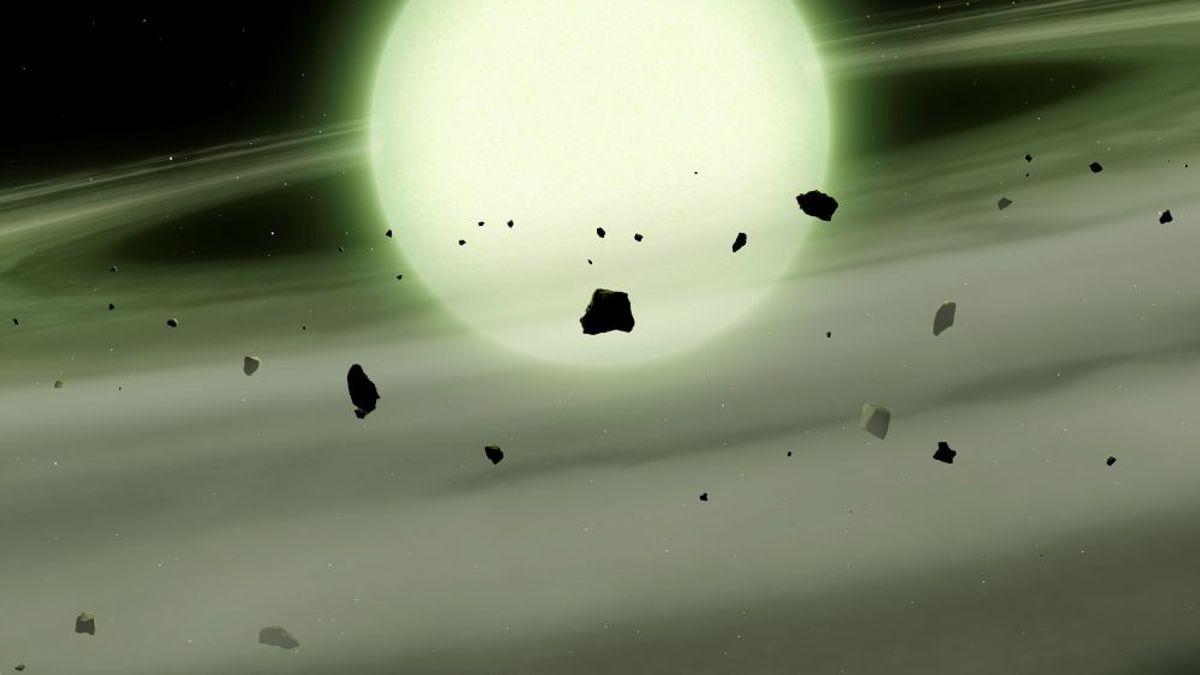
Researchers modeled the colors of white dwarf stars using their light and a model of human vision.
White dwarfs are the dense remains of stars, and the study examined data on them from across the cosmos.
Their density and atmospheric elements can affect their color, alongside temperature.
The models linked carbon-rich atmospheres to pink or purple hues, debris-rich ones to yellow, and some hydrogen-helium mixtures to cyan or pale blue.
One star, WD J1330+6435, appeared chartreuse green in the team’s model because its atmosphere is rich in lithium, sodium and calcium.
The color is a model result, not a direct view: no white dwarf is close enough to Earth to be seen with the human eye, and the team calculated how its light might appear from nearby.

Models suggest some white dwarfs could appear in unexpected colors, including green, pink, purple, yellow and cyan.
The study found that a white dwarf’s density, temperature and atmospheric composition can affect its apparent color.
Researchers used star spectra and a model of human color vision to estimate how the stars might look to people.
The team was most surprised by WD J1330+6435, which appeared chartreuse green in the models.
- Who
- A research team led by Mark Hollands, a University of Warwick astronomy researcher.
- What
- The team modeled the apparent colors of white dwarfs and found some could appear green, pink, purple, yellow or cyan.
- When
- The study was published in RAS Techniques and Instruments. The publication date is not stated in the article text.
- Where
- Not stated
- Why
- The researchers examined how white dwarfs’ temperature, density and atmospheric composition can affect their colors.
This story does not have two clearly opposing sides.
The team examined routinely collected data, including the stars’ spectra.
The researchers applied a model of human color vision to estimate how the stars would appear.
The team found distinct color groups and modeled WD J1330+6435 as chartreuse green.
- Journal
- RAS Techniques and Instruments
- Study lead
- Mark Hollands
- Green candidate
- WD J1330+6435
- Green appearance
- Chartreuse green in the team’s models
- Cool white dwarf density
- About 1 gram per cubic centimeter
1 source
What people are saying
Most stars, including most white dwarfs, behave like ‘perfect radiators,’ so their [color] is set almost entirely by temperature. But nobody had really looked into what else might be possible for white dwarfs
It turns out these incredibly dense stars can produce [colors] nobody expected, and some of them genuinely surprised me