

Business · Energy & Commodities · 2 hrs ago
US Builds About 10% of the Power Lines Needed to Meet Demand
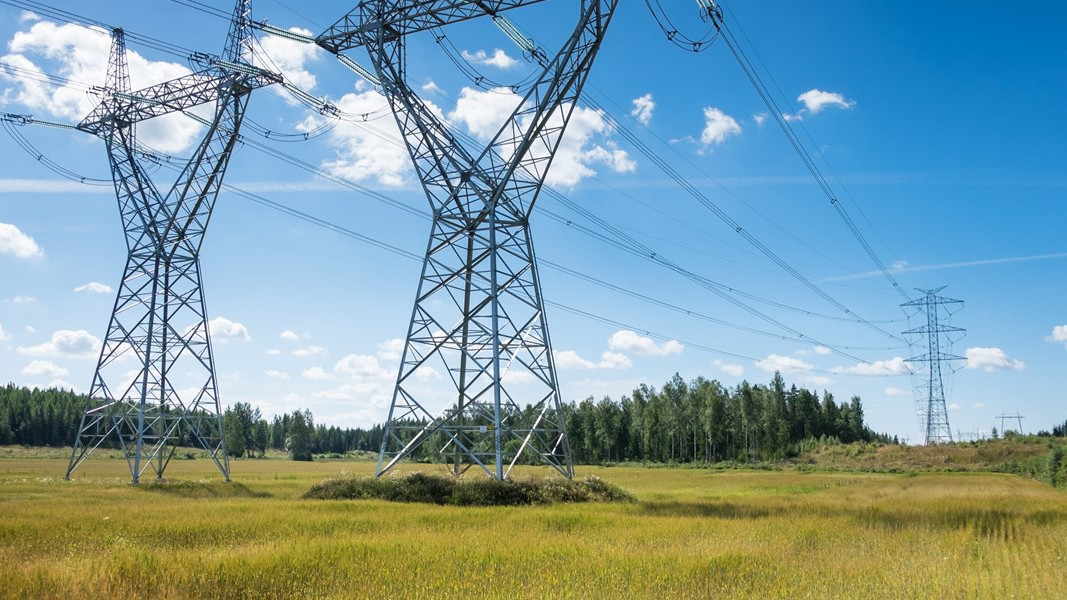
The US built about 500 miles of high-voltage lines a year over the past five years, while researchers say it needs 5,000 miles a year to expand the grid by 2050.
Demand for electricity is rising with the growth of AI and data centers, industry and electrification.
Researchers from Carnegie Mellon University and the University of California San Diego say the main obstacle is fragmented approval processes involving states, local authorities and utilities.
They say this grid bottleneck could weaken grid resilience, economic competitiveness and energy affordability.
Their proposals include making better use of existing rules and technology, testing new approaches and creating a presidential-congressional commission to develop a new framework.
Separately, Johns Hopkins researchers warn that shortages of grid equipment and materials could begin as early as next year, with acute shortages by 2030.
The proposals aim to make it easier to build transmission lines, but the sources do not say whether officials will adopt them.

The continental United States has built about 500 miles of high-voltage transmission lines per year over the past five years, about 10% of the 5,000 miles per year researchers say it needs.
The researchers say the transmission shortfall risks weakening grid resilience, the economy, competitiveness and energy affordability.
A paper by researchers from Carnegie Mellon University and the University of California San Diego says fragmented regulatory processes are a fundamental obstacle to expanding the grid.
The paper proposes making better use of existing regulatory and technology options, learning from experimentation and international examples, and creating a Presidential-Congressional commission.
A separate Johns Hopkins University study warns that shortages of grid equipment and materials could worsen as electricity demand rises.
- Who
- Researchers from Carnegie Mellon University and the University of California San Diego, as well as researchers from Johns Hopkins University.
- What
- The United States is building transmission lines far more slowly than researchers say it needs to meet future electricity demand.
- When
- The article was published on November 28, 2026; the transmission build rate covers the past five years.
- Where
- The continental United States.
- Why
- Electricity demand is surging, while transmission expansion is held back by fragmented regulatory processes and potential supply constraints.
This story does not have two clearly opposing sides.
The continental United States built about 500 miles of high-voltage transmission lines per year.
Researchers published a paper on the power transmission crisis in the journal Science.
- Annual transmission construction
- About 500 miles per year over the past five years
- Researchers' stated annual need
- 5,000 miles of new transmission capacity
- Grid expansion goal
- Triple the interregional grid by 2050
- Potential equipment shortages
- Could begin as early as next year, with acute shortages by 2030
- Data center power demand
- Goldman Sachs Research expects global demand to rise 170% between 2025 and 2030
What people are saying
As it stands, we have a system with lots of veto points and weak incentives to build the projects that deliver the greatest value across regions
Utilities are generally rewarded for investments inside their own service territories. Once a line crosses utility or state boundaries, more players get involved, approvals become more complicated, and fights break out over who pays and who benefits.
When the demand for electricity started to grow faster than expected, it started to amplify all the cracks in the industry
Power is probably the forever bottleneck