

World · Africa · 4 hrs ago
Tunisia’s journalists face growing legal pressure as press freedom erodes
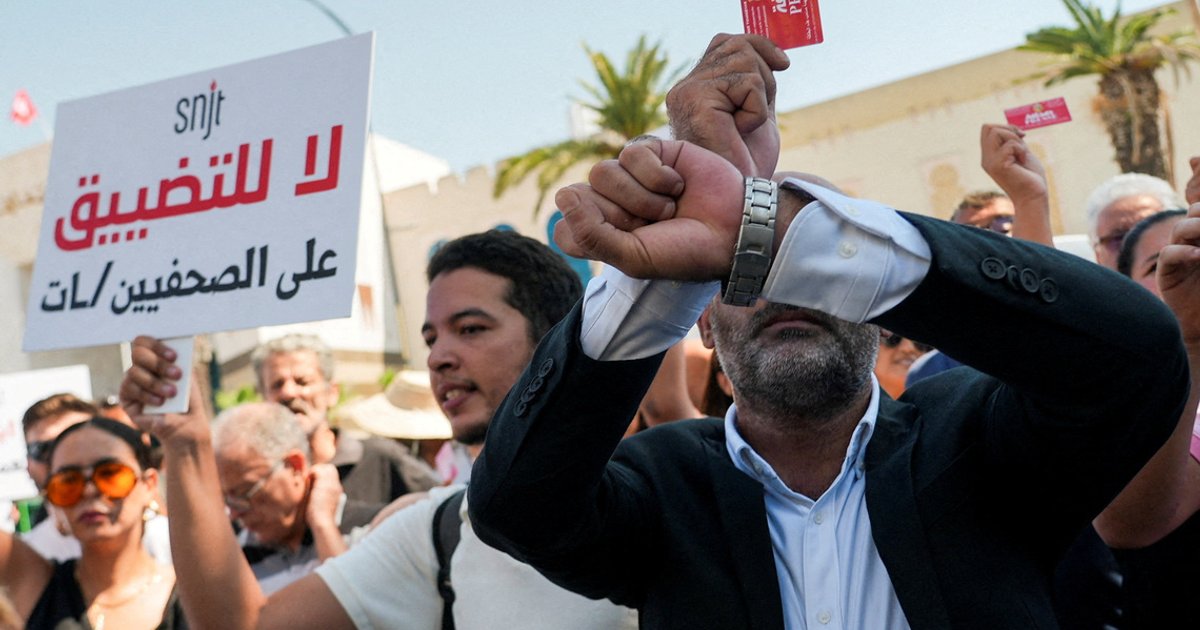
Journalists in Tunisia face growing legal pressure as authorities prosecute some over their reporting and social media posts.
The crackdown follows a period of greater media freedom after the 2011 overthrow of President Zine El-Abidine Ben Ali.
About 20 journalists face criminal charges, and four are imprisoned, according to the head of the journalists’ syndicate.
President Kais Saied says journalists are free to criticize the authorities, while officials describe prosecutions as impartial judicial matters.
Rights groups say prosecutions are being used to intimidate critics, while journalists also report police restrictions, detentions and limits on media coverage.
Tunisia has fallen to 137th in Reporters Without Borders’ press freedom index, more than 50 places lower than five years ago.
Some journalists have left Tunisia to avoid arrest, and the pressure on independent reporting continues.

Tunisia’s independent media face growing legal pressure, with journalists saying their reporting may lead to prosecution or imprisonment.
About 20 journalists face criminal charges over reporting or social media posts, and four are already imprisoned, according to the head of the journalists’ syndicate.
Tunisia has fallen more than 50 places in five years to 137th in Reporters Without Borders’ press freedom index.
Authorities say prosecutions are impartial judicial matters, while press freedom groups argue they are increasingly used to intimidate and silence critical voices.
Some journalists have left the country, while others report restrictions on their work and reduced access to public information.
- Who
- Tunisian journalists and independent media are facing legal and other pressures.
- What
- Journalists face criminal charges, imprisonment and restrictions on reporting.
- When
- The article was published on October 14, 2026; it describes a decline in press freedom over recent years.
- Where
- Tunisia.
- Why
- Press freedom groups say prosecutions are increasingly used to intimidate and silence critical voices. Authorities say cases are impartial judicial matters.
Tunisian authorities
Journalists and press freedom groups
Prosecutions
Tunisian authorities
Authorities say prosecutions are impartial judicial matters and that no one is above the law.
Journalists and press freedom groups
Press freedom groups argue prosecutions are increasingly used to intimidate and silence critical voices.
Freedom to criticize
Tunisian authorities
President Kais Saied says he is not a dictator and that journalists are free to criticize authorities.
Journalists and press freedom groups
Journalists describe uncertainty and fear that their work may lead to prosecution or imprisonment.
The overthrow of Zine El-Abidine Ben Ali ushered in a period of greater press freedom.
President Kais Saied’s seizure of sweeping powers began eroding those gains.
Khaoula Boukrim left Tunisia for France, fearing imminent arrest.
Boukrim was sentenced in absentia to four years in prison over her writings.
Mohamed Yousfi was arrested on his way to a live radio programme and charged with illicit enrichment.
- Press freedom ranking
- 137th in Reporters Without Borders’ index
- Journalists facing criminal charges
- About 20
- Journalists already imprisoned
- 4
- Khaoula Boukrim’s sentence
- Four years in prison, in absentia
- Nawaat suspension
- Government order suspended activities for one month last year
What people are saying
We are living in a grey area, as if we were in a shifting minefield, and we pay the price every day