

Science & Tech · Science & Environment · 7 hrs ago
New Mexico fossils suggest dinosaurs ate grape-sized fruits
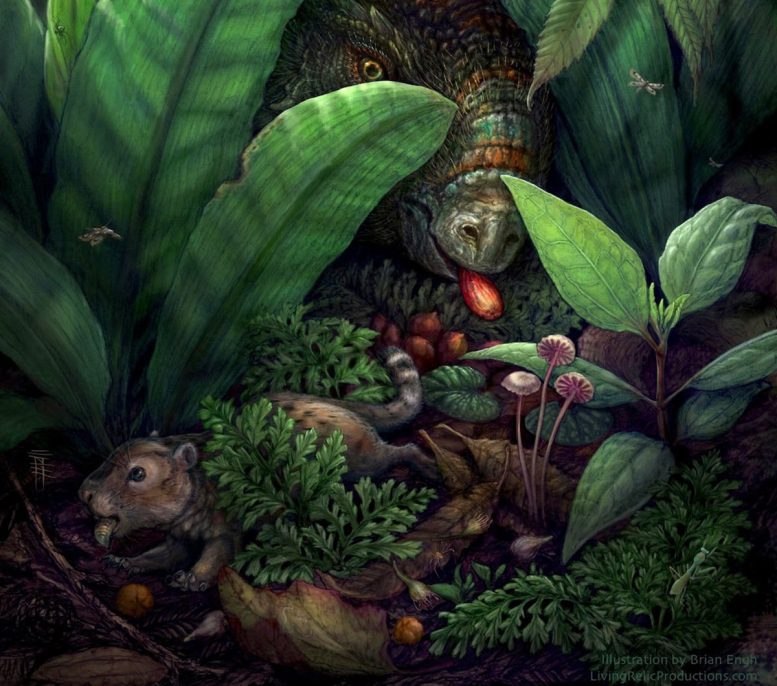
Fossils from a 74-million-year-old forest in New Mexico show that some flowering plants produced fruits about the size of modern grapes.
The forest was buried in volcanic ash, which preserved plants and their arrangement across the landscape.
Flowering plants appeared around 136 million years ago, but scientists had thought their early fruits and seeds were generally small and spread mainly by wind.
The new fossils suggest larger, fleshy fruits existed well before the extinction that ended the age of non-avian dinosaurs 66 million years ago.
Animals, including dinosaurs, may have eaten the fruits and helped spread the plants’ seeds.
This challenges the idea that complex seed dispersal evolved mostly after the extinction and changes how researchers understand flowering plants’ early ecology.

Fossils from a 74-million-year-old forest in New Mexico suggest some flowering plants produced fruits as large as modern grapes.
The findings challenge the view that large fruits and complex seed dispersal evolved mainly after the extinction of non-avian dinosaurs.
Researchers say prehistoric animals may have helped spread flowering-plant seeds earlier than previously thought.
The fossil forest near Truth or Consequences was preserved in volcanic ash and retains evidence of plants in their original landscape arrangement.
- Who
- Researchers studying plant fossils, including James Saulsbury of the University of Kansas Biodiversity Institute and Natural History Museum.
- What
- Fossils suggest flowering plants produced grape-sized fruits about 74 million years ago, earlier than previously thought.
- When
- About 74 million years ago; the study’s publication date is 2026-11-10.
- Where
- A fossil forest near Truth or Consequences, New Mexico.
- Why
- The findings challenge the view that larger fruits and more complex seed dispersal evolved mainly after the end-Cretaceous extinction.
Prevailing view
Study researchers
Fruit size and dispersal
Prevailing view
Flowering plants’ seeds and dispersal structures remained small and were mainly dispersed by wind or other non-animal means for much of the Cretaceous.
Study researchers
The New Mexico fossils suggest some flowering plants produced grape-sized fruits and that the transition to more diverse reproductive ecology began earlier.
Timing of complex reproductive ecology
Prevailing view
More diverse reproductive ecology emerged only after the end-Cretaceous extinction.
Study researchers
The study suggests this transition began much earlier.
Flowering plants first appeared.
The New Mexico forest was preserved, retaining fossils of plants that lived there.
An asteroid impact ended the age of non-avian dinosaurs.
SciTechDaily reported on the findings published in the journal Science.
- Age of fossil forest
- About 74 million years
- Location
- Near Truth or Consequences, New Mexico
- Largest fossil fruits
- About the size of a modern grape
- Forest deposit
- More than 1 kilometer long
- Journal
- Science
What people are saying
These fossils change how we understand the way flowering plants became modern in terms of their reproductive ecology.
The largest fruits in our fossil flora are about the size of a grape.