

Business · Economy · 53 mins ago
Saudi Arabia shifts to tighter spending as economic pressures grow
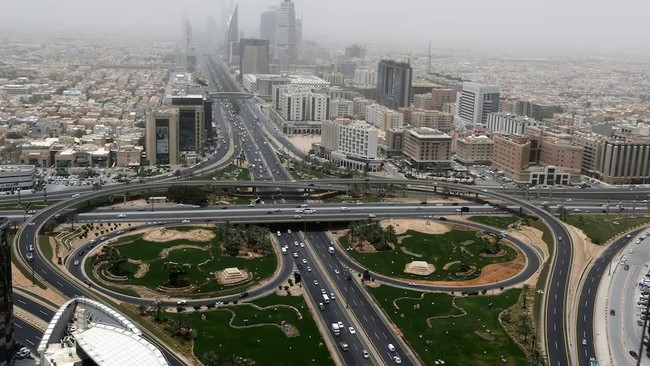
Saudi Arabia is tightening government spending as economic pressures and regional conflict weigh on the country.
The shift affects Vision 2030, its plan to reduce dependence on oil, and projects funded by the Public Investment Fund.
The government is reviewing NEOM and The Line, withdrawing funding from LIV Golf, stopping a planned Riyadh skyscraper and postponing the 2029 Asian Winter Games.
The economy contracted 3.8% in the third quarter, while oil activity fell 20.4% from a year earlier.
The government says the economy may shrink 2.1% this year before growing next year, but Oxford Economics forecasts a 3.4% contraction this year and a further 4% decline in 2027 if attacks on energy infrastructure continue.
The attacks, attributed to Yemen's Houthi militants, have also raised concerns about damage to investor and tourist confidence.
Saudi Arabia plans to focus spending on essential services and strategic priorities, while seeking more private-sector investment.

Saudi Arabia is shifting to tighter, more selective spending as economic and geopolitical pressures grow.
Economy Minister Faisal Alibrahim said the government is moving from spending at any cost to spending at the right cost.
The kingdom is reviewing or scaling back major projects, including NEOM and The Line, and delaying the 2029 Asian Winter Games.
Saudi Arabia’s real GDP contracted 3.8% in the third quarter, while oil-sector activity fell 20.4% year on year.
The Saudi Finance Ministry expects the economy to shrink 2.1% this year, while Oxford Economics forecasts a 3.4% contraction.
- Who
- The Saudi government, led on economic policy by Economy Minister Faisal Alibrahim, is changing its spending approach.
- What
- Saudi Arabia is tightening and prioritizing spending and reviewing major projects.
- When
- The shift was reported on November 29, 2026.
- Where
- Saudi Arabia.
- Why
- Economic pressures and regional conflict have made the fiscal outlook more challenging and prompted a reassessment of spending.
Saudi Finance Ministry
Oxford Economics
Economic outlook
Saudi Finance Ministry
It expects the Saudi economy to shrink 2.1% this year before growing 10.9% next year.
Oxford Economics
It forecasts a 3.4% contraction this year and a 4% contraction in 2027 if attacks on energy infrastructure continue.
Saudi Arabia launched its Vision 2030 plan to reduce reliance on oil.
Net foreign direct investment inflows fell 19.5% year on year.
Real GDP contracted 3.8%, and oil-sector activity fell 20.4% year on year.
Saudi Arabia cancelled its global investor conference, known as Davos in the Desert.
The Asian Winter Games, originally planned for Trojena, were postponed.
- Real GDP
- Contracted 3.8% in the third quarter
- Oil-sector activity
- Fell 20.4% year on year in the third quarter
- Net FDI inflows
- Fell 19.5% year on year in the second quarter
- Saudi Finance Ministry forecast
- 2.1% economic contraction this year; 10.9% growth next year
- Oxford Economics forecast
- 3.4% contraction this year and 4% in 2027 if energy infrastructure attacks continue
- Minimum effective tax rate
- 15% on multinational companies’ profits
What people are saying
The phase we are going through now is one in which every riyal is deployed with greater precision
The human toll of this crisis is real, as are its economic costs
The government is managing fiscal pressures and shifting budget spending toward essential services and strategic priorities, while the PIF is becoming more selective in its capital allocation and seeking greater private-sector participation
The economic impact is not only about physical damage, but also tests investor and tourist confidence in Saudi Arabia as a destination for tourism, entertainment and sports, which are the backbone of Vision 2030