

Science & Tech · Science & Environment · 1 hr ago
NIST demonstrates two-laser chip for precise optical signals
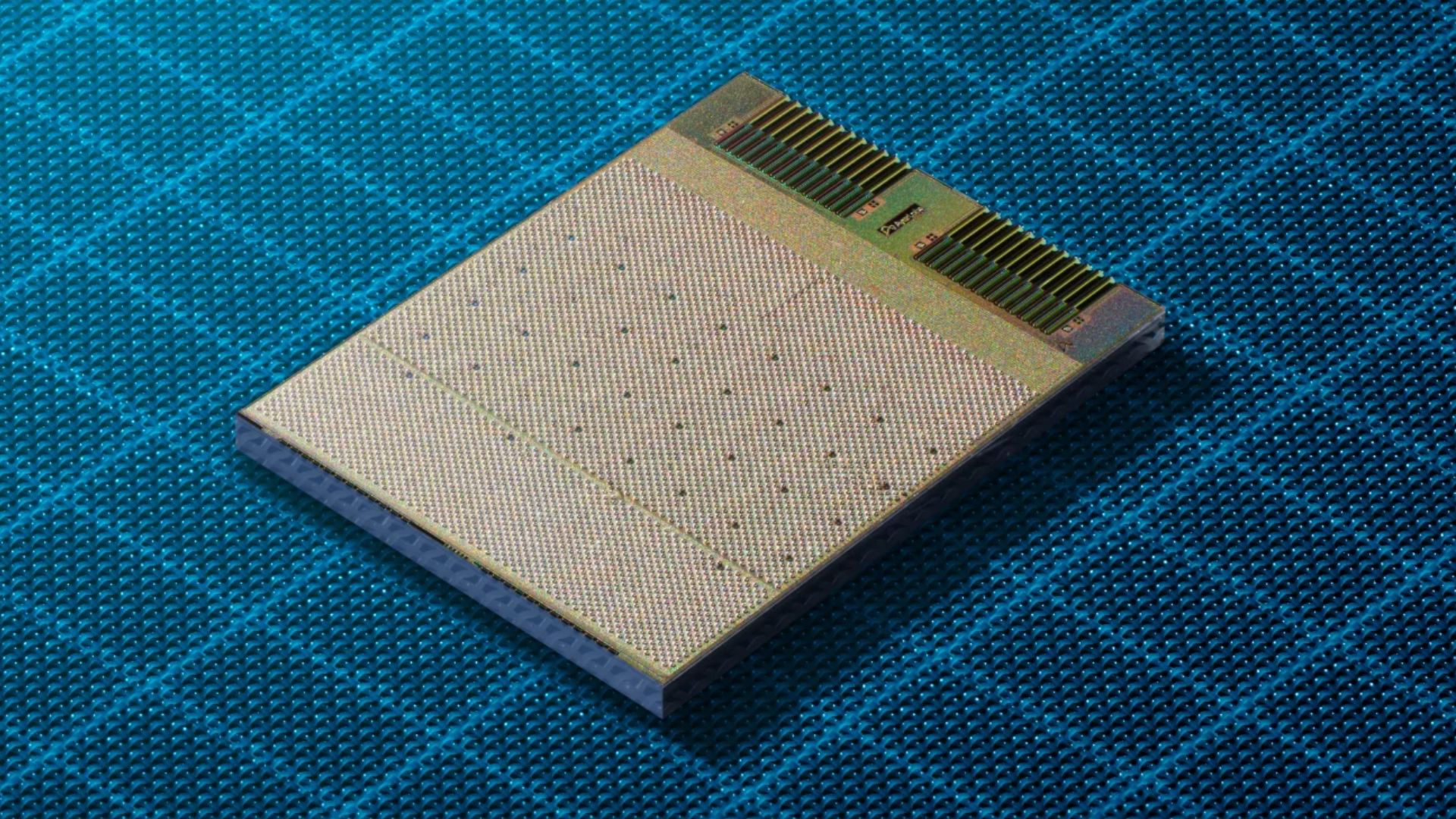
NIST researchers demonstrated a tiny chip that uses two lasers to produce precise light signals.
The device sends light through a ring-shaped structure, where it creates a series of evenly spaced frequencies used as measurement references.
These signals are part of optical frequency combs, which help optical atomic clocks measure time with great accuracy.
The two-laser design avoids bulky stabilization equipment used in some earlier approaches.
Smaller clocks could eventually provide timing for drones, submarines and other vehicles when GPS is blocked or jammed.
The demonstration is only one component, not a complete portable clock or a working GPS-free navigation system.
Researchers must still develop practical instruments that meet the size, power and reliability needs of vehicles.

Researchers at the National Institute of Standards and Technology demonstrated a chip-based optical frequency comb that uses two lasers to generate precise light signals.
The device sends light from both lasers through a tiny ring-shaped microresonator, producing evenly spaced optical frequencies.
The approach generates high-quality signals without bulky stabilization equipment required by some earlier designs.
The demonstration covers a frequency-comb component, not a complete portable optical atomic clock or navigation system.
Compact optical clocks could eventually support navigation when GPS signals are unavailable or jammed.
- Who
- Researchers at the National Institute of Standards and Technology, working with colleagues at the Joint Quantum Institute.
- What
- They demonstrated a chip-based optical frequency comb that uses two lasers to generate precise light signals.
- When
- The article was published on October 17, 2026; the demonstration date is not stated.
- Where
- At the National Institute of Standards and Technology; the specific location of the demonstration is not stated.
- Why
- To generate high-quality frequency-comb signals without bulky stabilization equipment, a challenge for making optical clocks more compact.
This story does not have two clearly opposing sides.
This story does not have a timeline yet.
- Lasers used
- Two
- Optical structure
- A tiny ring-shaped microresonator
- Chip fabrication
- Chips contained as many as 300 ring-shaped resonators
- Research partners
- National Institute of Standards and Technology and Joint Quantum Institute
- Publication date
- October 17, 2026