

Business · Economy · 15 hrs ago
OECD says Madrid's housing supply is falling behind population growth
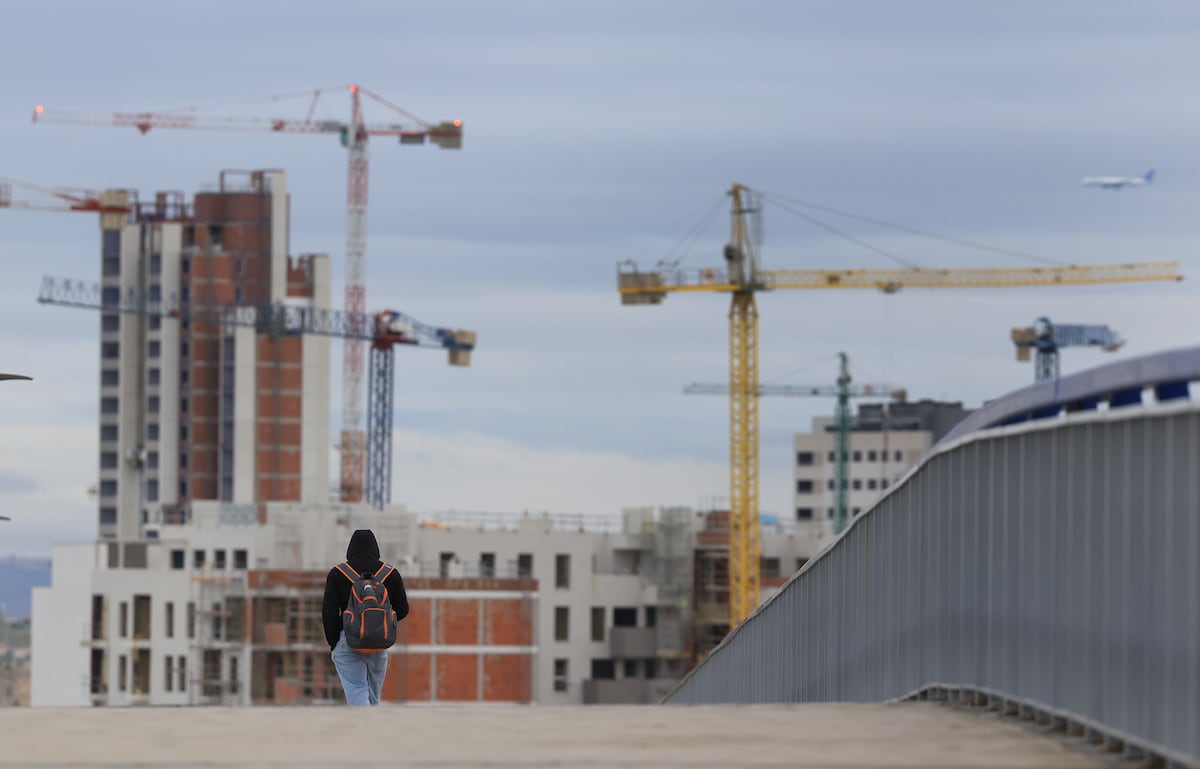
The OECD says Madrid has a particularly sharp gap between population growth and new housing construction.
The Spanish capital is named alongside Lisbon as an example of a wider problem in developed countries, where housing supply is not keeping pace with demand.
Across large metropolitan areas, each new home has had to accommodate an average of 1.8 additional residents, compared with 1.2 in medium-sized cities and 0.6 in small ones.
The OECD estimates that prices in Madrid's urban centre are 24.9% above the national average, close to the 27% average across the 23 countries studied.
High prices in city centres reflect the concentration of jobs, education and other opportunities, as well as limits on construction such as scarce land, regulation and local opposition.
The gap between housing supply and demand worsens affordability, especially in large cities where many people move for work or study.
The report does not give specific figures for Madrid on homes built or housing costs relative to incomes.

The OECD says Madrid is among the cities where housing supply has lagged furthest behind population growth.
The report identifies Madrid and Lisbon as examples of especially pronounced imbalances between population and housing.
Across large metropolitan areas, each new home has had to accommodate an average of 1.8 additional residents.
The OECD says housing prices in central Madrid are about 24.9% above the national average.
It attributes urban housing pressure to population and economic activity concentrating in cities, while new construction struggles to keep pace.
- Who
- The OECD reported the findings.
- What
- Its report says Madrid’s housing supply has fallen behind population growth, contributing to housing pressure.
- When
- The report was published on Wednesday, 4 November 2026.
- Where
- Madrid, Spain; the report also identifies Lisbon as an example of a pronounced imbalance.
- Why
- The OECD says large cities attract people and economic activity, while housing construction struggles to keep pace with population growth.
This story does not have two clearly opposing sides.
This story does not have a timeline yet.
- Madrid housing-price gap
- 24.9% above the national average
- Residents per new home
- 1.8 in large metropolitan areas, on average
- Comparison
- 1.2 additional residents per new home in medium-sized cities; 0.6 in small cities
- Countries affected
- The population-to-housing imbalance appears in 17 countries
- Other city cited
- Lisbon, Portugal
2 sources
What people are saying
The imbalance is particularly pronounced in cities that have recorded strong price increases in recent years, including Lisbon and Madrid
Housing pressures are greater in large urban agglomerations, where homes are less affordable, there are fewer vacant homes, and housing supply struggles to keep pace with population growth