

Science & Tech · Space · 1 day ago
Astronomers detect the most distant known fast radio burst
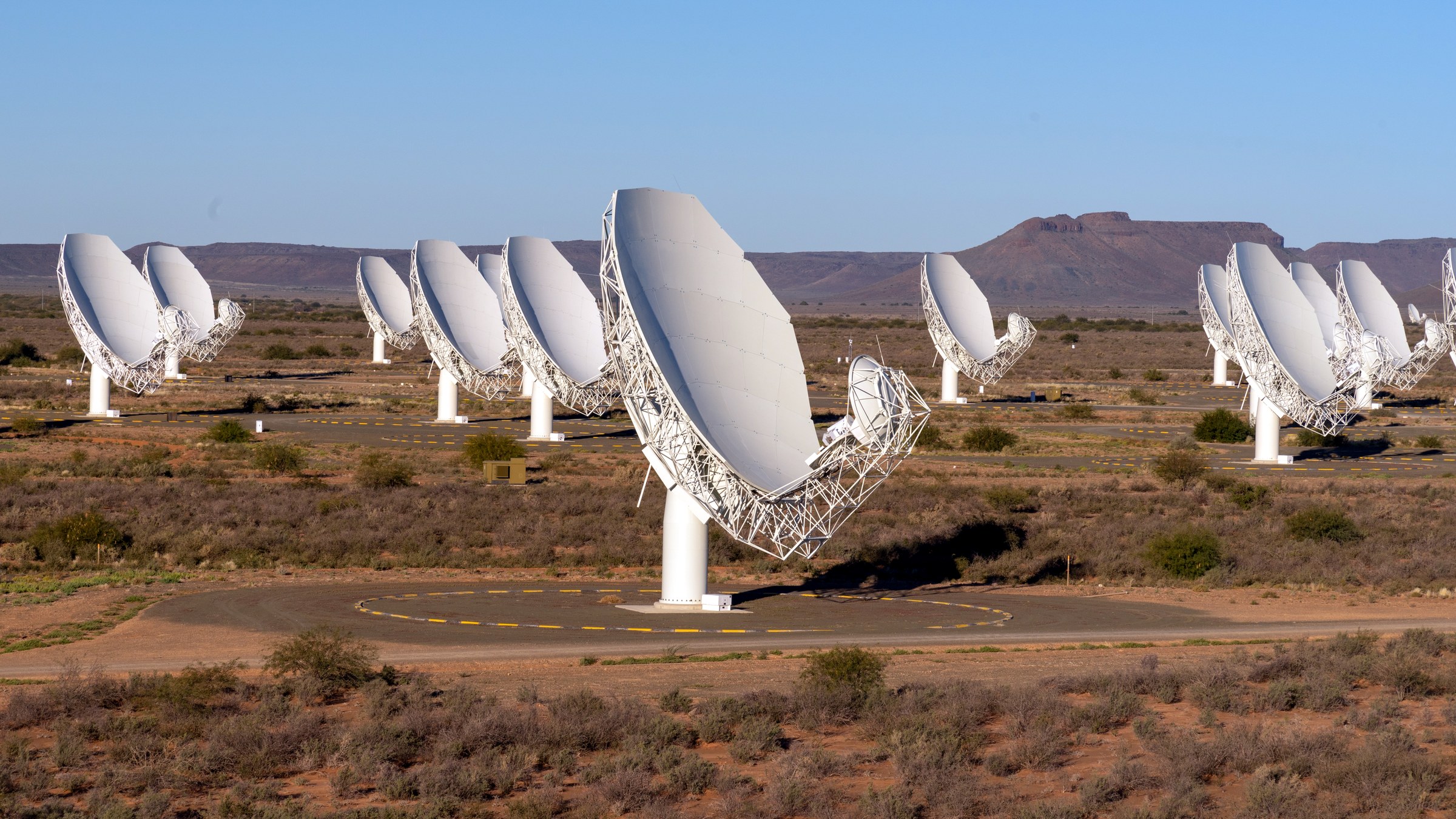
Astronomers detected a brief radio flash called FRB 20240304B, the most distant fast radio burst with an identified host galaxy.
The signal was picked up by the MeerKAT radio telescope in South Africa and had travelled for more than 10 billion years.
It left its galaxy when the universe was about three billion years old, long before Earth formed.
Fast radio bursts last only milliseconds, and their precise causes remain unknown.
The James Webb Space Telescope found the burst’s faint host galaxy, which ground-based telescopes had not been able to see.
The galaxy is small and appears to have formed stars rapidly, supporting the idea that a magnetar may have caused the burst, though this is not proof.
Researchers will need more distant bursts to test that explanation and learn how common such galaxies are.

Astronomers detected FRB 20240304B, the most distant fast radio burst with an identified host galaxy.
The burst travelled for more than 10 billion years from a time when the universe was about 3 billion years old.
The MeerKAT radio telescope in South Africa detected the millisecond-long signal, and the James Webb Space Telescope helped identify its faint host galaxy.
The host is a small, faint galaxy whose properties may support the idea that the burst came from a magnetar, but the source of fast radio bursts remains unproven.
The findings were published in Science on October 8, 2026.
- Who
- An international team of astronomers led by Manisha Caleb of the University of Sydney.
- What
- They detected FRB 20240304B, the most distant fast radio burst with an identified host galaxy.
- When
- The burst was detected on March 4, 2024. The research was published on October 8, 2026.
- Where
- MeerKAT, in South Africa’s Karoo region, detected the burst; the host galaxy was identified using the James Webb Space Telescope.
- Why
- The detection extends the known range of fast radio bursts and may offer clues about their origins.
Magnetar explanation
Neutron-star merger explanation
Likely origin
Magnetar explanation
The young, actively star-forming host galaxy supports a magnetar origin, according to the researchers.
Neutron-star merger explanation
A merger origin is considered less likely because neutron-star mergers can take billions of years.
Evidence
Magnetar explanation
The galaxy’s rapid star formation and low levels of heavier elements may favor the formation of magnetars.
Neutron-star merger explanation
The burst’s host galaxy leaves little room for the long delay expected before some neutron-star mergers.
Certainty
Magnetar explanation
The researchers say the magnetar explanation is not proven, and not all bursts necessarily share one origin.
Neutron-star merger explanation
The article says the merger explanation is less likely for this burst, not ruled out for all fast radio bursts.
MeerKAT detected the fast radio burst FRB 20240304B.
The discovery was first presented at a conference in Montreal.
The study was published in Science.
- Burst name
- FRB 20240304B
- Redshift
- 2.148
- Look-back time
- More than 10 billion years
- Detection instrument
- MeerKAT, a radio telescope made up of 64 antennas in South Africa’s Karoo region
- Host galaxy identification
- James Webb Space Telescope
- Previous record
- The new burst’s redshift is more than twice that of the previous record holder, at about 1.016
3 sources
What people are saying
This is an unparalleled observation of the distant universe.
We do not know what generates fast radio bursts.
This host galaxy stands out in the whole sample of galaxies we have. And it was completely different from what we expected.
Every large collection starts with just one specimen.