

Science & Tech · Space · 3 hrs ago
Europe’s GOCE satellite fell to Earth after mapping gravity for four years
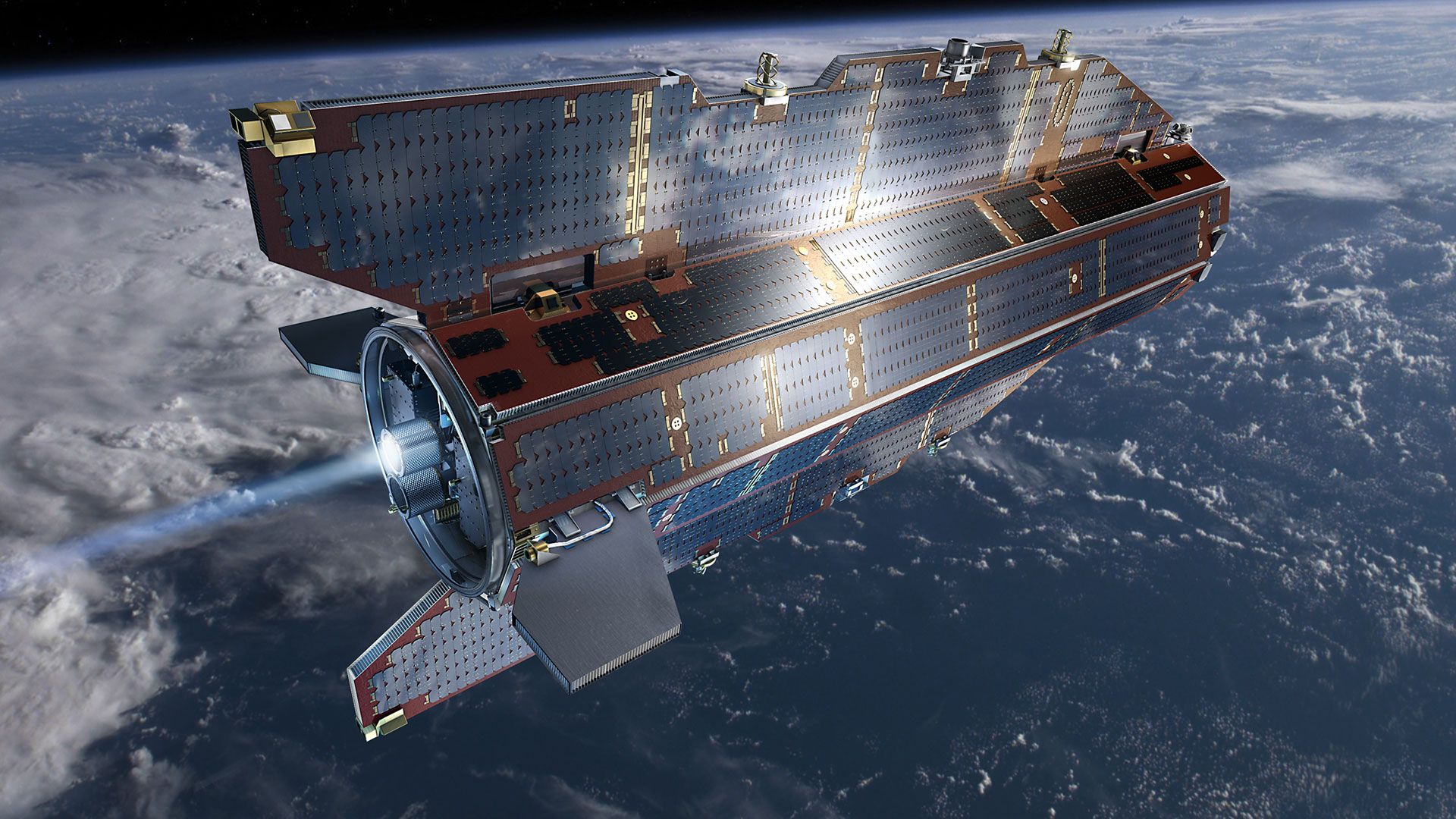
The European Space Agency’s GOCE satellite fell back to Earth in 2013 after four years in orbit.
Launched in 2009, it was designed to map Earth’s gravitational field and study ocean currents.
GOCE flew unusually close to Earth, at about 139 miles (224 kilometres) above the surface, and used an ion engine to stay in orbit.
Its maps revealed small differences in gravity and helped scientists study the planet’s crust and mantle.
When the satellite ran out of fuel, it could no longer maintain its orbit and began to fall.
It broke up about 50 miles above the Falkland Islands in the South Atlantic, causing no property damage.
The European Space Agency called the mission a success, and no further event is described.

Europe’s GOCE satellite fell back to Earth on Nov. 10, 2013, after four years mapping the planet’s gravity.
The satellite ran out of fuel and could no longer maintain its low orbit.
It disintegrated about 50 miles above the Falkland Islands in the South Atlantic Ocean.
The breakup caused no property damage.
The European Space Agency called the mission a success, citing its work on gravity, Earth’s crust and mantle, and ocean currents.
- Who
- Europe’s GOCE satellite, the Gravity field and steady-state Ocean Circulation Explorer.
- What
- It fell back to Earth after mapping the planet’s gravity for four years.
- When
- Nov. 10, 2013.
- Where
- It disintegrated about 50 miles above the Falkland Islands in the South Atlantic Ocean.
- Why
- It ran out of fuel and could no longer maintain its orbit.
This story does not have two clearly opposing sides.
GOCE launched on a mission to map Earth’s gravity.
After four years in orbit, GOCE fell back to Earth.
The satellite disintegrated about 50 miles above the Falkland Islands.
- Launch year
- 2009
- Reentry date
- Nov. 10, 2013
- Mission duration
- Four years in orbit
- Breakup location
- About 50 miles above the Falkland Islands, South Atlantic Ocean
- Satellite mass
- 1,100 kilograms
What people are saying
GOCE's sleek, elegant aerodynamic design — responsible for it being dubbed the 'Ferrari of space' — immediately set it apart from most other satellites,