

Politics · India · 3 hrs ago
India’s chief justice reassigns two cases over limits of judges’ rosters
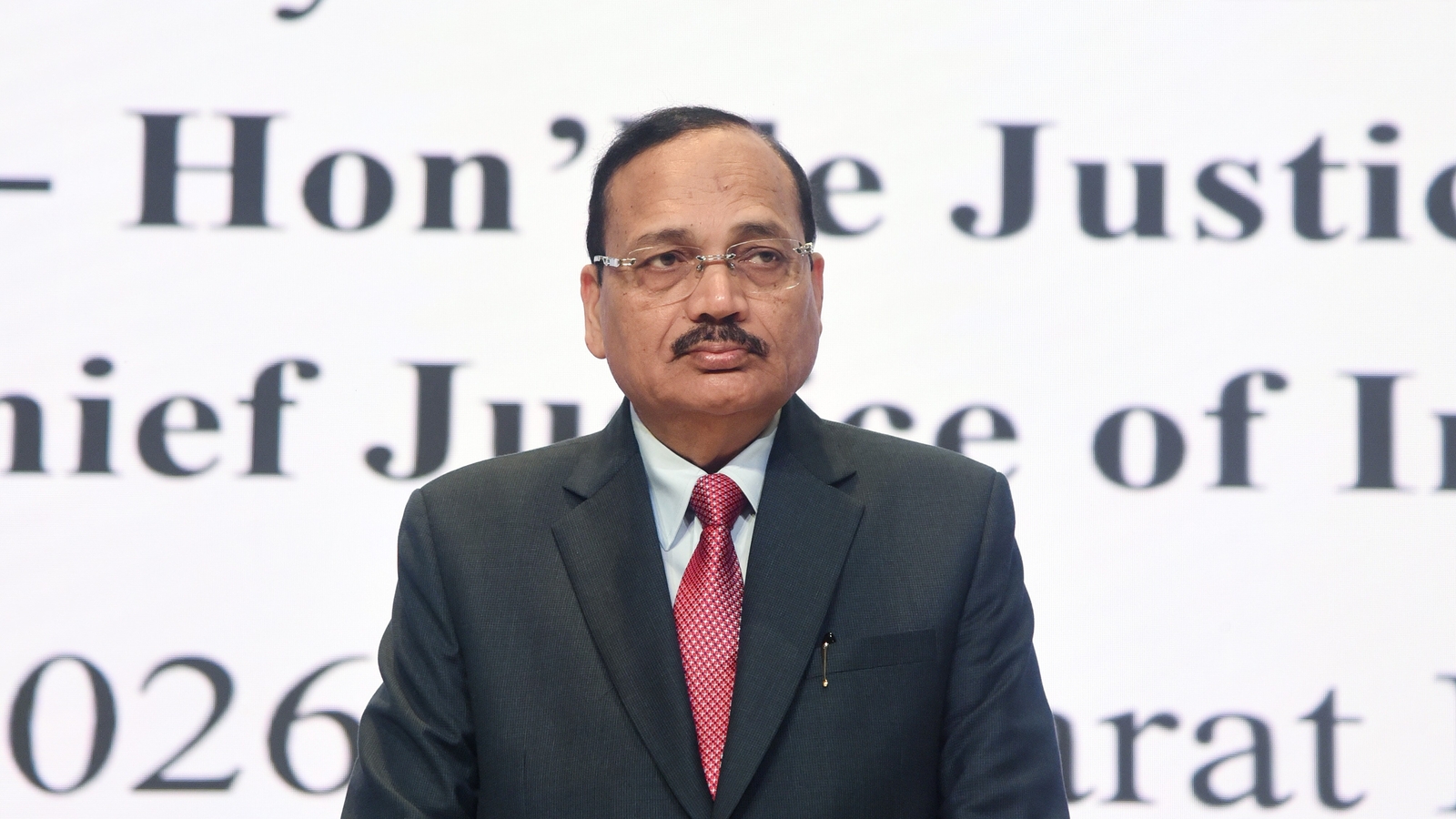
Chief Justice Surya Kant reassigned two cases from a Supreme Court bench led by Justice Ahsanuddin Amanullah.
The cases began as an individual student’s complaint against Amity University and a dispute over building rules in Chennai.
Both cases had grown into nationwide inquiries into private universities and unauthorised construction and commercial use of homes.
The chief justice made the decision after consulting four senior Supreme Court judges.
The move reinforces the rule that judges must follow their assigned rosters, which set out the kinds of cases each bench can hear.
The change is intended to support orderly case allocation, judicial discipline and public confidence in the courts.
The university case is scheduled for November 19, while the property case is expected before a bench headed by Justice BV Nagarathna on November 23.

Chief Justice of India Surya Kant reassigned two cases from a bench headed by Justice Ahsanuddin Amanullah after it expanded individual disputes into nationwide public interest litigations.
The cases concern regulation of private universities and unauthorised construction and commercial use of residential properties.
Kant acted after consulting the Supreme Court’s four most senior judges, according to people cited by Hindustan Times.
Amanullah’s roster does not include public interest litigations, and the move was described as an intervention to enforce roster limits.
The two cases are due to be heard by new benches on November 19 and November 23.
- Who
- Chief Justice of India Surya Kant reassigned two cases from a bench headed by Justice Ahsanuddin Amanullah.
- What
- The cases were moved after the bench expanded individual disputes into nationwide public interest litigation proceedings.
- When
- The decision was reported on November 18, 2026. The new hearings are scheduled for November 19 and November 23.
- Where
- Supreme Court of India.
- Why
- Kant sought to enforce the rule that judges must hear matters assigned to them under the roster.
This story does not have two clearly opposing sides.
Kant told a full court meeting that judges should decide cases in line with their assigned rosters.
The Supreme Court took up the individual case concerning unauthorised construction in Chennai.
Hindustan Times reported that Kant had reassigned the two cases after consulting four senior judges.
The private-universities case is scheduled before a three-judge bench headed by Justice Vikram Nath.
The unauthorised-construction case is expected before a bench headed by Justice BV Nagarathna.
- Cases reassigned
- At least two
- Chief justice
- Surya Kant
- Judge whose bench lost the cases
- Ahsanuddin Amanullah
- Private-universities case hearing
- November 19, 2026
- Construction case hearing
- November 23, 2026
- Consulted senior judges
- Vikram Nath, BV Nagarathna, MM Sundresh and PS Narasimha
1 source
What people are saying
The CJI was categorical in the full court meeting that the judges ought to work as per the roster to keep case allocation orderly, maintain judicial discipline and help preserve public confidence that justice is being administered fairly
As per roster, justice Amanullah does not have PILs as a matter he could examine and therefore, if his bench felt the matter required adjudication as a PIL, it ought to have been referred to the CJI through the court registry for appropriate orders