

Science & Tech · Science & Environment · 2 hrs ago
Moth Study Finds Small Developmental Changes Can Alter Wings
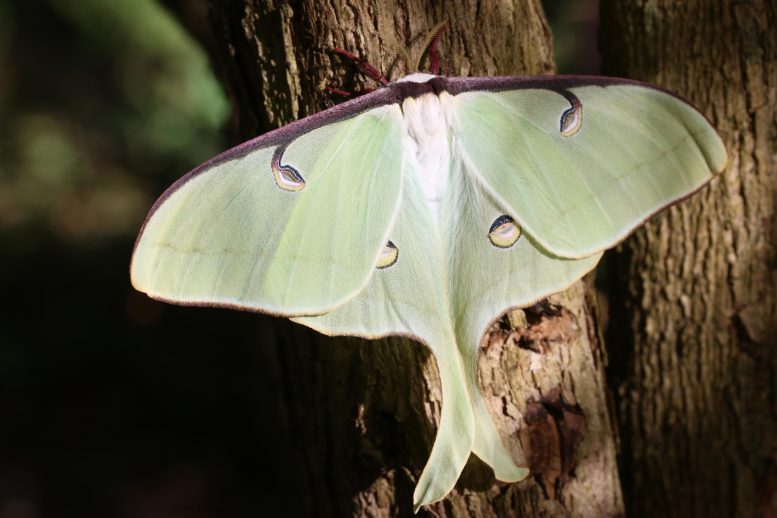
Andrei Sourakov studied more than 700 luna and polyphemus moths over seven years, raising them from eggs to adults.
He treated developing moths with heparin and dextran sulfate, substances that increase activity in Wnt proteins involved in development.
The treatments changed wing shapes and eyespot patterns, including wider luna moth tails and more noticeable markings on both species.
Luna moths use leaf-like wings to avoid predators, while eyespots on some moths can appear threatening when exposed.
The findings suggest small changes in development can reshape existing features, potentially changing how moths defend themselves.
The study also suggests moths and butterflies may have independently used the same type of gene to evolve tails; the findings were published in Evolution & Development.

Andrei Sourakov altered moth wing shapes and patterns by treating developing moths with substances that increase Wnt activity.
The study suggests small changes in developmental signals can make subtle eyespots more conspicuous and alter wing shape.
Over seven years, Sourakov reared more than 700 luna and polyphemus moths from eggs to adulthood.
The findings were published in Evolution & Development.
The work is described as the first experimental alteration of wing shape in Lepidoptera.
- Who
- Andrei Sourakov, a Lepidoptera collection coordinator at the Florida Museum of Natural History and an affiliate associate professor of entomology at the University of Florida.
- What
- He treated developing moths and changed their wing shapes and patterns.
- When
- The study took place over seven years. It was published recently, according to the article.
- Where
- Not stated.
- Why
- Sourakov was trying to change moth wing patterns and investigate how developmental signals affect wing traits.
This story does not have two clearly opposing sides.
Sourakov hand-reared more than 700 luna and polyphemus moths from egg to adulthood while testing developmental treatments.
He tried treatments without producing the changes he sought, and continued adjusting their concentration and timing.
He produced changes in both wing shape and eyespots.
The findings were published in Evolution & Development.
- Moths reared
- More than 700 luna and polyphemus moths
- Study duration
- Over seven years
- Treatments
- Heparin and dextran sulfate
- Species
- Luna moth (Actias luna) and polyphemus moth (Antheraea polyphemus)
- Publication
- Evolution & Development
What people are saying
I kept trying, and eventually, I achieved a single transformation. But it wasn’t of the wing pattern. It was the wing shape. This single specimen was so different that I couldn’t ignore it.
I thought, this is very bizarre. Maybe the genes that are normally responsible for wing patterns are here responsible for wing shape, because that’s seemingly the only thing that was transformed.