

World · Africa · 34 mins ago
Five South African baobabs replanted after illegal export attempt
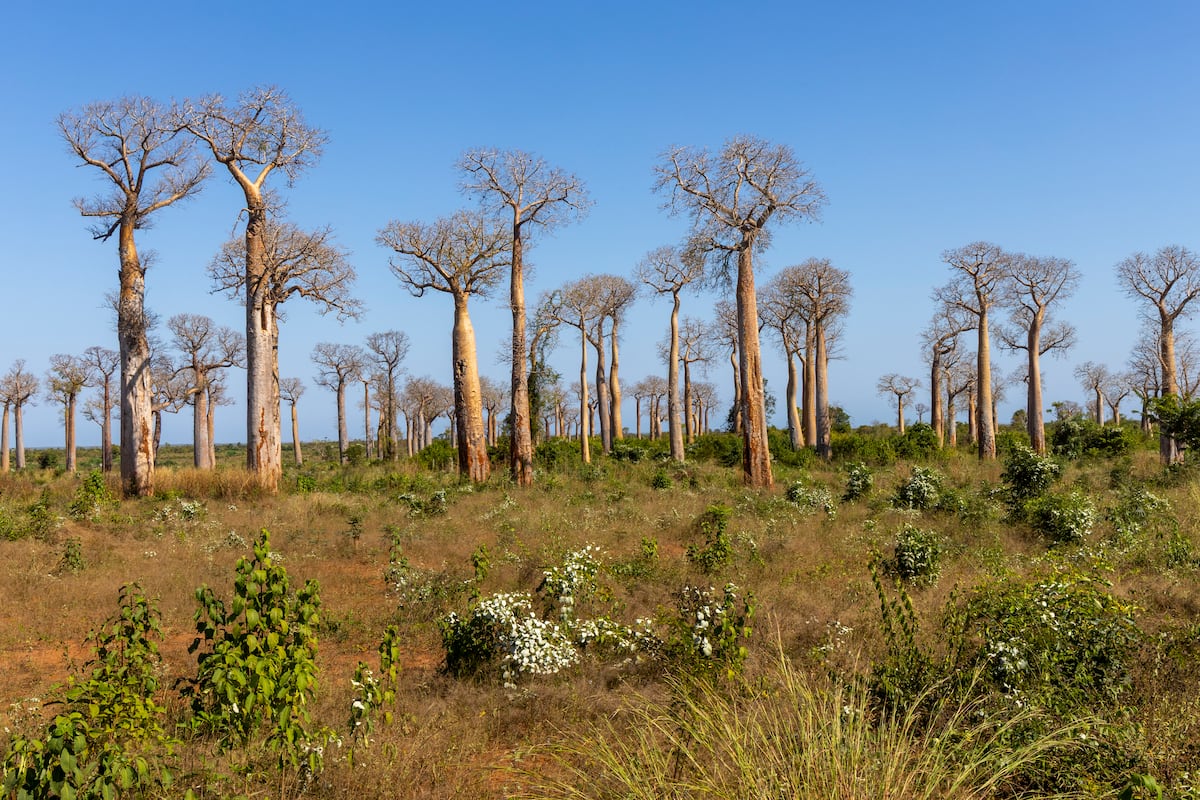
Authorities in South Africa found five uprooted, protected baobab trees in Durban in July, before they could be shipped abroad.
The trees, estimated to be 200 to 300 years old, were reportedly taken without permission from northern South Africa.
Officials say they were intended for a private collector in Georgia, but the intended buyer has not been identified publicly.
The trees were moved nearly 1,000 kilometres and replanted in November at Timbavati Nature Reserve, near Kruger National Park.
Their survival is still uncertain after they spent at least four months out of the ground, though some have begun to sprout leaves.
The case highlights the risk to rare plants from poaching: conservation groups estimate about 500,000 plants are taken illegally in South Africa each year.
A landscaper has been charged with wildlife offences, and the trees will be protected by electric fences and checked twice a year for 10 years.

Five baobab trees uprooted without authorisation in South Africa were replanted in their natural habitat after an attempted export.
The trees were found in July lying in a freight company’s carpark in Durban, after being taken there for export.
They were replanted earlier in November at the privately owned Timbavati Nature Reserve in northern South Africa.
The trees are estimated to be 200 to 300 years old, and it remains uncertain whether they will survive.
Officials say a landscaper has been charged with wildlife offences related to the unauthorised harvesting of protected trees.
- Who
- Five baobab trees, rescued by South Africa’s Environment Ministry and the Baobab Foundation.
- What
- The trees were replanted after being uprooted without authorisation and taken to a port for export.
- When
- They were found in July and replanted earlier in November.
- Where
- They were found in Durban and replanted at Timbavati Nature Reserve in northern South Africa.
- Why
- They were replanted in an effort to save them after an attempted unauthorised export.
This story does not have two clearly opposing sides.
Environment Ministry officials found the protected trees lying in a freight company’s carpark in Durban.
A baobab tree was carried on a truck at Timbavati Nature Reserve, according to an AP photo caption.
Conservation workers prepared and carried out the replanting at Timbavati Nature Reserve, according to AP photo captions.
The five trees were replanted at Timbavati Nature Reserve.
- Number of trees
- 5
- Distance transported
- Nearly 1,000km
- Estimated age
- 200 to 300 years
- Found
- Durban, South Africa
- Replanted
- Timbavati Nature Reserve, northern South Africa
- Destination officials cited
- Georgia, in the Caucasus region near the Black Sea
3 sources
What people are saying
It’s an amazing tree and that’s why it’s an icon of Africa
We want our natural resources to stay here in Africa.
These trees are really just symbolic of everything that we are losing out of Africa to people who just want to take them for their collections, for their gardens, where they play no role, no ecological role
I am a baobologist