

Business · Economy · 1 hr ago
BCA Economist Says Indonesia’s Spending Is Slowing Despite ‘Lipstick Effect’
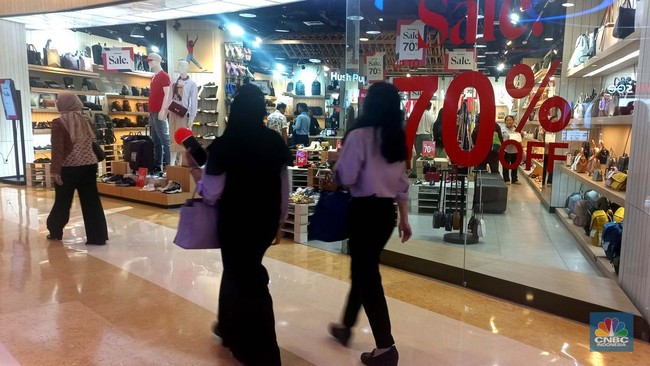
BCA chief economist David E. Sumual says Indonesian spending is slowing as household purchasing power shows signs of weakness.
Spending by the bank’s customers grew 1.4% year on year in September, down from 1.8% in August, based on data from 34 million customers.
Sumual also said BCA’s income index showed a downward trend, but did not give a specific figure for it.
He said the “lipstick effect” keeps some affordable luxuries in demand when the economy weakens, helping sectors such as beauty and personal care.
He also pointed to technology, digital media, education, fitness, tourism and other services as sectors with prospects.
A government deputy minister disputes that purchasing power is weakening, citing activity in transport, tourism, hotels and restaurants, as well as rising QRIS payments; no next step was specified.

BCA chief economist David E. Sumual said Indonesian consumer spending is slowing, despite a “lipstick effect” that can sustain demand for smaller, relatively affordable luxury goods.
Spending by BCA customers grew 1.4% year on year in September 2026, down from 1.8% in August, according to data covering 34 million bank customers.
Sumual also said the trend in the BCA Income Index was weakening.
Deputy Coordinating Minister for Economic Affairs Dradjad Wibowo disputed claims that Indonesians’ purchasing power was weakening, citing activity in tourism and rising QRIS transactions.
Sumual said beauty and personal care, technology, digital media and several other sectors remained promising.
- Who
- BCA chief economist David E. Sumual said spending was slowing; Deputy Coordinating Minister for Economic Affairs Dradjad Wibowo disputed that purchasing power was weakening.
- What
- Sumual reported slower consumer spending growth and a weakening income trend, while describing a “lipstick effect” in some sectors.
- When
- Spending growth slowed in September 2026 compared with August 2026. Dradjad made his remarks on October 12, 2026, and Sumual’s comments were reported on October 20, 2026.
- Where
- Sumual spoke at the virtual Business Outlook 2027. Dradjad spoke after meeting the head of Statistics Indonesia at its headquarters in Jakarta.
- Why
- Sumual cited spending and income indicators. Dradjad said transport, tourism and QRIS transaction data indicated that purchasing power was not weakening.
BCA chief economist David E. Sumual
Deputy Coordinating Minister for Economic Affairs Dradjad Wibowo
Purchasing power
BCA chief economist David E. Sumual
Sumual said spending growth slowed and the BCA Income Index showed a downward trend.
Deputy Coordinating Minister for Economic Affairs Dradjad Wibowo
Dradjad said it was wrong to say purchasing power was weakening.
Evidence
BCA chief economist David E. Sumual
Sumual cited data from 34 million bank customers, including September spending growth of 1.4% year on year.
Deputy Coordinating Minister for Economic Affairs Dradjad Wibowo
Dradjad cited activity in transport and tourism, and rising QRIS transactions, but did not provide specific figures.
Consumer spending grew 1.8% year on year, according to Sumual.
Consumer spending growth slowed to 1.4% year on year, according to Sumual.
Dradjad said purchasing power was not weakening after meeting the head of Statistics Indonesia in Jakarta.
CNBC Indonesia reported Sumual’s remarks on slowing spending and the lipstick effect.
- BCA customer data
- 34 million customers
- Spending growth, August 2026
- 1.8% year on year
- Spending growth, September 2026
- 1.4% year on year
- BCA income indicator
- BCA Income Index; Sumual said its trend was declining
- Sectors described as promising
- Beauty and personal care, technology, creative and digital media, among others
What people are saying
In an economy that is declining, the lipstick effect occurs.
Entering the third quarter, the trend is slowing. So in September it grew by only 1.4%.
I can say that it is not true that purchasing power in Indonesia is weakening; that is wrong.
So what is happening is not that purchasing power is weakening. No, that is very, very untrue.