

Politics · Other · 1 hr ago
Eisenkot rejects immediate attack on Iran as Israel coalition talks continue
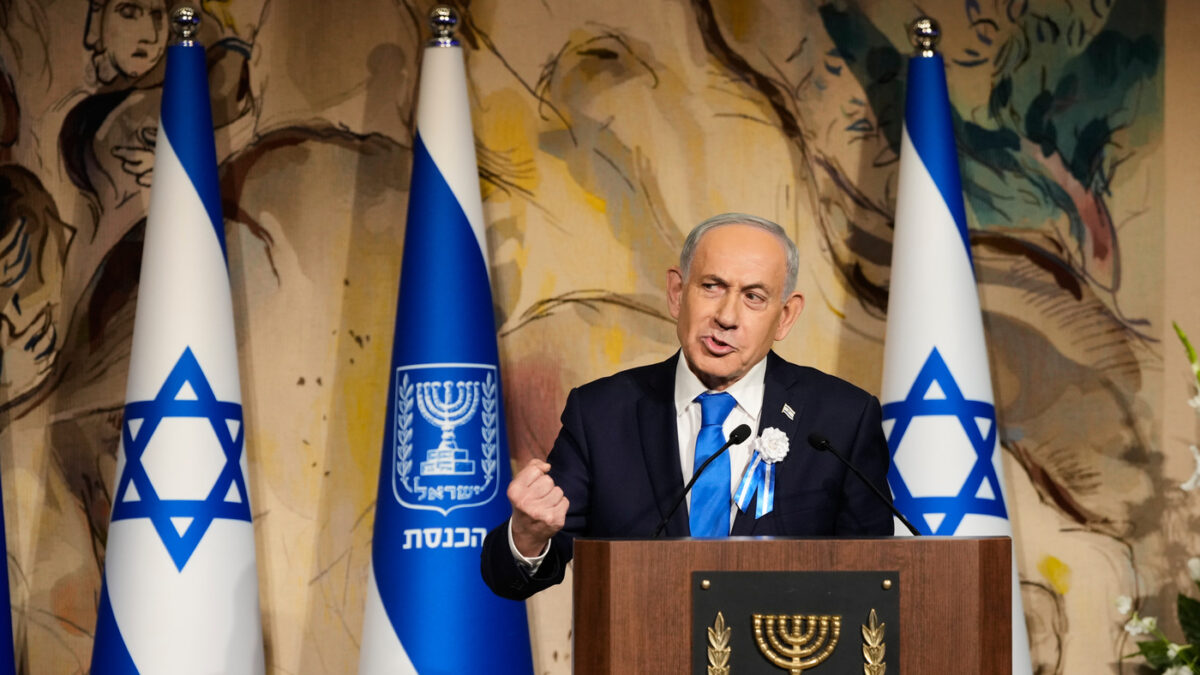
Gadi Eisenkot says Iran poses no immediate reason for military action before Israel has a new government.
He said Israel should focus on Iran’s stockpile of 440 kilograms of enriched uranium, which he called the gravest threat.
Caretaker Prime Minister Benjamin Netanyahu says the threats are real and accused political opponents of minimizing them for political reasons.
The dispute comes after an October election left no bloc with a clear majority, and Eisenkot has been tasked with forming a government to replace Netanyahu.
Their parties are discussing a possible unity government, but the talks have not produced a breakthrough and key disagreements remain, including military service rules and an inquiry into the October 7, 2023, attacks.
The Iran dispute adds tension to negotiations because Netanyahu has urged unity while Eisenkot says military action should wait unless there is an immediate threat.
Talks are expected to continue as Eisenkot works to form a government within the time allowed for his mandate.

Gadi Eisenkot said he saw no immediate Iranian threat requiring military action before a new Israeli government is formed.
Caretaker Prime Minister Benjamin Netanyahu accused political opponents of minimizing security threats and said Iranian threats are real.
Eisenkot identified Iran’s estimated 440-kilogram stockpile of enriched uranium as the gravest threat and said Israel should focus on it.
The dispute came as Eisenkot’s Yashar party and Netanyahu’s Likud held talks on forming a unity government.
Eisenkot received a mandate to form a government on November 8 and has a maximum of 42 days to do so.
- Who
- Gadi Eisenkot and caretaker Prime Minister Benjamin Netanyahu disagree over the immediacy of the Iranian threat.
- What
- Eisenkot said no immediate threat justified military action against Iran before a new government is sworn in; Netanyahu said Iranian threats are real.
- When
- Monday, November 23, 2026.
- Where
- Israel; Netanyahu and Eisenkot made remarks at party meetings at the Knesset.
- Why
- The two leaders differ over whether Iran poses an immediate threat requiring military action, amid talks to form a new government.
Gadi Eisenkot
Benjamin Netanyahu
Immediate threat
Gadi Eisenkot
Eisenkot said he saw no immediate Iranian threat requiring military action before a new government is sworn in.
Benjamin Netanyahu
Netanyahu said Iranian threats are real and accused opponents of minimizing them for political reasons.
Priority on Iran
Gadi Eisenkot
Eisenkot said Israel should focus on Iran’s estimated 440-kilogram stockpile of enriched uranium.
Benjamin Netanyahu
Netanyahu warned against playing down threats and called for a unity government to help counter them.
Israeli President Isaac Herzog gave Eisenkot the mandate to form a government.
Representatives of Likud and Yashar held more than four hours of talks on possible coalition issues.
Eisenkot said he saw no immediate Iranian threat requiring military action before a new government is sworn in.
Netanyahu said Iranian threats were real and accused those minimizing them of political motives.
- Eisenkot’s government-forming mandate
- Granted November 8, 2026
- Maximum time to form a government
- 42 days
- Iranian enriched uranium stockpile
- Estimated 440 kilograms
- Parties in coalition talks
- Likud and Yashar
- Main issues discussed
- Ultra-Orthodox military service, legal reforms and an inquiry into the October 7, 2023 attacks
4 sources
Israel leadership rivals clash over Iran threat ahead of coalition talks
Eisenkot says no immediate threat justifies attack on Iran
Netanyahu, Eisenkot spar over perception of Iran as an ‘immediate’ security threat
Netanyahu contro Eisenkot: “Minimizzi la minaccia dell’Iran per motivi politici”. L’avversario: “Nessun bisogno di un’operazione militare ora”
What people are saying
The gravest threat from Iran is its estimated 440kg stockpile of enriched uranium.
We need to focus on that.
Whoever derides, whoever minimizes these threats — those surrounding us that are immediate, tough and severe — is doing so for political reasons.