

World · Latin America · 8 hrs ago
Suriname deports 63 Mennonites after legal fight over their stay
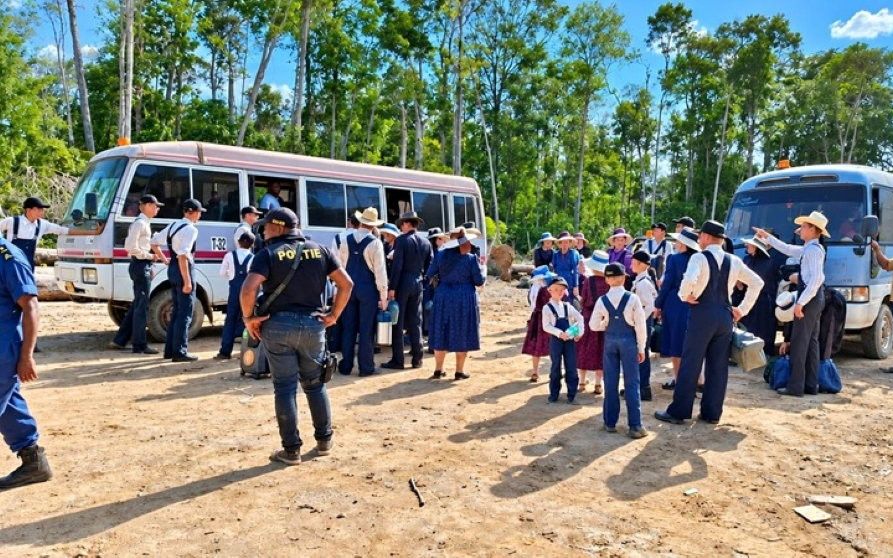
Suriname deported 63 Mennonites from Bolivia and Mexico over the weekend, after a court rejected an attempt to stop their removal.
The group had been moved to Kraka after police and military personnel found them in the Masonia area, where they had been working on farming projects.
Authorities said the group lacked valid residence papers and had used state land without permission; the government also opposed clearing forest for large-scale agriculture.
The Mennonites’ lawyer disputes the handling of their residence applications and says they were being held against their will without access to legal representatives.
A court rejected the first request to block deportation, but the lawyer filed a second case seeking access to the group and a pause on removal while legal options were pursued.
The authorities deported the group before that second case was heard, according to the latest account; the lawyer had said it was due to be considered on Monday.
The dispute reflects wider concerns in Suriname about forest loss and the impact of agricultural projects on local and Indigenous communities.

Suriname deported 63 Mennonites over the weekend after a prolonged legal dispute over their stay and activities in the country.
The group, mainly from Bolivia and Mexico, had been living in the Masonia area and was moved to a temporary site in Kraka before deportation.
Authorities cited the lack of valid residence permits and illegal forest clearing for large-scale agriculture.
A court rejected an effort to block the deportation, while the group’s lawyer later filed a second case seeking access to his clients and a halt to removal proceedings.
The lawyer says residence applications had not been rejected and argues that the government mishandled them.
- Who
- Suriname deported 63 Mennonites, mainly from Bolivia and Mexico.
- What
- The group was removed from Suriname after a legal dispute over its residence status and activities.
- When
- The deportation took place over the weekend before November 1, 2026.
- Where
- The group had been in the Masonia area and was temporarily held in Kraka, Suriname.
- Why
- Authorities cited expired or missing residence permits and illegal forest clearing. The group’s lawyer disputes the handling of its residence applications.
Surinamese authorities
Mennonite representatives and lawyer Derrick Veira
Residence status
Surinamese authorities
Authorities say the group lacked valid residence papers.
Mennonite representatives and lawyer Derrick Veira
Veira says residence applications had been submitted and, as he understood it, had not been rejected.
Land use and removal
Surinamese authorities
Authorities cite unauthorized use of state land and forest clearing as grounds for action.
Mennonite representatives and lawyer Derrick Veira
Veira argues that the situation cannot be blamed solely on the Mennonites and sought to suspend deportation while legal remedies were pursued.
The Mennonites were in Suriname, according to NOS, without residence permits.
A bailiff gave residents three months to leave the area, according to police commissioner Rishi Akkal.
Police and military searched for the group in the Masonia area and took them to a temporary site after finding them nearby.
Lawyer Derrick Veira filed a new case after being denied access to his clients in Kraka.
A judge rejected a company’s request to block the deportation, according to Cvandaag.
Suriname deported the group of 63 Mennonites.
- People deported
- 63 Mennonites
- Main countries of origin
- Bolivia and Mexico
- Temporary location
- Kraka, Para district
- Previous location
- Masonia area, Sipaliwini district
- Court ruling
- A judge rejected a request to block deportation
- Planned agricultural area
- About 35,000 hectares under a proposed trial project
4 sources
What people are saying
That procedure is now continuing
The president has not had all the information
They would have done much better to speak directly with the Mennonites and hear from them what their intentions are
They are treated as if they are terrorists who pose a threat to Suriname