

Politics · Spain · 1 hr ago
Spain’s 1976 political reform vote marked a path from dictatorship to democracy
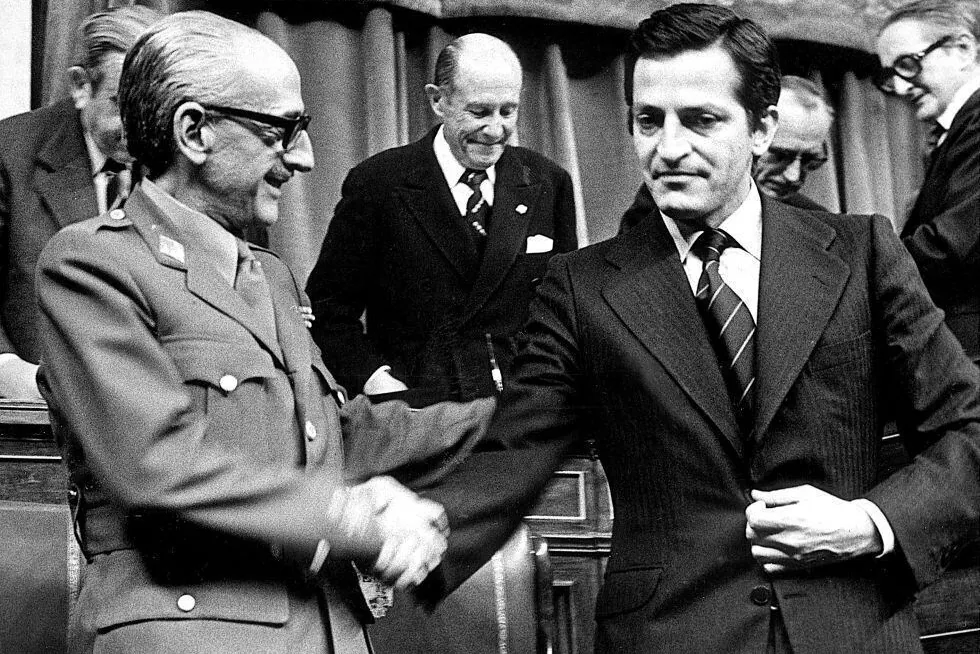
On 16 November 1976, Miguel Primo de Rivera defended a plan to end dictatorship before Spain’s Franco-era Cortes, the body then called the Cortes.
The reform asked lawmakers to vote to dissolve their own institution and establish democracy.
It was drawn up by Torcuato Fernández-Miranda with King Juan Carlos and carried out by Adolfo Suárez.
The plan called for freely elected representatives and protected fundamental rights.
Debate lasted more than 20 hours over three days, and the vote on 18 November passed with 425 votes for, 59 against and 13 abstentions.
Fifty years later, Spain still has two sides that struggle to understand one another, as the country reflects on the promise of national concord made during the transition.

Spain’s parliament approved the Political Reform Law in November 1976, setting out a path from dictatorship to democracy.
The vote on 18 November was 425 in favour, 59 against and 13 abstentions.
The law proposed free elections, a parliament chosen by universal suffrage and protection for fundamental rights.
The debate lasted more than 20 hours across three days, with supporters arguing for a transition without rupture or violence.
- Who
- Spain’s parliament, then called the Cortes, voted on the reform. Miguel Primo de Rivera defended it, while Blas Piñar was a leading opponent.
- What
- The Cortes voted on a law proposing a transition to a democratic system.
- When
- The debate began on 16 November 1976, and the vote took place on 18 November.
- Where
- Spain’s Cortes.
- Why
- The reform aimed to replace dictatorship with a democratic system, including freely elected representatives.
Reform supporters
Reform opponents
Goal
Reform supporters
Supporters sought a transition from dictatorship to liberal democracy through the law.
Reform opponents
Opponents opposed the reform; their specific reasons are not stated.
Political process
Reform supporters
Supporters argued for change without rupture or violence and for freely elected representatives.
Reform opponents
Not stated.
The debate on the Political Reform Law began in the Cortes.
The debate lasted more than 20 hours over three days, with 30 speakers.
The Cortes approved the reform by 425 votes to 59, with 13 abstentions.
- Vote in favour
- 425
- Vote against
- 59
- Abstentions
- 13
- Debate duration
- More than 20 hours over three days
- Law’s structure
- Five articles, three transitional provisions and one final provision
What people are saying
We have to move from a personal regime to a system of participation, without ruptures and without violence.
We must enter the future with lucid optimism, with complete confidence.
We have been able to lower the concept of irreconcilable enemy to the more civilised and Christian concept of peaceful political adversary.