

Science & Tech · Space · 6 hrs ago
Sun records strongest flare since October 10
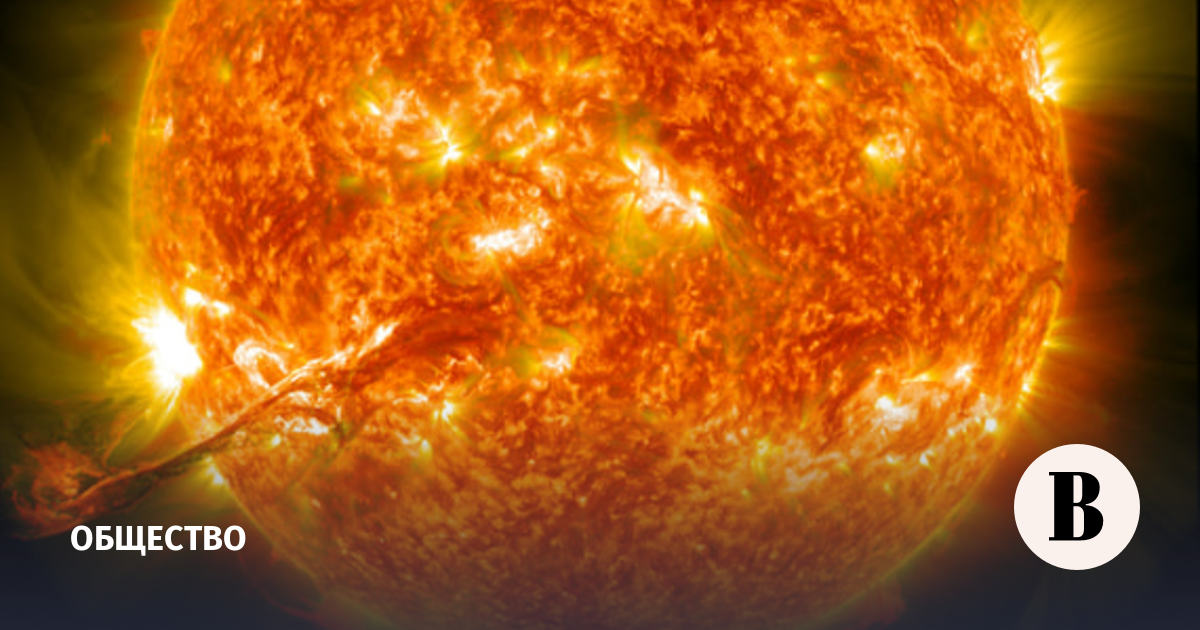
Scientists recorded an M3.6 flare on the Sun, the strongest since October 10.
It happened at 21:33 Moscow time in sunspot group 4566, during a month with very few flares.
The flare was moderate in absolute terms, but its strength stood out after a quiet month.
Its location points roughly toward Earth, so ejected plasma could reach our planet, though scientists have not seen signs of an ejection.
Researchers say the Sun has enough energy for isolated powerful flares, not a sustained series.
Separately, Earth is expected to enter fast solar wind from a large coronal hole on the night of November 7, which could cause magnetic storms.

The Sun produced an M3.6 flare, its strongest since October 10.
The flare occurred in sunspot group 4566 at 21:33 Moscow time.
Scientists said the event was moderate in absolute terms but stood out after a month with almost no flares.
The flare site is near the direction of Earth, but scientists have not yet observed signs of an ejected cloud of plasma.
Researchers said the Sun has enough energy for individual powerful eruptions, but not for a sustained series.
- Who
- Scientists at the Russian Academy of Sciences’ Institute of Space Research and Institute of Solar-Terrestrial Physics reported the flare.
- What
- The Sun produced an M3.6 flare, its strongest since October 10.
- When
- At 21:33 Moscow time. The article does not state the date of the flare.
- Where
- In sunspot group 4566 on the Sun.
- Why
- Not stated
This story does not have two clearly opposing sides.
The previous strongest flare in the period cited by the article occurred.
The Sun ejected a large prominence measuring about 500,000 km.
The solar astronomy laboratory reported the M3.6 flare as the strongest since October 10.
Earth was expected to enter a fast solar-wind stream from a large coronal hole, which could cause magnetic storms.
- Flare class
- M3.6
- Sunspot group
- 4566
- Time
- 21:33 Moscow time
- Previous strongest flare
- October 10
- Coronal hole width
- About 1 million km
What people are saying
In absolute terms, the event is rather average, but it stands out strongly against the almost complete absence of flares throughout the last month.