

Health · Medical Research · 3 hrs ago
Review finds fiber type shapes how gut bacteria work together
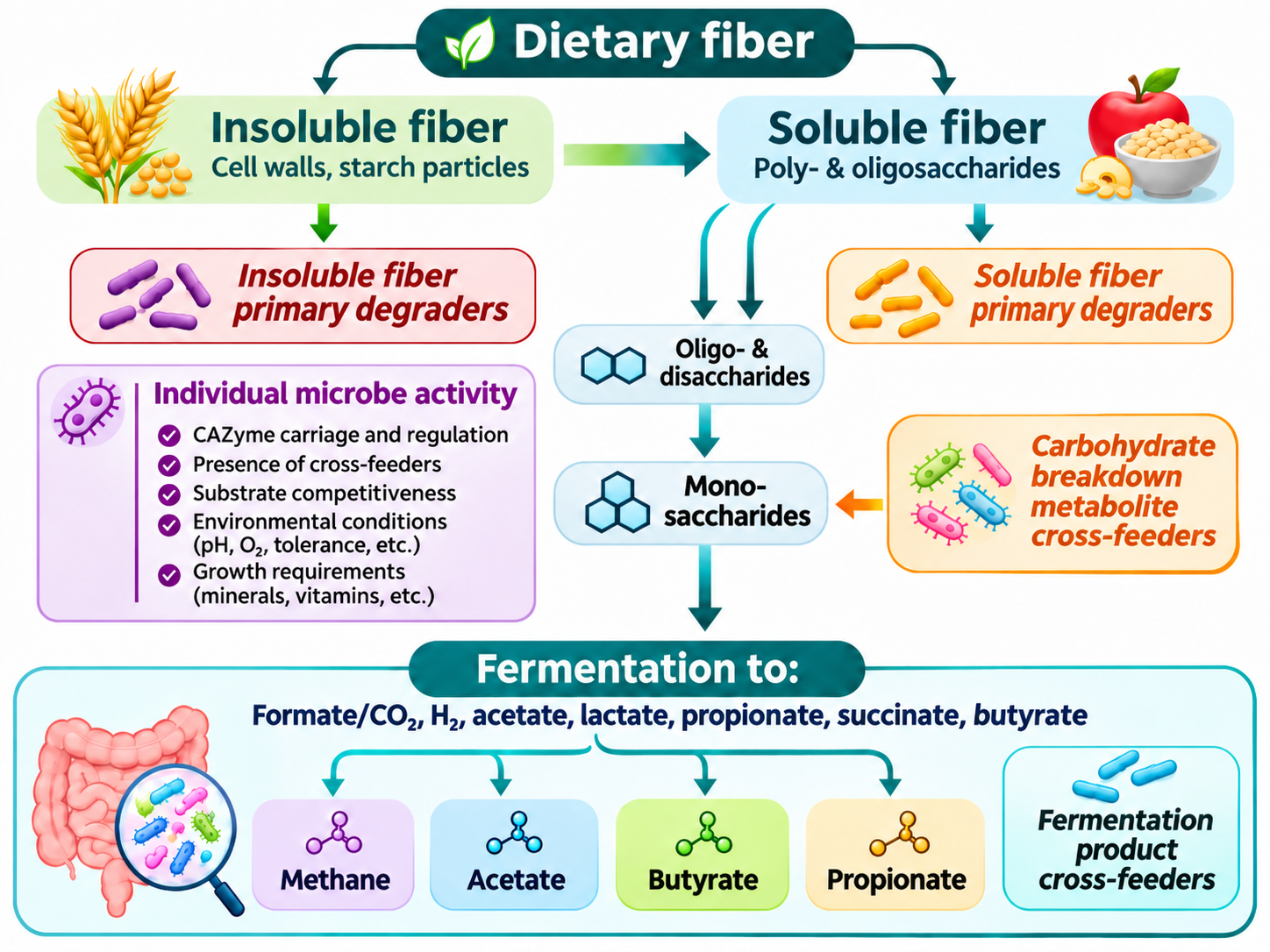
A review of earlier research examined how different fibers shape gut bacteria in the human large intestine.
Fiber includes varied carbohydrates, such as plant cell-wall material and resistant starch, which differ in structure and how easily microbes can reach them.
Some bacteria have many tools for using different carbohydrates, while others specialize in particular fibers.
As bacteria break fibers down, other microbes can use the resulting nutrients and fermentation products, including short-chain fatty acids.
These compounds can affect energy use and inflammation, and butyrate also supplies energy to cells lining the colon.
How fiber structure affects microbial cooperation remains unclear, especially when fiber is part of intact foods.
The review says this could inform dietary advice, but it does not set out a specific recommendation or next step.

A 2021 review examined how the structure and complexity of dietary fiber affect the ways gut bacteria break it down and share the resulting nutrients.
The reviewed research describes different strategies used by gut bacteria to access complex carbohydrates.
Some Bacteroides species have more than 100 polysaccharide utilization loci, gene clusters involved in recognizing and processing carbohydrates.
Gut bacteria ferment fiber into short-chain fatty acids, including acetate, propionate and butyrate.
The review said how carbohydrate structure shapes bacterial competition and cooperation, particularly in intact foods, remains incompletely understood.
- Who
- Researchers who wrote a review of existing biochemical, microbiological and genomic literature.
- What
- The review examined how dietary fiber complexity influences gut bacteria and their use of fiber-derived nutrients.
- When
- The review was published in 2021.
- Where
- Proceedings of the Nutrition Society.
- Why
- To address gaps in understanding how complex carbohydrates are broken down by different gut bacteria and what this could mean for dietary advice.
This story does not have two clearly opposing sides.
This story does not have a timeline yet.
- Review publication
- 2021
- Journal
- Proceedings of the Nutrition Society
- Bacteroides species
- Some have more than 100 polysaccharide utilization loci
- Short-chain fatty acids
- Acetate, propionate and butyrate