

Science & Tech · Space · 1 hr ago
New software reveals a planet in old James Webb telescope images
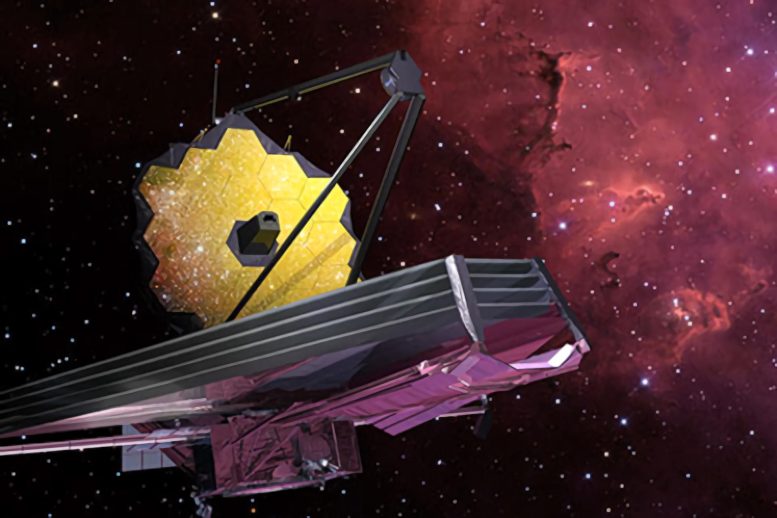
Northwestern researchers developed software called FLIP to find faint planets in images from NASA’s James Webb Space Telescope.
The software models tiny changes in the telescope’s optics, which can alter the pattern of glare around a star.
That glare can hide planets, even when a telescope’s coronagraph blocks most of the star’s light.
Astronomers have often tried to remove the glare by comparing images of different stars, but changes in the telescope can make those images a poor match.
FLIP revealed 51 Eridani b in Webb observations taken about two years earlier, at a wavelength where standard processing had found no signal.
Across four observation sets, it improved sensitivity by two to 15 times, which could help astronomers find fainter planets in telescope images.

Researchers developed software that revealed the known giant planet 51 Eridani b in James Webb Space Telescope images where standard processing had not detected it.
The software models tiny changes in the telescope’s optics to separate a planet’s light from its star’s glare.
Across four sets of observations, the technique improved Webb’s sensitivity to faint planets by two to 15 times.
The team tested the software on published images of three stars.
- Who
- A team led by Northwestern University researchers Rodrigo Ferrer-Chavez and Jason Wang.
- What
- New software called FLIP revealed the planet 51 Eridani b in Webb images.
- When
- The images were taken two years before the reports; the reports were published in November 2026.
- Where
- In observations from the James Webb Space Telescope.
- Why
- The software models changes in the telescope’s optics to remove starlight glare that can hide faint planets.
This story does not have two clearly opposing sides.
Webb captured the images that the team later reprocessed.
SciTechDaily reported that the new technique recovered the planet in Webb observations.
Earth.com reported that the software identified 51 Eridani b in Webb images.
- Software
- FLIP
- Recovered planet
- 51 Eridani b
- Sensitivity improvement
- Two to 15 times across four sets of observations
- Test sample
- Published Webb images of three stars
- Planet signal
- About 100,000 times fainter than its star in infrared light
2 sources
What people are saying
Our method models how light travels through the telescope and accounts for those tiny changes, allowing us to remove the glare much more precisely.
We used the same computational tools that researchers use to train AI models, but we did not actually use AI.