

Science & Tech · Science & Environment · 1 day ago
Study Finds REM-Like Sleep in Fringed Jumping Spiders
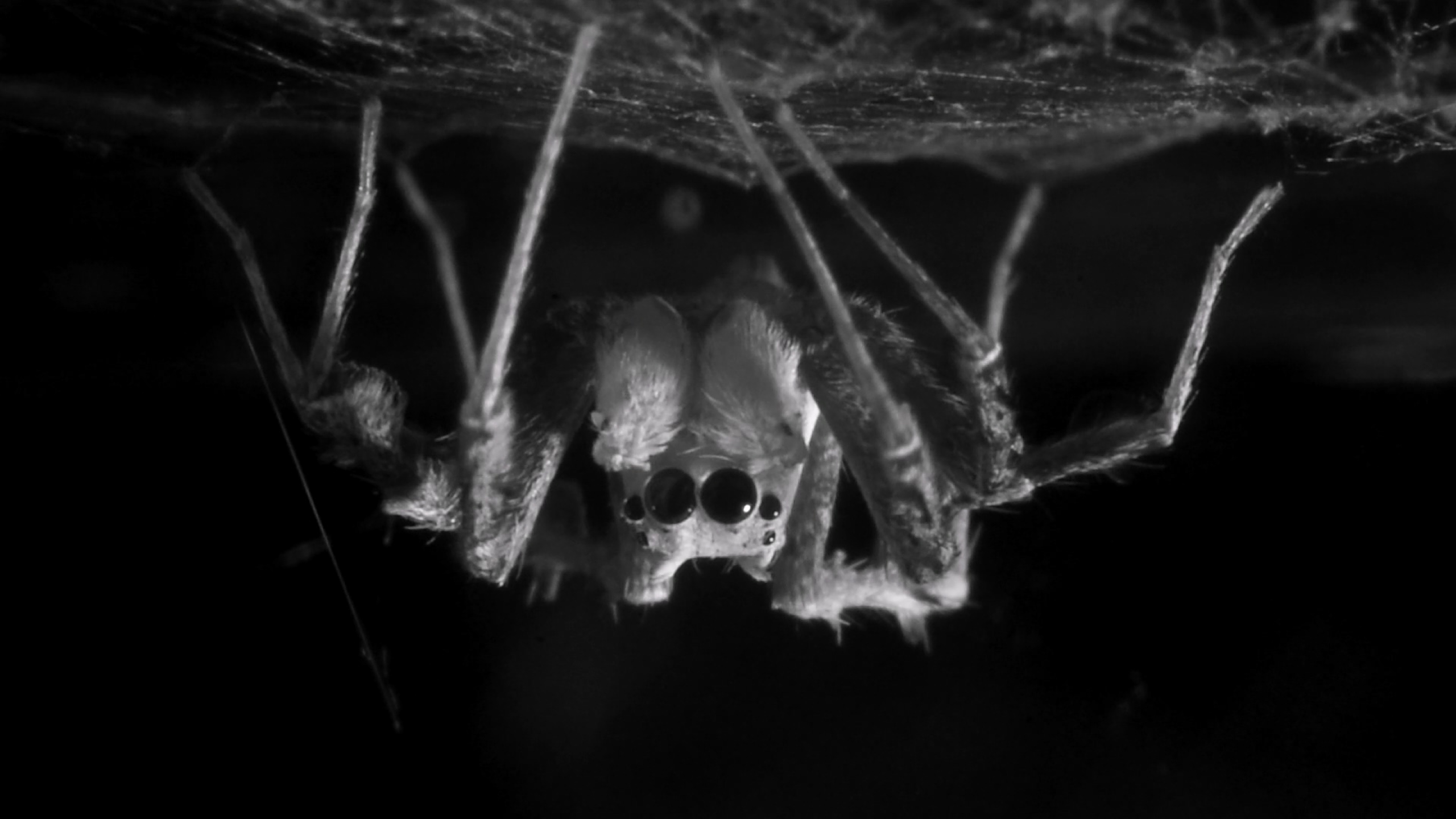
Researchers at the University of Bonn studied fringed jumping spiders called Portia fimbriata.
At night, the spiders' eyes moved and their legs and other body parts twitched while they appeared to sleep.
The findings provide evidence of a distinct REM-like stage during sleep, rather than movement alone.
The researchers also found signs of homeostatic sleep control, in which sleep needs are regulated, though the available findings do not detail how this was tested.
The results add to earlier observations of similar behavior in another jumping spider species and may help explain how sleep stages evolved across animals.
The spiders' movements do not prove they dream, and whether spiders experience dreams remains unclear.

A study reports evidence that fringed jumping spiders, Portia fimbriata, undergo a distinct REM-like stage of sleep.
During this state, the spiders’ limbs twitch, their mouthparts tremble and their retinas move as if tracking something.
Researchers say the findings support the possibility that distinct sleep stages have deep evolutionary roots.
Whether the spiders dream, or what their REM-like sleep does for them, remains unclear.
- Who
- Fringed jumping spiders, Portia fimbriata, and the researchers Nadja Geiger and Daniela C. Rößler of the University of Bonn.
- What
- A study found evidence of a distinct REM-like sleep stage in the spiders.
- When
- The articles were published on 26 October 2026.
- Where
- The study concerns Portia fimbriata; the research was conducted by researchers at the University of Bonn in Germany.
- Why
- Researchers investigated whether the spiders’ movements occur during sleep, rather than merely resembling REM sleep.
This story does not have two clearly opposing sides.
A team led by Daniela C. Rößler reported REM-like movements in Evarcha arcuata jumping spiders but had not established that the spiders were asleep.
Articles reported evidence of a distinct REM-like sleep stage in Portia fimbriata.
- Species
- Portia fimbriata, the fringed jumping spider
- Researchers
- Nadja Geiger and Daniela C. Rößler
- Institution
- University of Bonn, Germany
- Earlier research
- In 2022, a team led by Rößler studied Evarcha arcuata jumping spiders
3 sources
What people are saying
What surprised us was how closely spider sleep mirrors vertebrate sleep in its structure and regulation
Seeing such strong parallels, especially in the homeostatic control of sleep, in animals with such a different neural architecture was genuinely exciting and opens up a new comparative window into how sleep operates across the animal kingdom.
We do think our findings support the idea that distinct sleep stages, including REM-like or active sleep, may have very deep evolutionary roots