

World · Middle East · 9 hrs ago
Iranians expect Israel's Iran policy to stay the same under a new government
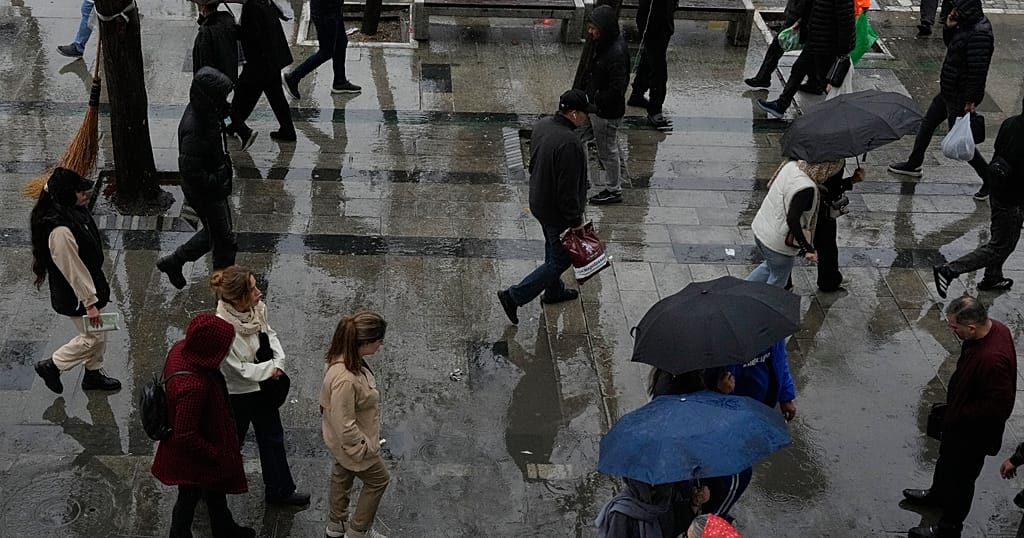
People in Tehran expect Israel's policy toward Iran to remain unchanged even if Israel gets a new government.
Israeli President Isaac Herzog has given opposition candidate Gadi Eisenkot the first chance to form a governing coalition after the Oct.
27 election.
Eisenkot, a former military chief, is challenging Prime Minister Benjamin Netanyahu, whose bloc lost its parliamentary majority.
Neither Netanyahu's bloc nor Eisenkot's bloc won a majority, leaving Arab-led parties as possible but politically divisive partners.
The uncertainty matters after Israel and the United States struck Iran in February, beginning a war, while Israel's government said it needed to stop Iran from seeking nuclear weapons.
Eisenkot has up to 28 days to form a coalition, with a possible two-week extension from Herzog.
If Eisenkot and then Netanyahu fail to form a government, Israel will return to elections early next spring.

Many Iranians interviewed in Tehran expect Israel’s policy toward Iran to remain unchanged under a new government.
Their comments came after Israeli President Isaac Herzog gave opposition candidate Gadi Eisenkot the first opportunity to form a coalition.
Eisenkot’s bloc and Prime Minister Benjamin Netanyahu’s allies both failed to win a parliamentary majority in the October 27 election.
Israel and the United States struck Iran in February, beginning a war against Tehran.
Netanyahu and his government have said they must prevent Iran from acquiring nuclear weapons, which they describe as a threat.
- Who
- Iranian residents of Tehran shared their views; Gadi Eisenkot was given the first chance to form an Israeli government.
- What
- Residents expect Israel’s policy toward Iran to remain unchanged under a new government.
- When
- The article was published on November 9, 2026; Herzog announced his decision on Saturday night.
- Where
- Tehran, Iran, and Israel.
- Why
- Residents said a change in Israel’s government would be unlikely to change its policy toward Iran. Israel’s government says it must stop Iran from trying to acquire nuclear weapons.
Iranian residents who expect Israel’s policy to continue
Netanyahu and his allies
Expected policy
Iranian residents who expect Israel’s policy to continue
Residents said a new Israeli government would be unlikely to change Israel’s policy toward Iran.
Netanyahu and his allies
Netanyahu and his allies say they must stop Iran from trying to acquire nuclear weapons, which they describe as a threat.
Israel and the United States struck Iran, starting the war against Tehran.
Israel held elections, in which Netanyahu’s allies lost their parliamentary majority and Eisenkot’s bloc also failed to win a majority.
President Isaac Herzog gave Eisenkot the first opportunity to form a governing coalition.
Eisenkot was due to receive the mandate to form a coalition and would have up to 28 days, with a possible two-week extension.
- Eisenkot
- Former military chief and opposition candidate
- Election date
- October 27, 2026
- Coalition-building period
- Up to 28 days, with a possible two-week extension
- Iran strikes
- Israel and the United States struck Iran in February
- Interviewee
- Ali Soroush, 26, said Israel’s enmity would more or less continue
What people are saying
In practice there will be no change in their ominous intention, it means that their enmity will more or less continue.
With the guy we know as Bibi (Benjamin Netanyahu) or anybody else, will unlikely make any change in future.