

Science & Tech · Science & Environment · 12 hrs ago
A spider walk reveals hidden webs and how spiders respond to vibrations
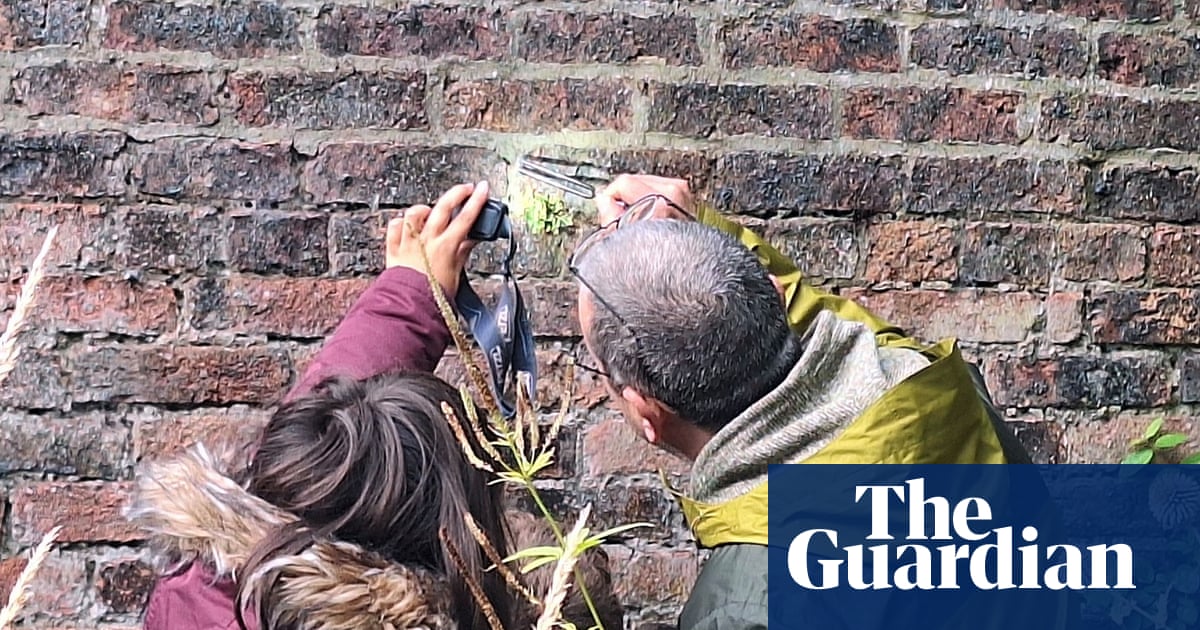
A guided spider walk took place in an abbey’s grounds in southern England.
Fran Garcia, a member of the British Arachnological Society, led a group of 10, including two children.
He demonstrated spider anatomy and web building, and showed the group an egg sac from a wasp spider, a species found in southern England that is moving north.
The walk also showed how to tell harvestmen from spiders: harvestmen have eight legs but cannot spin webs and have no venom.
A laceweb spider rushed out after sensing a tuning fork’s vibrations near its shelter in an old brick wall.
The vibration mimicked a signal from prey, and the spider retreated when it detected the trick.
Water droplets revealed webs hidden among thistles, showing their structure as if they were covered in morning dew.
The walk offered a close look at local arachnids and helped one child lose some of her fear of spiders.

A spider walk led by British Arachnological Society member Fran Garcia showed how spiders use webs to detect vibrations.
Garcia struck a tuning fork against a brick wall, prompting a laceweb spider to emerge from its lair before retreating.
He sprayed water over thistles to reveal webs that had been hidden from view.
The walk took place in abbey grounds and included a group of 10 people, among them two children.
- Who
- Fran Garcia led the walk. The group included 10 people, including two children.
- What
- Participants searched for spiders and learned about their anatomy, webs and responses to vibrations.
- When
- Not stated.
- Where
- In abbey grounds, including near a brick wall and a patch of creeping thistles.
- Why
- To introduce the group to spiders and show how they build webs and sense vibrations.
This story does not have two clearly opposing sides.
Garcia introduced spider anatomy and web building using assorted objects.
The group looked for harvestmen and spiders in stonework and an old brick wall.
Garcia used a tuning fork to trigger a laceweb spider’s response to vibration.
Garcia sprayed water over the plants, revealing webs.
- Group size
- 10 people, including two children
- Walk leader
- Fran Garcia, a member of the British Arachnological Society
- Spider responding to vibration
- Laceweb spider, Amaurobius sp.
- Tuning-fork demonstration
- Garcia struck the fork against brickwork
- Web-revealing method
- Water droplets sprayed over creeping thistles