

Science & Tech · Science & Environment · 4 hrs ago
Satellite Data Suggest Two Magma Reservoirs Beneath Nicaragua’s Masaya Volcano
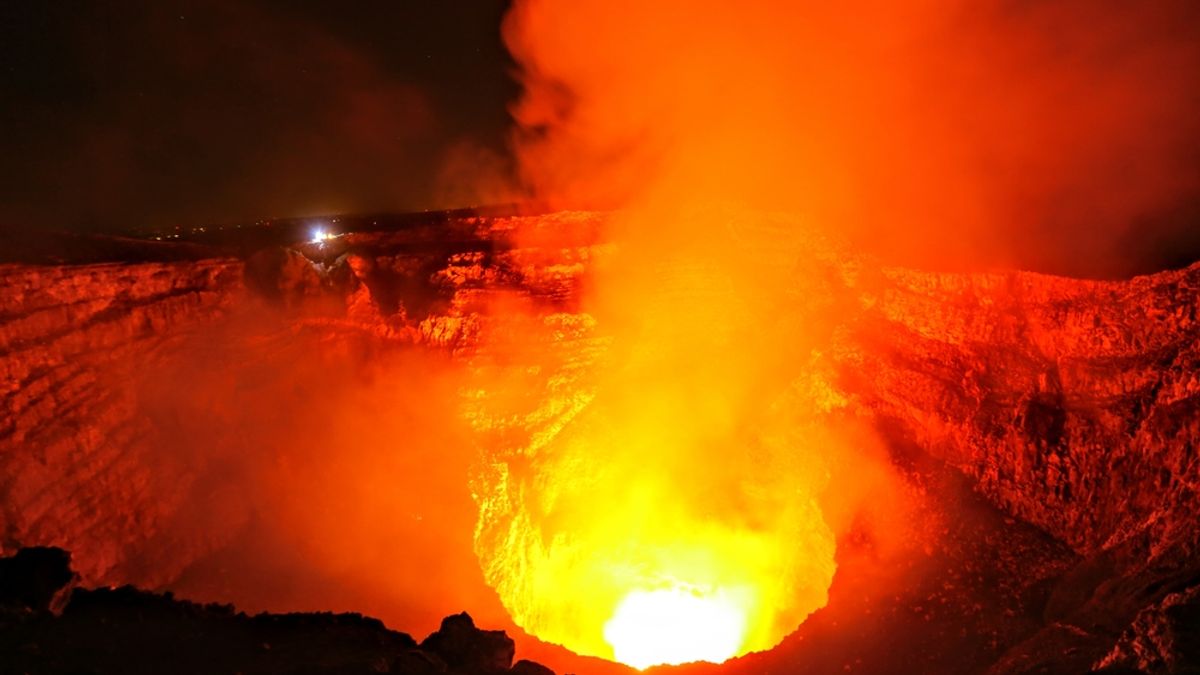
Researchers found evidence of two magma reservoirs beneath Nicaragua’s Masaya volcano using six years of satellite measurements.
Masaya lies southeast of the capital, Managua, and remains active, though it has not produced a major lava flow since 1772.
The measurements showed that ground north of the Santiago crater sank from 2018 to mid-2022, then rose again through 2024.
Researchers think the sinking reflected magma draining away, while the later rise may mean new magma moved in.
The changing ground points to magma moving through a complex system beneath the volcano.
About two million people live within 13 miles of Masaya, making a better understanding of its activity important.
The findings may improve monitoring and eruption forecasting in the future, but no specific next step was stated.

Satellite observations from 2018 to 2024 revealed ground movements at Nicaragua’s Masaya volcano that researchers say point to two magma reservoirs.
The ground north of Santiago crater sank from 2018 to mid-2022, then rose from mid-2022 to 2024.
Researchers suggest magma drained away before new magma moved in.
The findings could help scientists understand magma movement and improve monitoring and eruption forecasting.
About 2 million people live within 13 miles of the volcano.
- Who
- Researchers, including lead author Lizzie Johnson, studied the volcano using satellite data.
- What
- The study found evidence of two magma reservoirs beneath Masaya and tracked changes in ground elevation.
- When
- Satellite data covered 2018 to 2024. The article was published on October 22, 2026.
- Where
- Masaya volcano, southeast of Managua, Nicaragua.
- Why
- Researchers aim to better understand the volcano’s magma system and improve monitoring and eruption forecasting.
This story does not have two clearly opposing sides.
Satellite observations began showing ground changes around Masaya.
The ground north of Santiago crater sank slightly.
The ground north of Santiago crater rose again.
- Satellite data period
- 2018–2024
- Satellite
- European Space Agency’s Sentinel-1
- Volcano location
- Southeast of Managua, Nicaragua
- Nearby population
- About 2 million people live within 13 miles
- Santiago crater summit elevation
- 2,088 feet
What people are saying
These observations help scientists better understand how magma moves beneath Masaya and may improve monitoring and eruption forecasting in the future
Cloud penetration is important for volcanoes because many of them, like Masaya, are in tropical areas where there is often cloud cover