

Business · Markets · 2 hrs ago
Economists Say Rupiah at 21,000 Would Be an Extreme-Risk Scenario
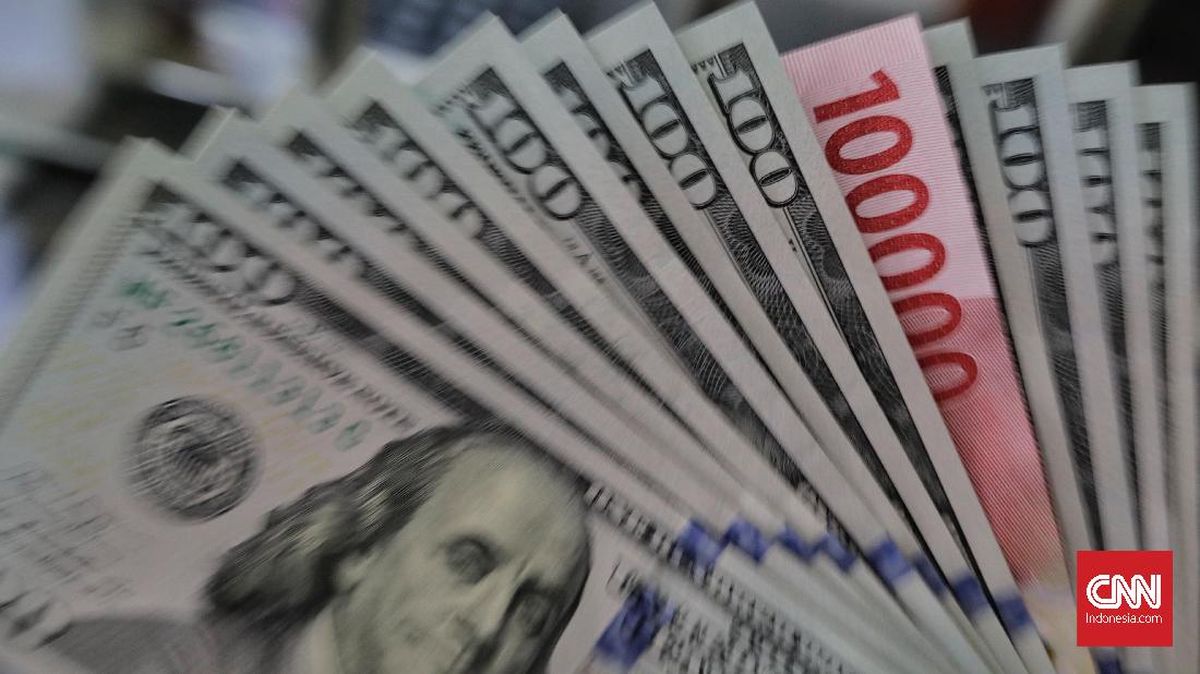
Hashim Djojohadikusumo warned the rupiah could weaken to 21,000–22,000 per US dollar if foreign investors leave Indonesia’s stock market.
He linked that risk to a possible downgrade by global index provider MSCI and concerns about manipulated stock prices.
The rupiah stood at 18,148 per dollar on November 3, so reaching Hashim’s range would require a further fall of about 16% to 21%.
Economists said that level is an extreme-risk scenario, not the main forecast, and would likely require wider financial pressures than a stock-market downgrade alone.
If MSCI downgrades Indonesia, one economist estimated that passive investment funds could withdraw US$3 billion to US$6 billion.
A much deeper fall would likely need several shocks at once, including foreign withdrawals from government bonds and a stronger US dollar globally.
Indonesia also has foreign-exchange reserves of US$146.3 billion, while MSCI’s final decision on reclassifying the market is scheduled for June 2027.

Kadin Indonesia advisory board chairman Hashim Djojohadikusumo warned that the rupiah could fall to Rp21,000-Rp22,000 per US dollar if foreign investors leave after a possible downgrade of Indonesia’s market status by MSCI.
Economists said that range represents an extreme-risk scenario, not a baseline forecast.
The rupiah was at Rp18,148 per dollar on November 3, 2026, according to JISDOR data.
Economists said a much deeper fall would likely require broader shocks, including capital outflows from government bonds and a stronger US dollar.
Indonesia had foreign exchange reserves of US$146.3 billion at the end of September 2026, equivalent to about 5.3 months of imports.
- Who
- Hashim Djojohadikusumo warned of a sharp fall in the rupiah. Economists Rizal Taufikurahman and Josua Pardede assessed the risk.
- What
- Hashim said the rupiah could reach Rp21,000-Rp22,000 per US dollar. Economists described that as an extreme-risk scenario, not a baseline projection.
- When
- Hashim spoke on October 29. The story was published on November 4, 2026.
- Where
- Hashim made his remarks at a Kadin Indonesia meeting in Central Jakarta.
- Why
- Hashim linked the risk to a possible MSCI downgrade of Indonesia’s market status and foreign investor withdrawals. Economists said a much deeper fall would require broader shocks.
Hashim Djojohadikusumo
Rizal Taufikurahman and Josua Pardede
Risk level
Hashim Djojohadikusumo
Hashim warned that the rupiah could fall to Rp21,000-Rp22,000 per dollar if foreign investors leave.
Rizal Taufikurahman and Josua Pardede
The economists said this range is an extreme-risk scenario, not a baseline forecast.
MSCI downgrade
Hashim Djojohadikusumo
Hashim linked the danger to a possible MSCI reclassification and concerns about stock-price manipulation.
Rizal Taufikurahman and Josua Pardede
Pardede said it was too simplistic to attribute a sharp rupiah fall solely to so-called “fried stocks” or an MSCI decision.
Hashim warned at a Kadin Indonesia meeting that the rupiah could fall to Rp20,000-Rp22,000 per dollar if foreign investment left the stock market.
JISDOR data put the rupiah at Rp18,148 per US dollar, and Rizal discussed the scenario with CNN Indonesia.
MSCI’s routine index review was due to take place, distinct from the market-status reclassification consultation.
MSCI’s final decision on a possible change to Indonesia’s market status was scheduled.
- Rupiah exchange rate
- Rp18,148 per US dollar on November 3, 2026
- Hashim’s warning
- Rp21,000-Rp22,000 per US dollar
- Estimated passive fund outflows
- US$3 billion-US$6 billion if MSCI downgraded Indonesia’s market status
- Foreign exchange reserves
- US$146.3 billion at the end of September 2026
- Reserve import cover
- About 5.3 months
What people are saying
The calculation requires assumptions about capital outflows, foreign-exchange needs, and BI’s ability to stabilize the market.
A much deeper weakening of the rupiah would require a shock far broader than simply foreign funds leaving the stock market.
This is a very, very serious problem because if foreign investment leaves our stock market, the rupiah could weaken further.