

Science & Tech · Science & Environment · 1 hr ago
Lunar Meteorites Could Reveal More About the Moon’s History
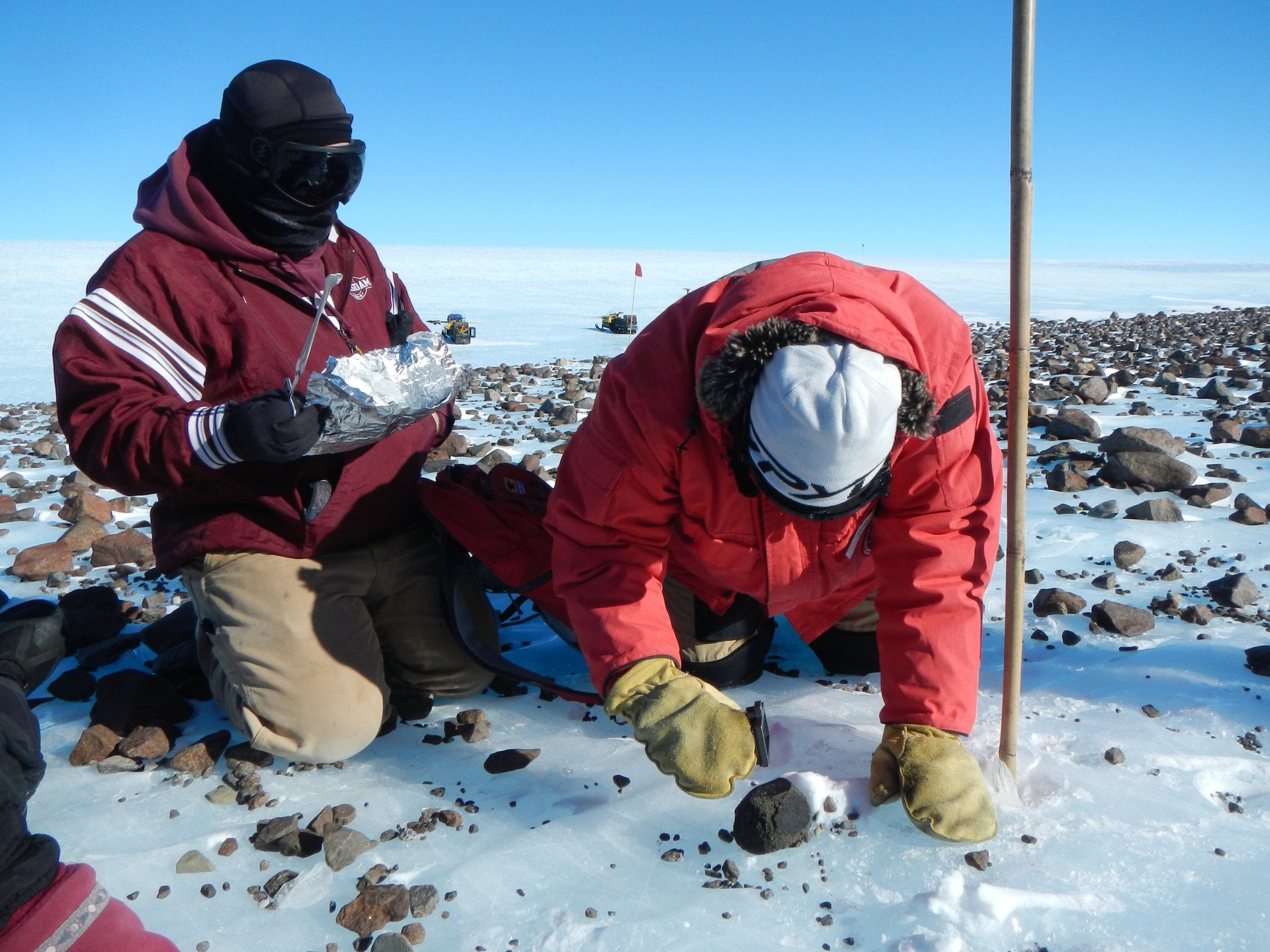
Lunar meteorites are pieces of the Moon that were blasted into space and later fell to Earth.
They could help scientists understand how the Moon formed and changed over time.
Unlike spacecraft samples, they are thought to come from many parts of the lunar surface, possibly including the far side, though their exact origins are unknown.
Only 835 lunar meteorites have been verified, while spacecraft have returned much larger amounts of lunar material.
The Apollo and Chang’e missions sampled areas now known to be geochemically unusual, which may limit how well those samples represent the whole Moon.
Meteorites may therefore fill gaps in scientists’ picture of lunar geology and evolution.
The story gives no specific next step for research.

Lunar meteorites could provide a broader picture of the Moon’s history because they are thought to come from locations across its surface, including the far side.
Only 835 lunar meteorites have been verified, representing 0.7% of meteorites that fall to Earth.
Research Professor Emeritus Randy Korotev says lunar meteorites offer a more representative sample of the Moon than the Apollo collections.
The Apollo and Chang’e missions returned larger quantities of lunar material, and spacecraft still bring back the most pristine samples.
Most lunar meteorites have been found in Antarctica, Oman and the deserts of Northwest Africa.
- Who
- Lunar scientists studying meteorites, including Randy Korotev of Washington University in St. Louis.
- What
- Lunar meteorites may help fill gaps in understanding the Moon’s evolution by sampling places beyond spacecraft landing sites.
- When
- The article was published on October 25, 2026. The first identified lunar meteorites were collected in 1979.
- Where
- The meteorites are found on Earth, often in Antarctica, Oman and Northwest African deserts. They originated on the Moon.
- Why
- They are thought to come from widely distributed locations on the Moon, offering a broader sample than spacecraft missions collected.
This story does not have two clearly opposing sides.
The Japanese meteorite-hunting program collected Yamato-791197 and Yamato-793169 in Antarctica, the first identified lunar meteorites.
A paper in the journal Elements noted the quantities of lunar samples returned by Soviet, Chinese and Apollo missions.
Universe Today published an article about how lunar meteorites could fill gaps in understanding the Moon’s evolution.
- Verified lunar meteorites
- 835
- Share of meteorites falling to Earth
- 0.7%
- Apollo lunar samples
- About 382 kg
- Soviet Luna mission samples
- About 300 grams
- Chang’e 5 and 6 samples
- About 3.7 kg
- Common discovery locations
- Antarctica, Oman and Northwest Africa
What people are saying
From the point of view of a scientific study, Apollo was done wrong; we had no orbital data, except gray-scale photography by which to choose the landing sites
Yet lunar meteorites provide a more representative sampling of the Moon than Apollo