

Health · Medical Research · 2 hrs ago
Mouse study finds psilocybin’s brain effects may be separable from hallucinations
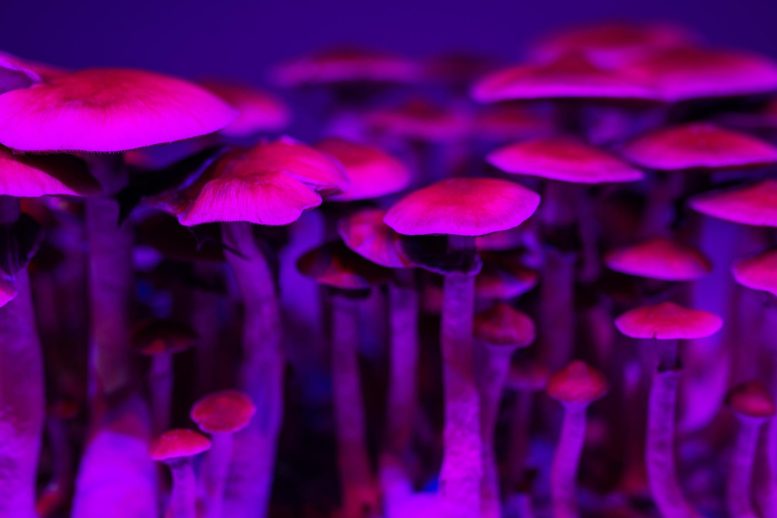
Researchers at the University of California, Santa Cruz, studied psilocybin in mice to understand how it changes brain connections.
Psilocybin is the psychedelic compound in some “magic mushrooms,” and scientists are studying its potential for mental health treatment.
In stressed mice, the drug led to a larger rise in new brain-cell connections than in healthy mice, and it slowed the loss of existing connections.
The researchers also found that psilocybin helped new connections mature into more stable forms.
Some brain cells supported new connections without triggering a behavior used as a hallucination proxy in rodents.
The findings suggest brain-rebuilding effects may be separable from psychedelic effects, but the study was in mice and does not establish that the same results apply to people.
The work may inform research into psychiatric medicines that promote brain changes without causing hallucinations.

A mouse study found that psilocybin’s effects on brain connections may be separable from its psychedelic effects.
Researchers at the University of California, Santa Cruz, observed changes in the formation and maturation of brain-cell connections in mice.
The effects differed between healthy mice and mice exposed to unpredictable mild stress, a model of aspects of human depression.
The researchers identified brain cells that supported new connections without triggering a mouse head-twitch behavior used as a proxy for hallucinogenic activity.
The study may inform research into psychiatric medicines that do not cause hallucinations.
- Who
- Researchers at the University of California, Santa Cruz, including senior author Yi Zuo and lead author Jacob Baker.
- What
- A mouse study examined how psilocybin affects brain connections and found these effects may be separable from hallucinogenic effects.
- When
- The study was published on October 15. The article was published on October 29, 2026.
- Where
- University of California, Santa Cruz; experiments were conducted in mice.
- Why
- To investigate how psilocybin reshapes neural circuits and its potential implications for treating mental disorders.
This story does not have two clearly opposing sides.
Researchers observed a rapid increase in new dendritic spine formation in mice.
In healthy mice, some connections that predated treatment were removed and connectivity gradually returned toward baseline.
The study was published in Nature Neuroscience.
- Institution
- University of California, Santa Cruz
- Study publication
- October 15, Nature Neuroscience
- Imaging method
- Two-photon microscopy
- Treatment observation
- New spine formation increased within 24 hours of psilocybin administration
- Animal model
- Mice subjected to unpredictable mild stress
What people are saying
I consider this work a major advance, particularly in our understanding of how psilocybin reshapes neural circuits and its potential implications for treating mental disorders.
These findings challenge the prevailing view that psilocybin simply increases neural connectivity and suggest that its effects depend on the brain’s underlying condition.
These newly formed connections can integrate into existing neural circuitry and persist over time, leaving a lasting structural trace of psilocybin’s effects on the brain.