

Science & Tech · Science & Environment · 9 hrs ago
Teghaza 001 meteorite is at least 4.1 billion years old
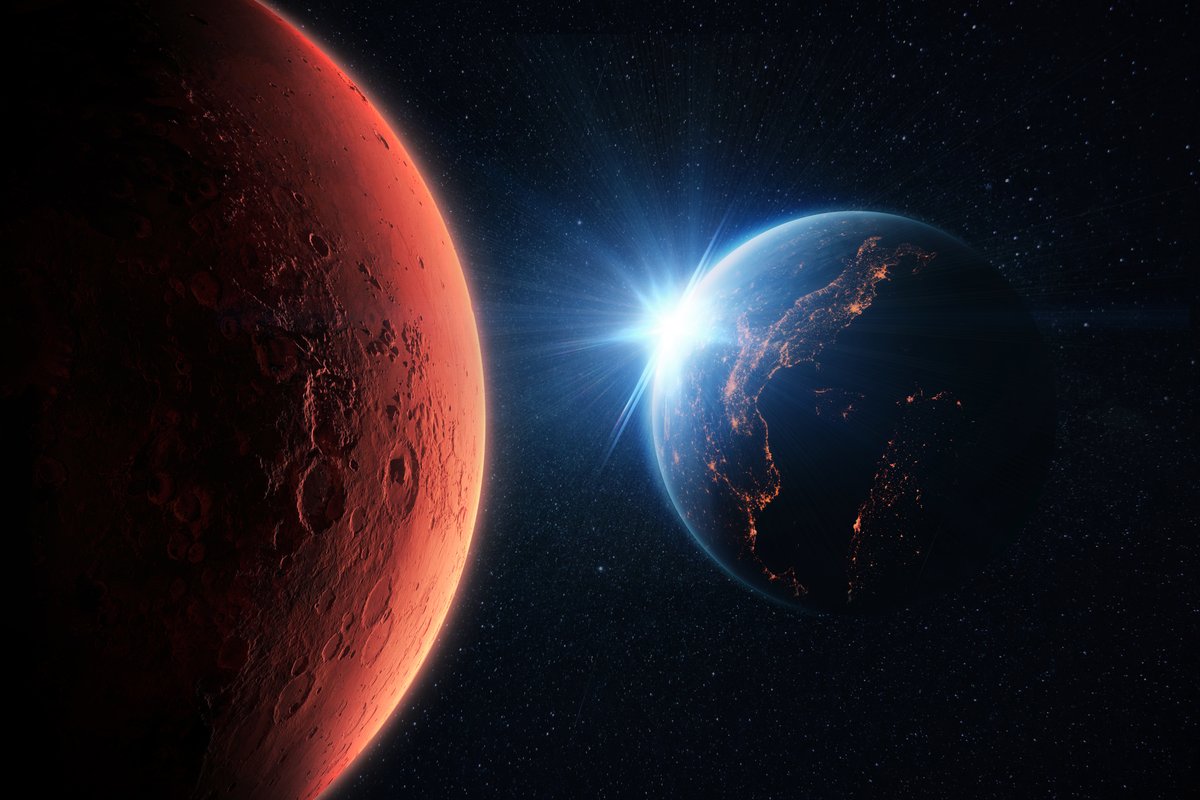
Teghaza 001 is a piece of Mars found in the Sahara Desert in Mali in 2022.
Researchers say it is at least 4.1 billion years old, making it one of the oldest Martian meteorites found on Earth; one account describes it as the oldest known.
The rock formed from slowly cooled magma and is thought to have come from Mars’s southern highlands, an ancient region.
Meteorites from Mars are blasted into space by impacts, and some eventually land on Earth.
Minerals in Teghaza 001 show signs of contact with water, offering evidence that liquid water was present on early Mars.
This matters because water is one of the conditions that could support life, but the findings do not show that life existed on Mars.
Scientists can use the meteorite’s age and composition to learn more about Mars’s early crust and watery past.

Teghaza 001, a meteorite from Mars found in Mali, is at least 4.1 billion years old, according to research published in Science.
Researchers identify it as a piece of Mars’s crust formed from slowly cooled magma.
Its mineral and chemical composition suggests it came from Mars’s southern highlands and that water once flowed through the rock.
The meteorite was found in the Sahara in 2022 by meteorite hunters.
The findings offer evidence about conditions on early Mars but do not establish whether life ever existed there.
- Who
- Researchers led by Yang Liu studied Teghaza 001.
- What
- They found it is at least 4.1 billion years old and a piece of Mars’s crust.
- When
- It was found in September 2022; the research was published on October 29, 2026.
- Where
- It was found in the Sahara Desert in Mali, about 34 kilometres from Bir Shali.
- Why
- Researchers studied it to learn more about Mars’s early history and whether the rock had been exposed to water.
This story does not have two clearly opposing sides.
Sahrawi meteorite hunters found Teghaza 001 in the Sahara in eight fragments.
The study identifying Teghaza 001 as at least 4.1 billion years old was published in Science.
- Name
- Teghaza 001
- Age
- At least 4.1 billion years
- Weight
- 800 grams
- Discovery
- September 2022, in eight fragments
- Location
- Sahara Desert in Mali, about 34 kilometres from Bir Shali
- Likely origin
- Mars’s southern highlands
3 sources
What people are saying
We’re holding a piece of a rock that’s dated even before the oldest Earth rock—a piece of Mars that’s so ancient, it existed when life had just started on Earth.
This is truly the first piece of Martian crust we have found in a part of Mars from which we have never had a sample before.
The findings support the idea that early Mars had the necessary ingredients and conditions to host life, but do not directly answer the question of whether life ever existed on Mars.