

Business · Economy · 54 mins ago
Bank Indonesia Says Rupiah Has Stayed Stable for Two Days
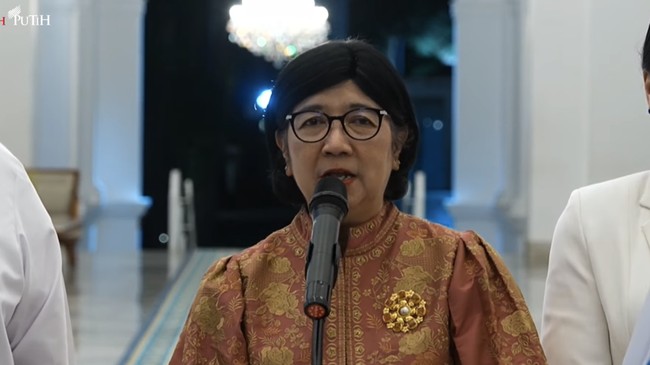
Bank Indonesia Governor Destry Damayanti briefed President Prabowo on inflation and the rupiah at a meeting in Jakarta.
Core inflation was 2.8% in September, while food inflation reached 5%.
The central bank aims to keep food inflation within its target range of 1.5% to 3.5%, and plans to coordinate with the Agriculture Ministry.
Global market volatility is high, with US inflation above its target and interest rates expected to stay higher for longer.
The rupiah has remained stable over the past two days, though Destry said the global situation remains a challenge.
Bank Indonesia is using market interventions and incentives for hedging to support the currency.
Those incentives, introduced in late July, have helped bring in about US$8 billion to US$9 billion through foreign-exchange swaps and domestic non-deliverable forwards.

Bank Indonesia Governor Destry Damayanti said the rupiah had remained stable over the previous two days.
Destry reported on the currency and inflation to President Prabowo Subianto at a meeting in Jakarta on October 19, 2026.
She said global volatility, high US inflation and interest-rate expectations posed challenges for the rupiah.
September core inflation was 2.8%, while food inflation reached 5%.
Destry said BI would coordinate with the Agriculture Ministry on food inflation and continue efforts to support the rupiah.
- Who
- Bank Indonesia Governor Destry Damayanti reported to President Prabowo Subianto.
- What
- Destry said the rupiah had remained stable for two days and reported on inflation.
- When
- October 19, 2026. She said the rupiah had been stable over the previous two days.
- Where
- At a limited meeting at Merdeka Palace in Central Jakarta.
- Why
- Global volatility, high US inflation and interest-rate expectations were challenges for the rupiah. BI also focused on managing inflation.
This story does not have two clearly opposing sides.
BI had begun providing incentives for hedging costs, according to Destry.
Core inflation was 2.8%, while food inflation was reported at 5%.
Destry reported on inflation and the rupiah to President Prabowo at a meeting in Jakarta.
Destry said BI had maintained the rupiah's stability.
- Rupiah stability
- Stable for two days, according to Destry
- Core inflation
- 2.8% in September 2026
- Food inflation
- 5%
- Meeting location
- Merdeka Palace, Central Jakarta
- Inflows from FX swaps and DNDF
- About US$8 billion to US$9 billion
- Food-inflation corridor
- Detik reported BI's target as 3.5% plus or minus 1%; CNBC Indonesia reported 2.5% plus or minus 1%
3 sources
What people are saying
But so far, over these two days, we have been able to maintain the rupiah's stability, so there has been a slight slowdown, which is also in line with several emerging-market countries.
The Federal Funds Rate is expected to rise, but the probability in October will be smaller, so that is certainly one of the challenges for our rupiah.
What needs attention is food inflation, volatile food inflation, which has reached 5%.
Whether in the form of intervention in the spot market, NDF and DNDF, or incentives for hedging costs, which we have also provided since the end of July.