

Science & Tech · Space · 35 mins ago
Leonid meteor shower peaks this week, with up to 15 meteors an hour
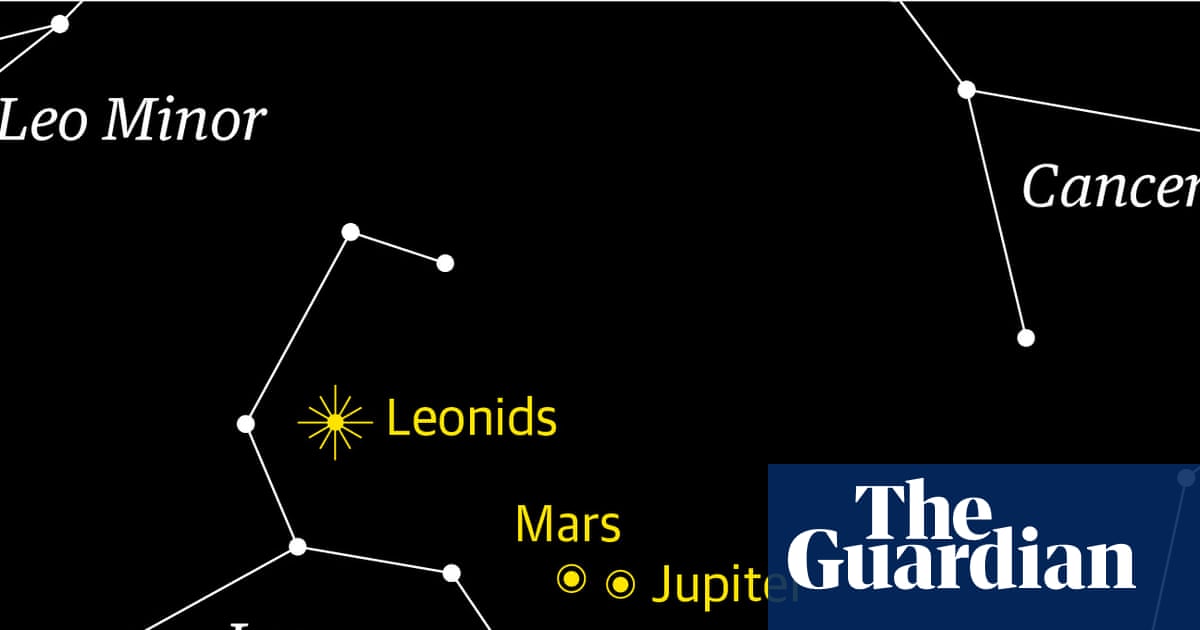
Earth is passing through debris from comet 55P/Tempel-Tuttle, creating the annual Leonid meteor shower.
The shower is visible from both hemispheres, and its meteors appear to come from the constellation Leo.
The peak is expected around Nov.
17–18, though reports differ slightly on the precise peak night.
Estimates range from fewer than three meteors an hour to as many as 15 under ideal conditions.
The best chance to see them is before dawn, when Leo is higher and the moon has set; look away from bright lights and let your eyes adjust to the dark.
No telescope or binoculars are needed, but observers south of the equator may see fewer meteors because Leo is lower in the sky.
A meteor storm is not expected this year, but scientists say another could occur in 2033; such storms are not guaranteed.

The Leonid meteor shower is expected to peak this week, with the sources giving peak windows from Nov. 16–17 to Nov. 17–18.
Under ideal dark-sky conditions, observers may see up to 15 meteors per hour, although NASA gives a lower estimate of fewer than three per hour.
The best viewing is expected in the hours before dawn, when the constellation Leo is higher and the waxing moon has set.
The meteors are debris from comet 55P/Tempel-Tuttle, which orbits the Sun about every 33 years.
A meteor storm is not expected this year, though sources point to a possible storm in 2033.
- Who
- Sky-watchers in both the Northern and Southern hemispheres can look for the shower.
- What
- The annual Leonid meteor shower is expected to peak, with up to 15 meteors per hour under ideal conditions; NASA estimates fewer than three per hour.
- When
- Sources give peak windows of Nov. 16–17 and Nov. 17–18, 2026. The best viewing is before dawn.
- Where
- Across the night sky; the meteors appear to come from the constellation Leo.
- Why
- Earth is passing through debris left by comet 55P/Tempel-Tuttle, and particles entering the atmosphere create the meteors.
This story does not have two clearly opposing sides.
The Leonid meteor shower is active, according to Live Science.
Live Science and CNN identify this overnight period as the expected peak.
Space.com and the Guardian identify this night as the expected peak.
Space.com says the radiant will be highest in the southeastern sky and the moon will have set.
CNN says a Leonid meteor storm is expected; Space.com says one could occur as early as this year.
- Peak windows
- Nov. 16–17 and Nov. 17–18, 2026
- Expected rate
- Up to 15 meteors per hour under ideal conditions
- NASA estimate
- Fewer than three meteors per hour
- Parent comet
- 55P/Tempel-Tuttle
- Meteor speed
- About 71 km/s
- Next possible storm
- 2033
7 sources
The Leonid Meteor Shower Peaks Under Dark November Skies: Here's Where to Watch
Wo man sie sehen kann - Sternschnuppen-Regen über Deutschland
The Leonid meteor shower peaks tonight: How to see more than a dozen 'shooting stars' per hour
Look up! The Leonid meteor shower peaks tonight
The Leonid meteor shower peaks Nov. 17-18! Here's what you need to know
See dazzling meteors from the Leonid shower this week
Starwatch: Fleeting brilliance of Leonid meteor shower to hit peak
What people are saying
You’ll need a really dark sky,
Lie on your back and take in as much sky as you can. No telescopes, no binoculars, just your eyes,