

Science & Tech · Science & Environment · 4 hrs ago
Bisphenol mixture disrupted growth of lab-grown human breast tissue
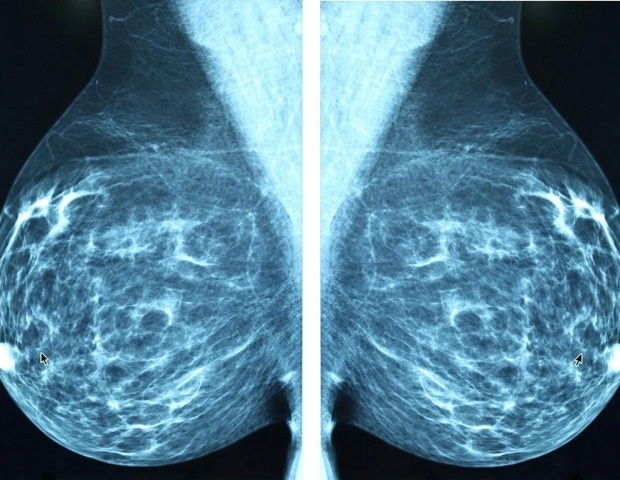
Researchers found that three bisphenols changed the growth of lab-grown human breast tissue when mixed together.
The chemicals, BPA, BPS and BPF, are found in consumer products, and BPA is used in some plastics and food packaging.
The team grew three-dimensional breast tissue models from donated cells and tested chemical levels similar to those measured in people.
The mixture disrupted tissue development in samples from five of six donors, while the same doses of each chemical had little effect on its own.
Some changes resembled patterns seen in a type of breast cancer, but the study does not show that the chemicals caused cancer.
The mixture also changed the activity of genes involved in cell maturity and connections between cells.
The findings suggest that testing chemicals one at a time can miss effects of mixtures, so researchers have reason to study how combinations affect healthy breast tissue.

A mixture of three common bisphenols disrupted the development of lab-grown human breast tissue, while the chemicals produced few changes when tested separately.
The researchers used breast tissue organoids grown from cells donated by 13 healthy young women.
At low concentrations comparable to levels detected in human blood and urine, the mixture disrupted development in organoids from most donors.
Some molecular changes resembled patterns found in invasive lobular carcinoma, but the study does not show that the chemicals cause cancer.
The researchers said further studies are needed to determine whether the changes persist or contribute to breast disease.
- Who
- Researchers from Tufts University School of Medicine and Boston University, led by Charlotte Kuperwasser.
- What
- They found that a mixture of BPA, BPS and BPF disrupted the development of lab-grown human breast tissue.
- When
- The study was published on October 16, 2026.
- Where
- In laboratory-grown breast tissue organoids; the research was conducted by teams at Tufts University School of Medicine and Boston University.
- Why
- The researchers investigated how exposure to chemicals, including mixtures, may affect normal breast tissue development.
This story does not have two clearly opposing sides.
Researchers exposed breast tissue organoids to individual chemicals and mixtures as the organoids developed.
The study was published in the Proceedings of the National Academy of Sciences.
- Chemicals tested
- BPA, BPS and BPF
- Donors
- Breast tissue from 13 healthy young women
- Exposure period
- About three weeks
- Concentrations
- Comparable to levels detected in human blood and urine
- Cancer pattern
- The mixture-associated pattern was most strongly represented in data from invasive lobular carcinoma cases
2 sources
What people are saying
We intentionally used concentrations of chemicals that were relevant to real-world exposure rather than the very high doses sometimes used in toxicology studies
We also tested a mixture of these because people are typically exposed to multiple chemicals at the same time