

Science & Tech · Space · 7 hrs ago
Amateur astronomer uses AI to spot a possible exoplanet in NASA data
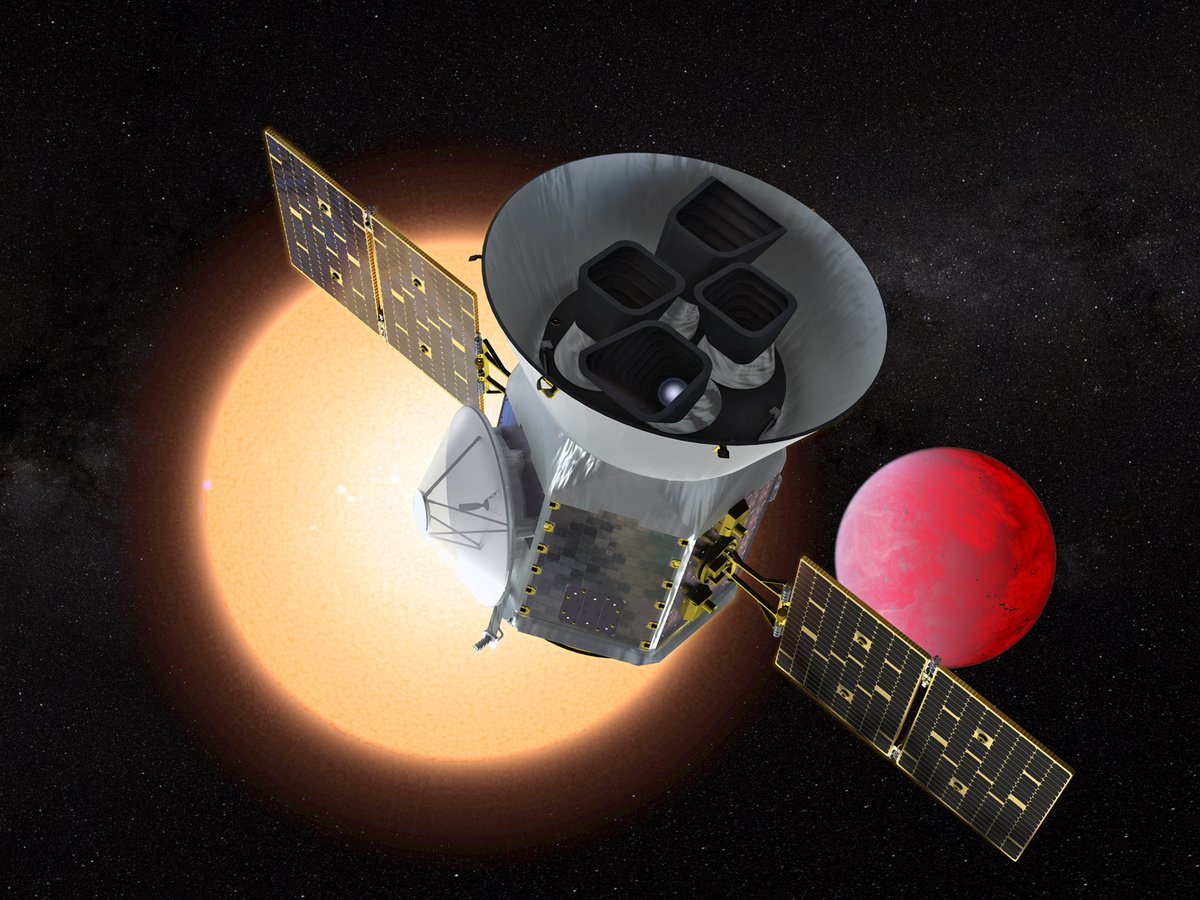
Spain-based hobbyist Pavel Rabtsevich used AI to search NASA telescope data for signs of planets beyond our solar system.
The data came from TESS, which looks for stars that dim when a planet passes in front of them.
The signal came from a star about 116 light-years away in the constellation Orion, and the star appeared to dim for about two hours every three days.
If a planet causes the signal, it could be a rocky world about 1.4 times Earth's size, with an estimated surface temperature of 1,000 degrees Fahrenheit.
The signal is not yet proof of a planet, because the star's light could dim for other reasons, including effects linked to TESS firing its thrusters.
TESS data gathered later made the signal clearer, although a detection filter had identified it in 2020 and rejected it for lack of conclusive evidence.
More evidence is needed to confirm whether the possible planet is real.

Amateur astronomer Pavel Rabtsevich used AI to identify a possible exoplanet signal in publicly available data from NASA’s TESS space telescope.
The signal comes from star TIC 4206066, about 116 light-years away in the Orion constellation.
Data showed the star dimming for about two hours every three days, and Rabtsevich found 22 additional instances in TESS archives.
If confirmed as a planet, it would be a super-Earth about 1.4 times the size of Earth, with an estimated surface temperature of 1,000 degrees Fahrenheit.
The signal is not confirmed, and other explanations for the star’s dimming have not been ruled out.
- Who
- Pavel Rabtsevich, a Spain-based product manager and space-science hobbyist, identified the signal with help from AI.
- What
- He found a repeating transit-like signal that could indicate a super-Earth. The signal is not confirmed as a planet.
- When
- The signal appeared in TESS data, including observations from 2018. A detection filter picked it up in 2020.
- Where
- Around star TIC 4206066, about 116 light-years away in the Orion constellation.
- Why
- Rabtsevich used AI to search TESS data for possible exoplanet signals.
This story does not have two clearly opposing sides.
Dips in the star’s light tended to align with moments when TESS fired its thrusters.
A TESS detection filter picked up the signal, but it was rejected because there was not conclusive evidence.
TESS gathered more observations of that part of the sky, making the signal clearer.
- Star
- TIC 4206066
- Distance
- Around 116 light-years from Earth
- Location
- Orion constellation
- Signal
- About two hours of dimming every three days
- Additional instances
- 22
- Possible planet
- A super-Earth around 1.4 times Earth’s size
What people are saying
repeating transit-like signal in open data, with a plausible planetary explanation and alternatives that aren’t yet ruled out.
Models agreeing with each other isn’t evidence
a great example of human-AI teamwork
Posts on X
I took Pavel's idea and ran it across 9,979 nearby red and orange dwarf stars with the help of Opus 5.5. I've uncovered 10 possible exoplanets that aren't reported anywhere I could find, including what may be a third transiting planet around TOI-4342.