

Archive · 27 Jul 2026
India's First Hydrogen Train Marks Zero-Emission Rail Milestone
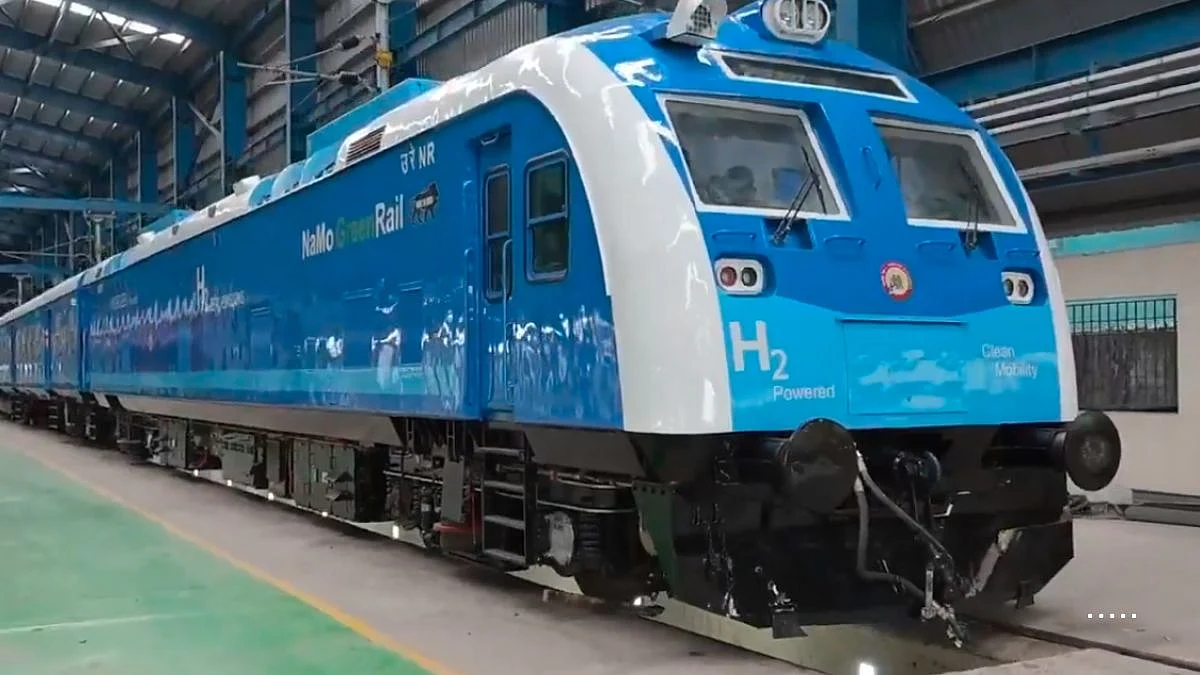
India has developed its first hydrogen-powered train, which runs on a special fuel cell that uses hydrogen and oxygen to make electricity.
This train doesn't pollute the air because it only releases water vapor and a little heat.
It can carry up to 2,600 passengers and travels at speeds up to 75 kmph.
The train is part of India's plan to use cleaner energy for transportation.
A special station in Jind, Haryana, has been set up to produce and store hydrogen for the train.
The train has special sensors to detect any hydrogen leaks, making it safe to use.
This new train is a big step towards making India's railways more environmentally friendly.

India's first indigenous hydrogen fuel cell train has been developed and tested, marking a significant milestone in sustainable transportation.
The train operates on the Jind-Sonipat section of Northern Railway and has a capacity of 2,600 passengers.
Powered by a Proton Exchange Membrane Fuel Cell (PEMFC), the train produces only water vapor and heat as by-products, making it zero-emission.
The train has an operational speed of 75 kmph and a design speed of 110 kmph.
A dedicated hydrogen refuelling ecosystem has been established at Jind in Haryana to support the train's operations.
- Who
- Indian Railways
- What
- Development and trial of India's first indigenous hydrogen fuel cell train
- When
- Announced on Sunday
- Where
- Jind-Sonipat section of Northern Railway, Haryana
- Why
- To advance India's clean mobility ambitions and reduce carbon emissions
Environmental Benefits
Technological and Economic Challenges
Environmental Impact
Environmental Benefits
The hydrogen-powered train produces only water vapor and heat, making it a zero-emission and environmentally friendly mode of transport.
Technological and Economic Challenges
The development and operation of hydrogen trains require significant investment and infrastructure, which may pose economic challenges.
Technological Advancement
Environmental Benefits
The train represents a major technological breakthrough for Indian Railways, showcasing the potential of hydrogen as a clean alternative to diesel.
Technological and Economic Challenges
The technology is still in its early stages, and there may be technical challenges in ensuring the reliability and safety of hydrogen-powered trains.
- Train Capacity
- 2,600 passengers
- Operational Speed
- 75 kmph
- Design Speed
- 110 kmph
- Hydrogen Production Location
- Jind, Haryana
- Power Source
- Proton Exchange Membrane Fuel Cell (PEMFC)
- By-products
- Water vapor and heat