

Archive · 5 Jan 2026
Earth's Atmosphere Has Nourished Moon for Billions of Years
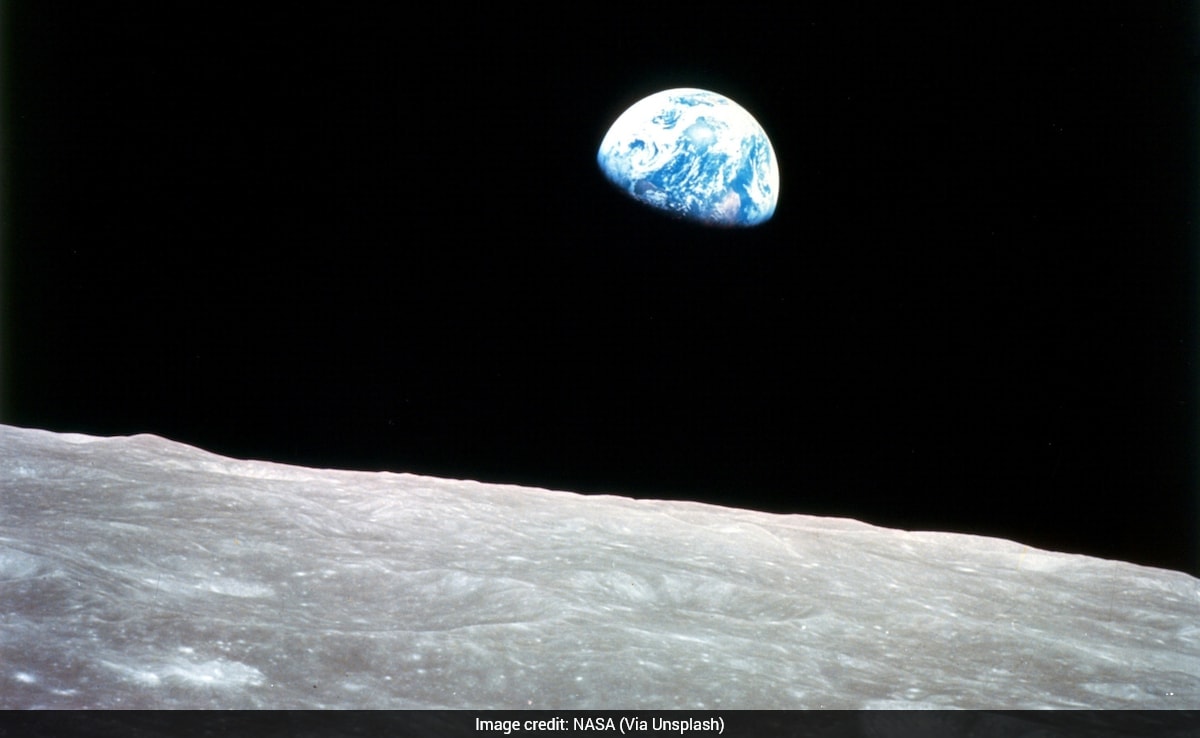
Scientists have discovered that Earth's atmosphere has been sending tiny particles to the Moon for billions of years.
These particles, which include water, carbon dioxide, helium, argon, and nitrogen, have been embedded in the lunar soil.
This finding suggests that Earth has played a significant role in shaping the Moon's environment.
The researchers used data from Moon rocks collected during the Apollo missions and advanced computer simulations to reach this conclusion.
This study not only helps us understand the history of Earth's atmosphere but also has broader implications for studying other planets like Mars.

Earth's atmosphere has been sending particles to the Moon for billions of years.
These particles include water, carbon dioxide, helium, argon, and nitrogen.
The Moon's surface layer contains these substances, suggesting Earth's significant role in shaping the lunar environment.
Researchers used data from Apollo mission Moon rocks and advanced computer simulations to reach this conclusion.
The study has broader implications for understanding early atmospheric escape on planets like Mars.
- Who
- Researchers at the University of Rochester
- What
- Earth's atmosphere has been sending particles to the Moon for billions of years
- When
- The process has been ongoing for billions of years
- Where
- From Earth to the Moon
- Why
- To understand the history of Earth's atmosphere and its magnetic field, and its implications for planetary habitability
- Particles
- Water, carbon dioxide, helium, argon, and nitrogen
- Source
- Earth's atmosphere and solar wind
- Study
- Published in Nature Communications Earth and Environment
- Researchers
- University of Rochester
- Method
- Combined data from lunar soil and computational modeling
- Implications
- Understanding early atmospheric escape on planets like Mars