

Archive · 20 Jun 2025
Trump's 'Unconditional Surrender' Rhetoric: A Wartime Echo
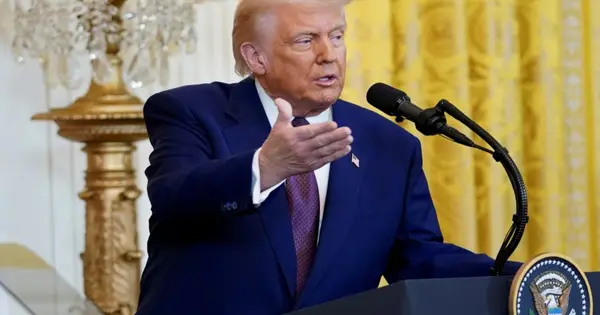
President Trump recently told Iran to surrender completely, or face consequences, using the phrase "unconditional surrender".
This term, meaning total defeat with no negotiations, is rarely used.
It was first used in the Civil War by General Grant.
It was later used in World War II by the Allies against Germany and Japan.
Modern conflicts usually involve diplomacy and trying to find solutions together.
Trump's recent use of the phrase shows a shift in the U.S.'s approach toward Iran during the conflict with Israel.

President Trump used the phrase "unconditional surrender" in a message to Iran regarding the conflict with Israel.
The phrase "unconditional surrender" has deep roots in American military history, primarily from the Civil War and World War II.
During the Civil War, Ulysses S. Grant demanded "unconditional surrender" at Fort Donelson.
In World War II, the Allies, led by Roosevelt and Churchill, demanded the unconditional surrender of Nazi Germany and Imperial Japan.
The U.S. has rarely used the phrase "unconditional surrender" in modern conflicts, favoring diplomacy and negotiated outcomes.
- Who
- President Donald Trump issued the message to Iran.
- What
- President Trump used the phrase "unconditional surrender" in a message to Iran.
- When
- This occurred recently during the conflict between Iran and Israel.
- Where
- The message was directed toward Iran.
- Why
- The use of the phrase may be designed to project strength and signal the administration's stance on the conflict.
Traditional Diplomacy
Unconditional Surrender
Approach to Conflict
Traditional Diplomacy
Focus on negotiated outcomes, strategic deterrence and diplomacy.
Unconditional Surrender
Advocates for decisive action and emphasizes the need for complete capitulation from the opposition.
- Key Phrase Used
- "Unconditional Surrender"
- Associated Figures (WWII)
- Roosevelt, Churchill
- Associated Figures (Civil War)
- Ulysses S. Grant
- Modern Conflict Approach
- Diplomacy, deterrence, negotiated transitions