Archive · 2 Jun 2025
Damascus Faces Severe Water Crisis Amidst Historic Drought
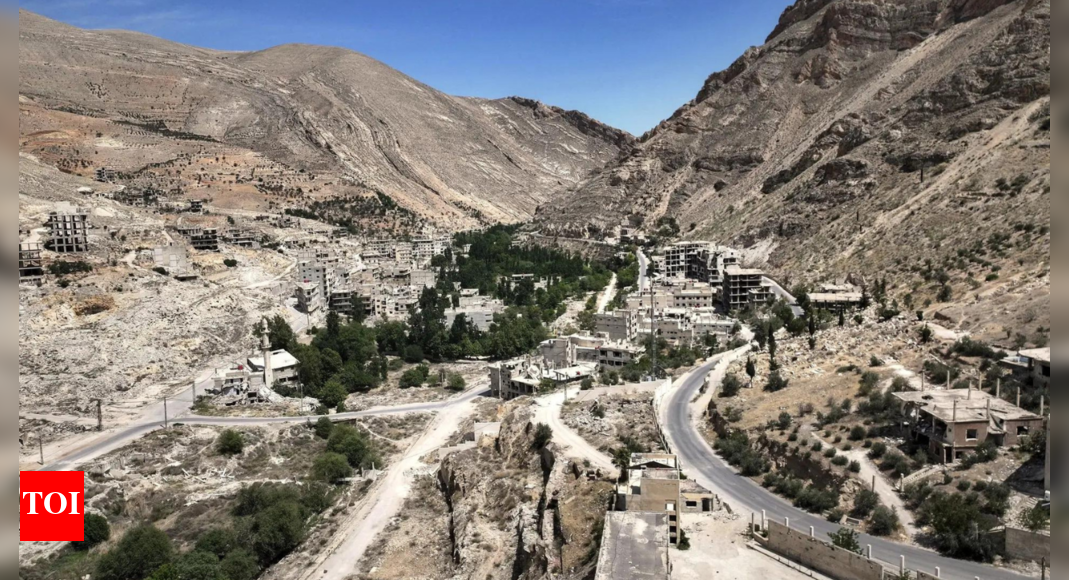
Imagine a city called Damascus, where the main water source, a spring, is running very low because it hasn't rained much.
This spring is super important because it gives water to most of the city.
But because there was hardly any rain, the spring is like a tiny stream now.
People in Damascus don't have as much water as before, and some have to buy it from trucks, which costs a lot of money.
The city officials are telling everyone to use less water.
A guard named Hassan, who has worked at the spring for a very long time, says he's never seen it so dry.
The river that the spring feeds is also drying up.
Everyone is worried, especially because summer is coming, and it might get even worse.

Damascus faces severe water shortages due to the driest winter since 1956.
The Ein al-Fijeh spring, which supplies 70% of Damascus's water, is at its lowest level.
5 million residents are experiencing water restrictions, often relying on costly tanker trucks.
Government officials are urging water conservation amidst infrastructure challenges.
The Barada River, fed by the spring, is mostly dry, affecting surrounding areas.
- Who
- Damascus residents, government officials like Ahmad Darwish, and individuals like Hassan Bashi and Bassam Jbara are affected.
- What
- Damascus is experiencing a severe water shortage due to the driest winter since 1956, causing the Ein al-Fijeh spring to deliver a limited water supply.
- When
- The water shortage is occurring after the driest winter since 1956.
- Where
- Damascus, Syria, particularly the Ein al-Fijeh spring, the Barada River and surrounding areas.
- Why
- Damascus faces a critical water crisis due to a lack of rainfall and snowmelt, reducing the flow from the Ein al-Fijeh spring.
- Main Water Source
- Ein al-Fijeh spring
- Water Supply Percentage
- 70% of Damascus's water
- People Affected
- 5 million
- Rainfall
- Lowest since 1956
- Water Access
- 90 minutes daily in some areas