

Archive · 13 Aug 2026
Homeopathy debate needs better evidence, modern tools urged
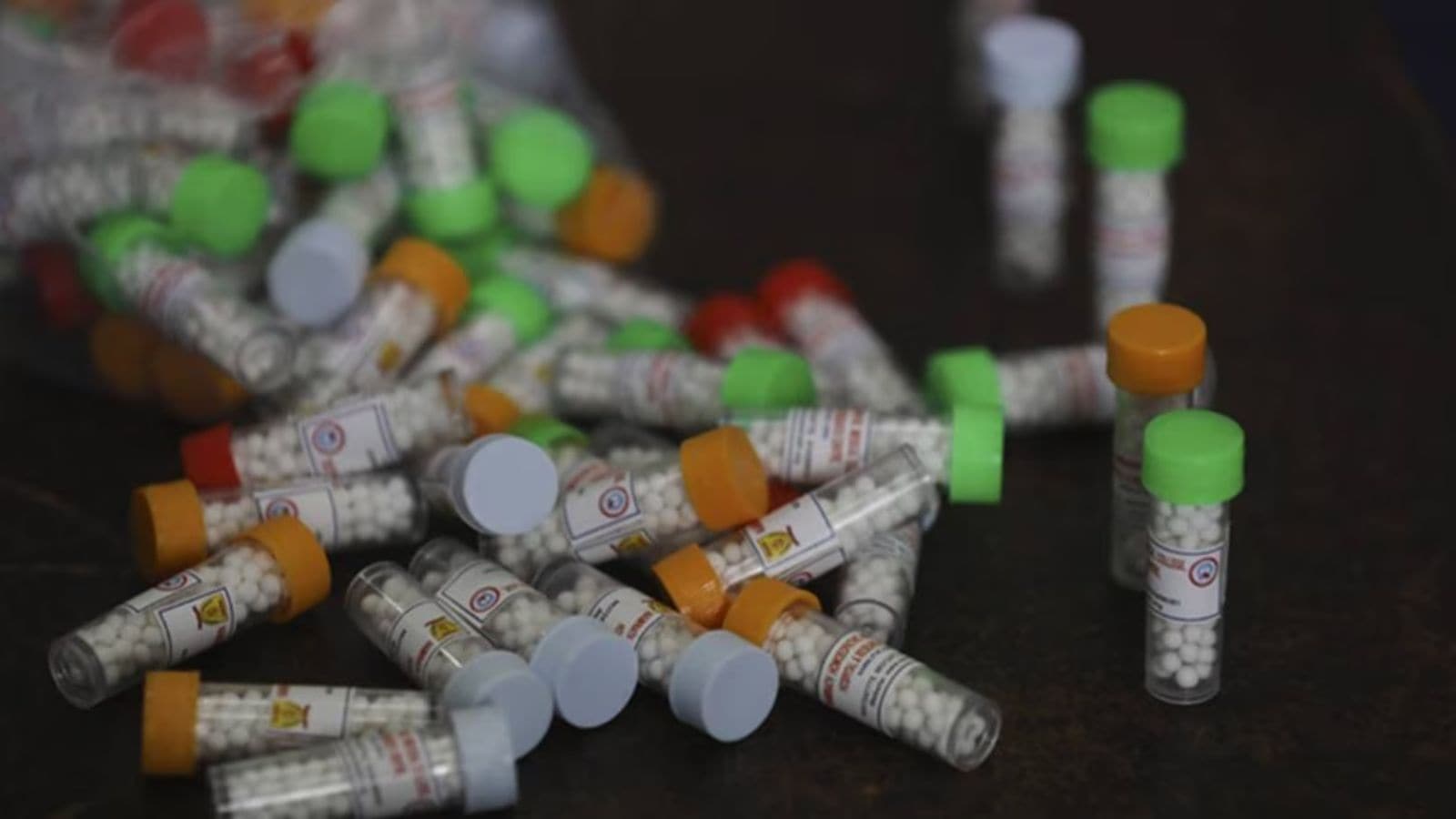
Some people believe in homeopathy, a type of medicine that has been used for more than 200 years to help many people feel better.
Other people do not believe in it, because they say the medicine is so watered down that it should not be able to do anything.
This big disagreement is called the homeopathy debate.
For a long time, scientists did not have good enough tools to study these very watery medicines.
Now, with new machines and ideas from science like nanotechnology, they can look much more closely.
Some studies found tiny particles in these medicines, but that does not prove the medicines work.
A government research group called the CCRH is working on new research to answer this question.
They want to find out what is in the medicines, whether they affect living bodies, and whether they help sick people get better.
By studying with better tools, the CCRH hopes to replace opinions with facts.
That way, science can decide whether homeopathy really works.

Homeopathy supporters say it has helped millions of patients over two centuries, while critics say there is no convincing scientific explanation for effects beyond the placebo response.
The Central Council for Research in Homoeopathy (CCRH) is encouraging evidence-based research using modern scientific tools.
Advances in nanotechnology, materials science, and analytical instruments now allow researchers to study highly diluted medicines with far greater precision.
Some studies report nanoparticles and other measurable properties in highly diluted medicines, though the findings do not prove homeopathy works.
CCRH says the debate requires answering three distinct questions: physical, biological, and clinical.
- Who
- Subhash Kaushik, Director General of the Central Council for Research in Homoeopathy (CCRH), and Kishore Paknikar, a member of CCRH's Scientific Advisory Board.
- What
- A call to examine the homeopathy debate with modern scientific tools and generate transparent, reproducible evidence.
- When
- No specific date is given; the article describes the ongoing homeopathy debate and current CCRH research efforts.
- Where
- India, centred on the CCRH under the Ministry of Ayush in New Delhi.
- Why
- To shift the homeopathy conversation from opinion to investigation and determine whether diluted medicines have measurable and clinical effects beyond placebo.
Homeopathy supporters
Homeopathy critics
Effectiveness of diluted medicines
Homeopathy supporters
Homeopathy has helped millions of patients over two centuries and deserves rigorous scientific investigation with modern tools.
Homeopathy critics
There is still no convincing scientific explanation for how highly diluted medicines could produce a biological effect beyond the placebo response.
Content of highly diluted preparations
Homeopathy supporters
Modern studies report nanoparticles and other measurable properties in highly diluted medicines, so long-held assumptions should be retested.
Homeopathy critics
The prevailing scientific view is that after repeated dilution, a homeopathic medicine is unlikely to contain anything beyond the liquid used to prepare it.
- Organization
- Central Council for Research in Homoeopathy (CCRH)
- Governing Ministry
- Ministry of Ayush, New Delhi
- Lead Author
- Subhash Kaushik, Director General, CCRH
- Co-Author
- Kishore Paknikar, Member, CCRH Scientific Advisory Board
- Core Research Questions
- Physical, biological, and clinical
- Scientific Tools Mentioned
- Nanotechnology, materials science, molecular biology, clinical studies
- Key Finding Noted
- Some studies report nanoparticles in highly diluted medicines, not proof of efficacy