Archive · 6 Nov 2025
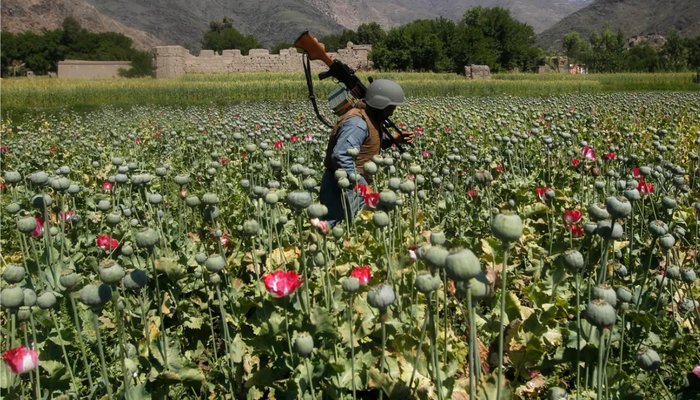
Afghanistan Opium Cultivation Decreases Significantly, UN Report States

Imagine farmers in a country called Afghanistan used to grow a special plant a lot.
But the leaders of the country said they must stop growing it.
So, this year, the farmers grew 20% less of that plant than last year.
Because there's less of the plant, they made 32% less of the special powder it makes.
Even though there's less powder, it also became cheaper by 27%.
This made farmers earn less money, so some are now growing regular food crops instead.
However, bad guys who used to deal with the special powder might be making new, different kinds of powders in labs because they are easier to hide and make.
The people who study these things also saw more of these new powders being caught this year.

Afghanistan's opium poppy cultivation area decreased by 20% in 2025 to 10,200 hectares.
The estimated opium harvest dropped by 32% to 296 tons in 2025.
The price of dry opium fell by 27% to $570 per kilogram in 2025.
This trend follows a 2023 ban on narcotics production by the Taliban and a 19% rebound in 2024.
UNODC notes an increase in synthetic drug production as a new business model for organized crime, with methamphetamine confiscations up 50% in 2024.
- Who
- UN Office on Drugs and Crime (UNODC)
- What
- Afghanistan's opium poppy cultivation area decreased by 20% in 2025, with the opium harvest dropping by 32% and dry opium prices falling by 27%. The report also noted a 50% increase in synthetic drug confiscations in 2024.
- When
- 2025 (for cultivation data), 2024 (for synthetic drug data)
- Where
- Afghanistan
- Why
- Following the Taliban's ban on narcotics production in 2022, compounded by factors like drought and increased pressure on resources, leading to a shift towards synthetic drug production by criminal gangs.
UNODC Assessment
Report Caveats
Impact of Taliban Ban
UNODC Assessment
The Taliban's ban on narcotics production in 2022 has led to a significant reduction in opium poppy cultivation.
Report Caveats
The ban has also contributed to a shift towards synthetic drug production by organized criminal gangs.
Farmers' Livelihoods
UNODC Assessment
A sharp drop in opium prices and harvest has led to reduced income for farmers, prompting them to switch to growing cereals.
Report Caveats
Drought and low rainfall have left over 40% of farmland barren, exacerbating economic pressures on farmers.
Addressing Drug Menace
UNODC Assessment
Combating the drug problem requires a multifaceted approach including eradication efforts, support for alternative livelihoods, demand reduction, and addressing synthetic drugs.
Report Caveats
Drug trafficking is a global issue involving both Afghan and international actors, necessitating collaboration among stakeholders.
- Opium Poppy Cultivation Area 2025
- 10,200 hectares
- Decrease from 2024
- 20%
- Estimated Harvest 2025
- 296 tons
- Harvest Decrease from 2024
- 32%
- Price of Dry Opium 2025
- $570 per kilogram
- Price Decrease from 2024
- 27%
- Confiscation of Synthetic Drugs (Methamphetamine) 2024
- Increased by 50%