

Archive · 26 Dec 2025
Enceladus's Icy Plumes Hold Complex Organic Molecules
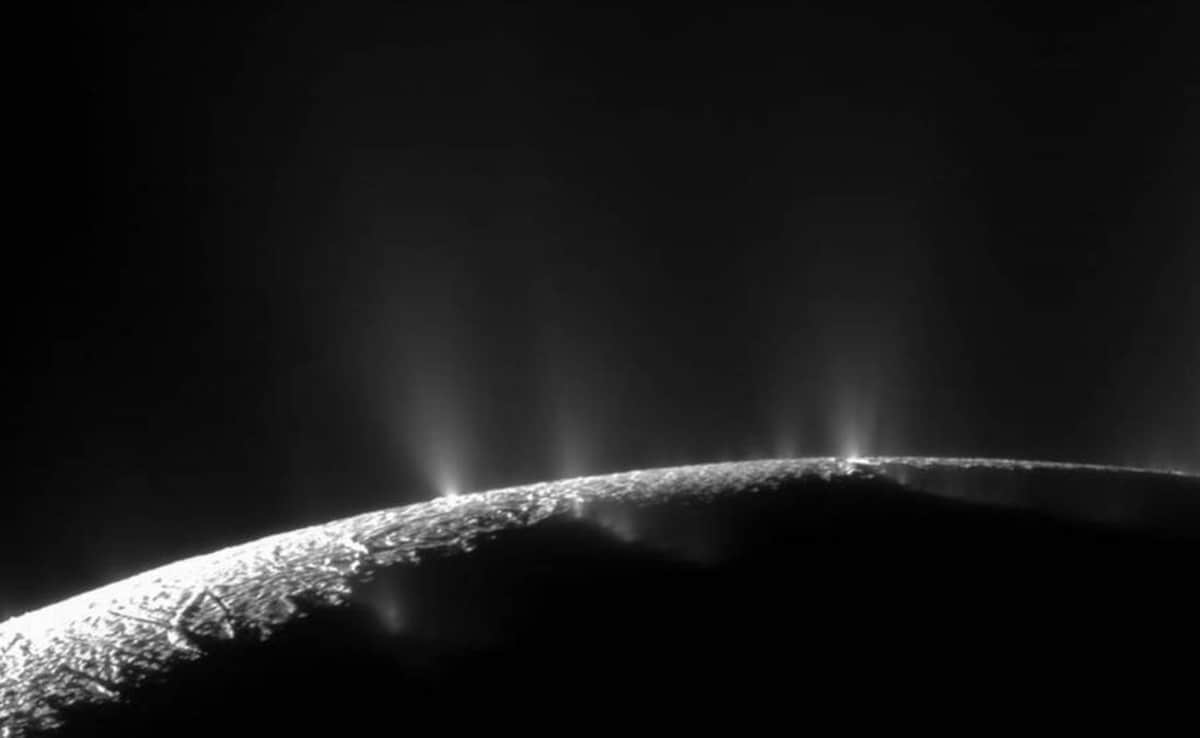
Scientists have found special molecules in the icy plumes of Enceladus, one of Saturn's moons.
These molecules are important because they could help life exist.
The molecules were found in fresh ice that came from an ocean under the moon's surface.
Before, scientists thought these molecules might have formed in space, but now they know they come from the ocean.
This makes Enceladus a very interesting place to look for signs of life beyond Earth.

Scientists discovered complex organic molecules in Enceladus's icy plumes.
The molecules were found in fresh ice from the moon's subsurface ocean.
Previous detections were in older ice altered by space radiation.
The compounds include aliphatic, cyclic ester, ether, and aromatic molecules.
Findings suggest these molecules are readily available in Enceladus's ocean.
- Who
- Scientists from Freie Universität Berlin
- What
- Discovered complex organic molecules in Enceladus's icy plumes
- When
- Based on data from Cassini spacecraft (2004-2017)
- Where
- Enceladus, Saturn's icy moon
- Why
- To understand the potential for extraterrestrial life
- Moon
- Enceladus
- Parent Planet
- Saturn
- Spacecraft
- Cassini
- Organic Compounds
- Aliphatic, cyclic ester, ether, aromatic, nitrogen- and oxygen-bearing
- Source of Compounds
- Subsurface ocean
- Study Lead Author
- Nozair Khawaja
- Study Co-Author
- Frank Postberg
- Institution
- Freie Universität Berlin