

Archive · 30 Aug 2026
FSSAI Proposes Red Hexagon Warnings for High-Salt, Sugar, Fat Foods
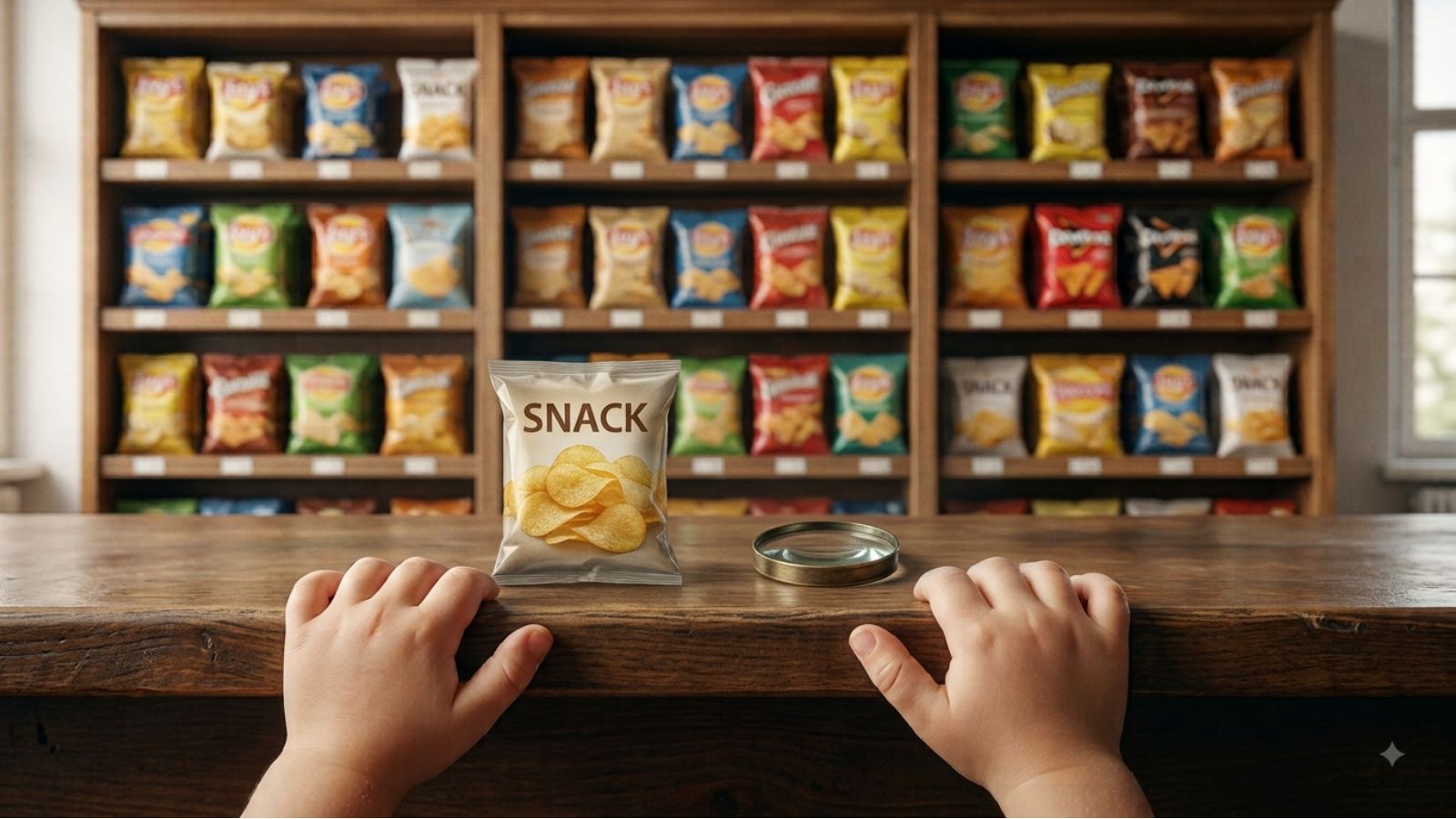
India’s food safety authority wants some packaged foods to carry a red warning sign.
The sign would be placed on the front of the package.
It would tell shoppers if a product has a lot of added fat, added sugar or salt.
In the first step, a product would usually need to be high in at least two of these nutrients to receive the warning.
Certain sweetened drinks would also be included.
Later, the warning could apply to products high in only one nutrient.
Foods such as salt, sugar, honey and ghee may be left out because they are single-ingredient or naturally high in these nutrients.
Experts support helping people understand food labels but worry that the plan may miss some unhealthy products.
The proposal is not mandatory yet because it still needs to complete the regulatory process.

FSSAI has proposed a prominent red hexagonal front-of-pack warning for packaged foods high in at least two specified nutrients.
The proposed labels could state “High Fat,” “High Sugar,” “High Salt” or “Highly Sweetened Beverage.”
The first phase would cover products high in at least two nutrients and specified sweetened beverages; a second phase would cover products high in one.
Single-ingredient foods and inherently high-fat, sugar or salt products such as ghee, oil, salt, sugar, jaggery and honey may be exempt.
Experts welcomed the proposal but questioned the two-nutrient threshold, the use of “added” nutrients, the small font and the lack of an implementation timeline.
- Who
- The Food Safety and Standards Authority of India proposed the system after a petition by 3S and Our Health Society and scrutiny by the Supreme Court of India.
- What
- A phased front-of-pack red hexagonal warning system for packaged foods high in specified levels of added saturated fat, added sugar and/or salt.
- When
- The proposal was submitted after the Supreme Court’s August 13 order; no implementation timeline has been announced.
- Where
- On the front of packaged food products in India.
- Why
- To give consumers, particularly children and other vulnerable groups, a simple way to identify products high in specified nutrients and make informed choices.
Health advocates and nutrition experts
FSSAI’s proposed approach
Nutrient threshold
Health advocates and nutrition experts
Experts said limiting the first phase to products high in at least two nutrients could allow many unhealthy products high in only one nutrient to avoid a warning.
FSSAI’s proposed approach
FSSAI proposed a phased rollout, beginning with products high in at least two nutrients and considering products high in one nutrient in the second phase.
Implementation timing
Health advocates and nutrition experts
The petitioner and experts have pressed for mandatory warnings and raised concerns that FSSAI has not provided a timeline for the second phase.
FSSAI’s proposed approach
FSSAI said the two-phase approach would give consumers time to adapt and companies time to reformulate; the system still requires the prescribed regulatory process.
Label design and terminology
Health advocates and nutrition experts
Experts questioned whether the proposed font is large enough, called for Hindi-language messaging and said “added” nutrients can be difficult to estimate; they also noted that natural sugars can affect health.
FSSAI’s proposed approach
FSSAI proposed clear nutrient-specific declarations in a red hexagon, displayed in a font one point larger than the back-of-pack nutrition table.
- Proposed symbol
- A prominent red-coloured hexagon on the front of food packages.
- Covered nutrients
- Added saturated fat, added sugar and salt.
- First phase
- Packaged products high in at least two specified nutrients, along with specified sweetened beverages.
- Second phase
- Products high in any one of the specified nutrients.
- Possible declarations
- “High Fat,” “High Sugar,” “High Salt” and/or “Highly Sweetened Beverage.”
- Label size
- The warning would be in English and one point larger than the nutrition information table’s font.
- Possible exemptions
- Single-ingredient foods and products inherently rich in fat, sugar or salt, including ghee, edible oil, salt, sugar, jaggery and honey.
- Regulatory status
- The proposal must be notified through an amendment to the relevant regulations before becoming mandatory.
