Archive · 10 Nov 2025
Bangladesh Farmers Struggle with Repeated Displacement Due to River Erosion

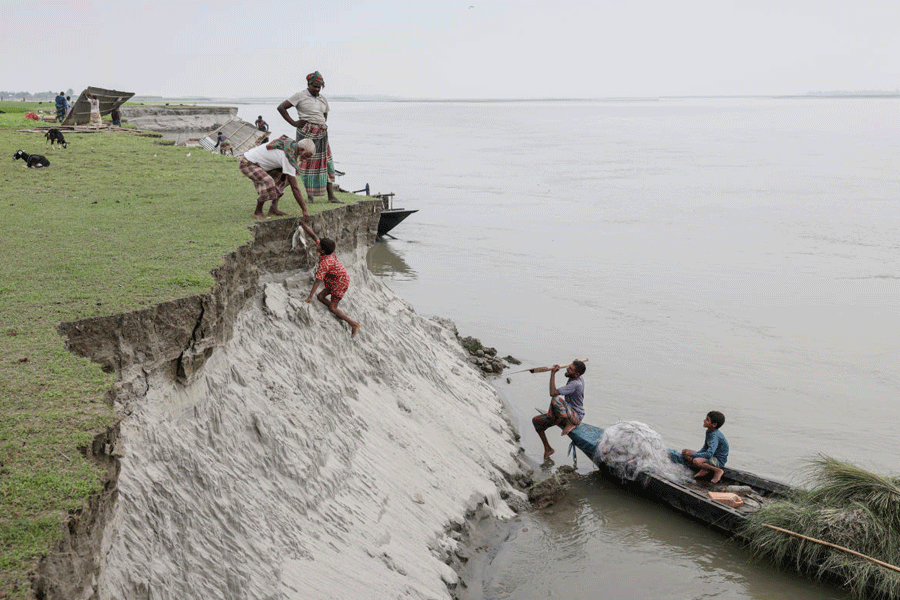
Imagine a river that acts like a hungry monster, constantly eating away the land where people live.
In a country called Bangladesh, this is happening to many families, especially farmers.
Their homes and fields get washed away, forcing them to move again and again, often to temporary islands in the river.
This is happening because the Earth is getting warmer, causing ice to melt faster and rain to fall harder and more often.
These families don't cause much of the pollution, but they suffer the most.
They are trying to protect themselves by building stronger homes and using sandbags to hold the river back.
They hope other countries will help them with money because they are losing everything.

Hundreds of families in northern Bangladesh are repeatedly displaced as rivers erode land, destroying homes, crops, and livelihoods.
Farmers like Nurun Nabi and Kosim Uddin have lost their homes multiple times, highlighting the constant struggle for survival on temporary river islands known as 'chars'.
Climate change is identified as a key driver, with accelerated Himalayan glacier melt increasing river flow and erratic monsoons causing more intense flooding and erosion.
Despite contributing less than 0.5% of global carbon emissions, Bangladesh is disproportionately affected, with projections of widespread displacement by 2050.
Local adaptation efforts like geobags and raised villages show promise in protecting communities, but require greater international support and climate finance for loss and damage.
- Who
- Hundreds of families in northern Bangladesh, including farmers like Nurun Nabi and Kosim Uddin.
- What
- Facing repeated displacement and loss of homes, land, crops, and livelihoods due to severe river erosion.
- When
- Yearly, with worsening conditions attributed to accelerated glacial melt and erratic monsoons.
- Where
- Northern Bangladesh, specifically the Kurigram district, along major rivers like the Brahmaputra, Teesta, and Dharla.
- Why
- Climate change causing accelerated Himalayan glacier melt and erratic monsoons, leading to increased river flow, flooding, and erosion.
Vulnerable Nations (Bangladesh)
Global Community
Climate Change Impact and Responsibility
Vulnerable Nations (Bangladesh)
Nations like Bangladesh bear the brunt of climate change impacts and river erosion caused by emissions they did not create, necessitating international funding for loss and damage.
Global Community
While resilience efforts are noted, stronger international support and climate finance are crucial for vulnerable nations to address climate-induced displacement and protect lives and land.
Climate Finance and Adaptation Needs
Vulnerable Nations (Bangladesh)
Urgent delivery of real funding for loss and damage at climate summits like COP30 is vital for vulnerable nations to protect themselves.
Global Community
International support and climate finance are essential to supplement and bolster local adaptation initiatives that are already underway.
- Location
- Northern Bangladesh, Kurigram district
- Primary Rivers Affected
- Brahmaputra, Teesta, Dharla
- Impact
- Loss of homes, land, crops, livestock due to severe river erosion and flooding
- Projected Displacement
- One in seven Bangladeshis could be displaced by climate-related disasters by 2050 (World Bank estimate)
- Adaptation Measures
- Use of geobags to strengthen riverbanks, construction of raised villages
- Bangladesh's Global Carbon Emissions
- Less than half a percent
- Climate Change Drivers
- Accelerated Himalayan glacier melt, erratic and intense monsoons