

Archive · 30 May 2025
Kerala's Textbook Teaches Tapioca Drying to Preserve Heritage
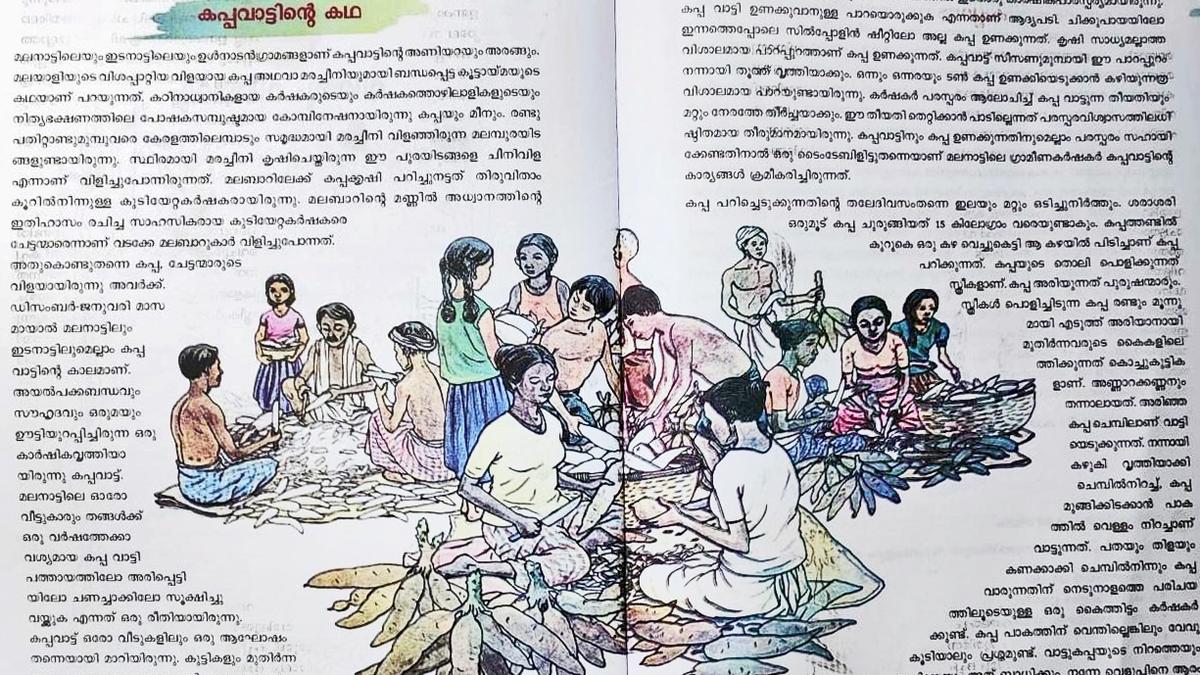
Imagine learning about your family's history in school!
In Kerala, India, kids in Class 8 are now learning about how their ancestors dried tapioca, a food similar to potatoes.
This tradition, called Kappa Vaattu, was important for keeping families fed.
During December and January, everyone helped peel, slice, and dry the tapioca under the sun.
The lesson, part of the Malayalam textbook, teaches students about farming, cooperation, and how people lived in the past.
It's like learning a cool story about food, community, and the hard work that helped people survive.

Tapioca drying tradition, known as Kappa Vaattu, included in Kerala's Class 8 Malayalam textbook.
The article, 'Kappa Vaatinte Katha,' explores the historical and cultural aspects of tapioca farming.
Villagers, men and women, traditionally come together to dry tapioca during December–January.
Dried tapioca was a staple food, ensuring food security for families.
The lesson aims to instill farming awareness and preserve agrarian heritage among students.
- Who
- Students in Kerala's Class 8 are learning about the tradition.
- What
- The tradition of drying tapioca (Kappa Vaattu) is being taught.
- When
- Included in the 2025 Class 8 syllabus.
- Where
- Kerala, India.
- Why
- To preserve farming heritage and promote awareness.
- Article Title
- Kappa Vaatinte Katha
- Textbook
- Class 8 Malayalam
- Key practice
- Kappa Vaattu (Tapioca Drying)
- Season
- December–January
- Focus
- Agrarian heritage