5 days ago
Georgia’s Ancient Qvevri Tradition Shapes Its Distinctive Wines

Georgia has a very old tradition of making wine.
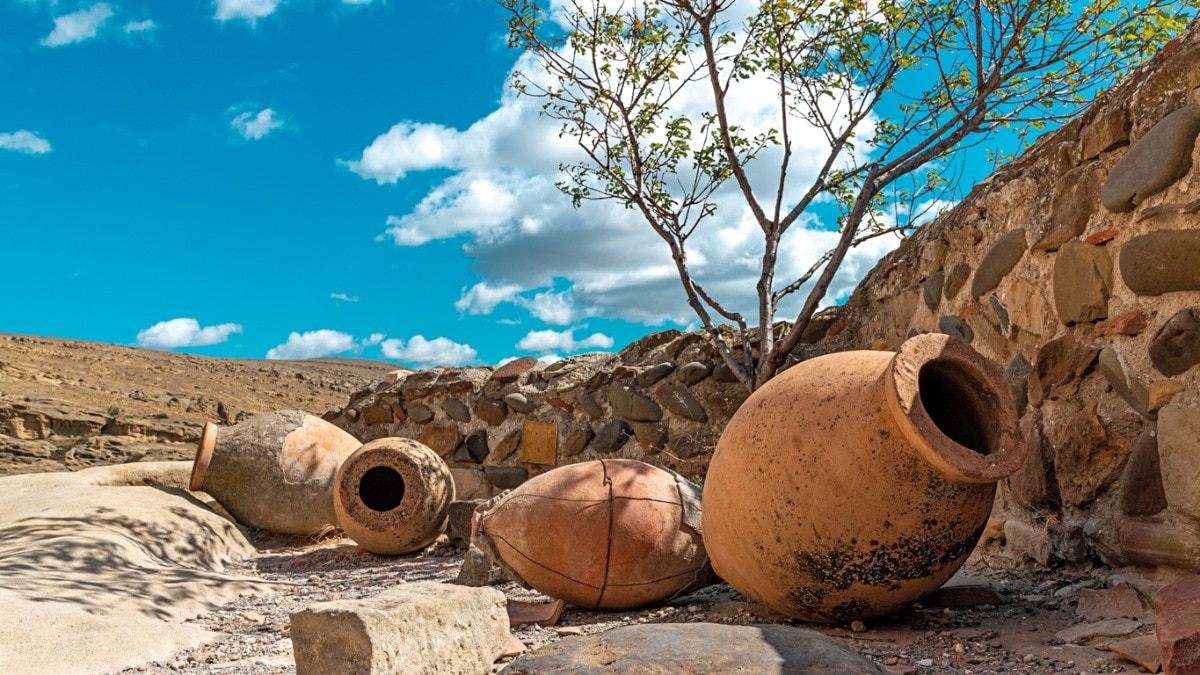
Many winemakers use big clay pots called qvevri, which are buried in the ground.
Grapes, including white grapes, can ferment with their skins, seeds and pulp inside the pots.
This helps make wines that can look darker and taste more textured than many familiar white wines.
Kakheti is an important wine region near Tbilisi.
At Giuaani Winery, workers push grape solids back into the wine during the first month of fermentation.
The wine then stays sealed in the qvevri for five more months.
Grapes left after winemaking can be used to make chacha, a grape spirit.
Georgia also exports wine to many countries around the world.

Georgia’s wine culture centres on qvevri, large earthenware vessels buried underground for fermentation and ageing.
Skin-contact fermentation, including for white grapes, helps produce amber wines with deeper colour, tannins and savoury flavours.
The Kakheti region, a couple of hours from Tbilisi, is a major centre for Georgian vineyards and wine production.
Giuaani Winery uses qvevri, stainless-steel tanks and oak barrels; its Georgian-style wines spend six months in qvevri.
Georgia’s National Wine Agency reported 2025 exports of about 89.7 million litres, worth $267.9 million, to 71 countries.
- Who
- Georgian winemakers, including the family behind Giuaani Winery.
- What
- A feature on Georgia’s qvevri winemaking tradition, distinctive wines and wine industry.
- Where
- Georgia, particularly Kakheti; Giuaani Winery is in Manavi, about 45 kilometres from Tbilisi.
- When
- The article reports 2025 wine export figures; it says Giuaani’s harvest runs from mid-September to late October.
- Why
- Qvevri fermentation and ageing, local grape varieties and long-standing winemaking practices shape Georgia’s distinctive wines.
Key facts
- Qvevri method
- Grapes ferment and age in large, egg-shaped earthenware vessels buried in the ground.
- Cultural recognition
- UNESCO inscribed the Georgian qvevri winemaking method on its Representative List of the Intangible Cultural Heritage of Humanity in 2013.
- Grape varieties
- The article names Rkatsiteli, Mtsvane, Kisi, Khikhvi, Tsolikouri and Saperavi.
- Giuaani history
- The family’s winemaking history reaches back to the 19th century; an old qvevri on the property dates to 1894.
- Giuaani qvevri
- The winery has 36 qvevri, each with a capacity of 2,000 litres.
- Georgian-style wine process
- At Giuaani, the wine spends six months in qvevri: one month fermenting with grape solids and five months sealed.
- Vardzia cellars
- Georgia’s official tourism portal records 28 wine cellars at Vardzia, housing 235 qvevri.
- 2025 exports
- Approximately 89.7 million litres worth $267.9 million were exported to 71 countries, according to Georgia’s National Wine Agency.
Quotes
Nika Tchitanava
Brand Ambassador and Sommelier at Giuaani Winery
“Even at night we wake up and push the solids back in.”
 businesstoday.in
Sources
Related news
Georgia’s Eight-Thousand-Year Qvevri Tradition Reaches Global Wine Tables

Yamaroku Shoyu Sees India’s Growing Appetite for Premium Soy Sauce

R Lounge Fuses Goan Ingredients With Cocktail Laboratory Techniques

Climate Heatwave Could Raise Champagne Alcohol To 15 Percent

Modi Gives Swiss President Three Award-Winning Indian Cheeses

Chef Ekaterina Alehina Brings Contemporary Russian Cuisine to Delhi